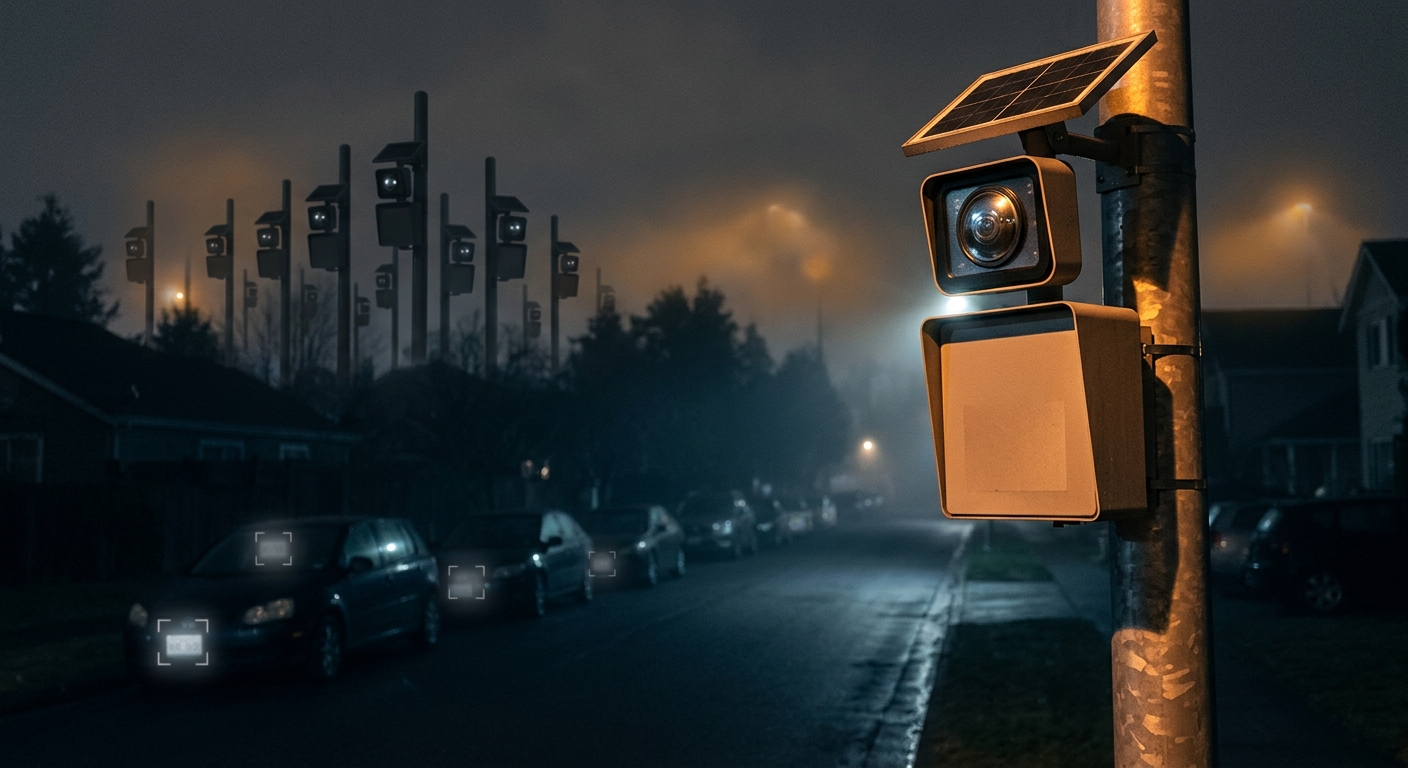
On June 29, 2026, the Supreme Court handed down Chatrie v. United States — a 6-3 decision holding that when police demand cell phone location records to find out who was near a crime scene, that demand is a search under the Fourth Amendment. Three weeks on, the immediate celebration has given way to the harder work of figuring out what the opinion actually requires. The short version: the ruling is genuinely significant, and it settles less than the headlines suggested.
What the Court held
Justice Elena Kagan, writing for the majority, put it plainly: “An individual has a reasonable expectation of privacy in records about his cell phone’s location, and police intrude on that constitutionally protected interest when they demand the information.”
That sentence does real work. It extends Carpenter v. United States (2018) — which covered historical cell-site location information held by carriers — to the far more precise device location histories that companies like Google maintain. And critically, it does so regardless of duration. Carpenter had left a widely exploited ambiguity: the government argued that short windows of location data fell below whatever threshold Carpenter set. Prosecutors routinely pointed out that a geofence request covering ninety minutes was nothing like the seven days at issue in Carpenter.
Chatrie closes that gap. Even a short slice of precise location history can, as the majority put it, reveal “familial, political, professional, religious, and sexual associations.” The clock doesn’t have to run long for the intrusion to be constitutional in nature.
Justice Samuel Alito dissented, calling the majority’s reasoning an “irresponsible escapade” and accusing his colleagues of “striking a pose as a great champion of privacy in the digital age.” The rhetoric is worth noting mostly because it signals how contested the doctrinal ground remains.
What the Court conspicuously did not hold
Here is the part that matters for anyone trying to predict how this plays out in practice: the Court did not decide whether the geofence warrant in Chatrie’s own case was valid.
A Fourth Amendment “search” is not the same as an unconstitutional search. Once you establish that a warrant is required, two further questions follow, and the Court punted on both:
- Particularity. The Fourth Amendment requires warrants to describe with specificity the place to be searched and the things to be seized. A geofence warrant, by construction, describes a geographic area and time window and asks for everyone inside it. Does drawing a circle on a map satisfy particularity? The Court didn’t say.
- Probable cause. Traditional warrants require probable cause that a specific person committed a crime or that specific evidence will be found in a specific place. A geofence warrant inverts this: police have probable cause that the suspect was somewhere in the circle, but no probable cause at all as to the dozens or hundreds of innocent people also in it. Whether that inversion can ever satisfy the Fourth Amendment is now the central open question in reverse-location law.
Lower courts had already split badly on both points before Chatrie. They remain split. What has changed is the framing: the government can no longer argue that no warrant is needed at all, so every fight now happens on the particularity-and-probable-cause battlefield.
Google had already moved
The most consequential practical shift may have come from a company rather than a court. Google informed the Supreme Court that it can no longer respond to geofence warrants based on Location History, and that it has objected to more than 3,000 such warrants on constitutional grounds.
This is the sleeper story. Google’s 2023–2024 migration of Location History to on-device storage — rebranded as “Timeline” — meant the company stopped holding the centralized database that made geofence warrants possible in the first place. You cannot compel production of records you don’t have.
That’s a reminder worth internalizing: architecture beats litigation on speed. A doctrinal fight over geofence warrants took roughly seven years to reach the Supreme Court. A storage design change made most of the requests unanswerable in about eighteen months. If you want your location history to be unavailable to a warrant, the most reliable path is for nobody to be holding it.
It also means the Chatrie ruling arrives partly as a post-mortem. The specific technique the Court addressed had already been substantially degraded by the time the opinion issued. What the ruling really governs is everything that comes next.
Next up: reverse keyword warrants
If a geofence warrant asks “who was here,” a reverse keyword warrant asks “who searched for this.” Police submit a search string — an address, a victim’s name, a phrase like “how to siphon gasoline” — and demand a list of every account that queried it in a given window.
The constitutional problem is structurally identical to geofencing: police start with a dragnet of innocent people and work backwards to a suspect. But the First Amendment overlay is heavier, because the thing being seized is a record of what someone wanted to read or know. Search queries are about as close to a record of thought as digital exhaust gets.
The Congressional Research Service has flagged reverse warrants generally — geofence and keyword together — as an unresolved area, and the reasoning in Chatrie reads as an obvious template. If precise location records get Fourth Amendment protection because of what they reveal about associations and beliefs, it is difficult to argue that search queries don’t get the same protection for the same reason. Expect that argument to be made repeatedly over the next two years, and expect the government to argue that queries are voluntarily conveyed to a third party — the same third-party-doctrine claim Carpenter and now Chatrie have been steadily eroding.
The loophole nobody closed
Here’s the uncomfortable coda. A warrant requirement constrains what police can compel. It does nothing about what police can buy.
Federal agencies — ICE and CBP most prominently — have spent years acquiring bulk location data from commercial data brokers rather than going through courts at all. The data originates from ad-tech SDKs embedded in ordinary apps: weather, games, prayer apps, coupon apps. Vendors like Venntel, Babel Street, and Penlink have packaged it into investigative tools. Buying is not compelling, so on the government’s theory, no warrant is required.
Chatrie doesn’t touch this. A ruling that police need a warrant to demand your location from Google means very little if an agency can purchase functionally equivalent data from a broker that got it from a flashlight app. The Fourth Amendment constrains the government as a sovereign; it has almost nothing to say about the government as a customer.
Closing that gap requires legislation — a Fourth Amendment Is Not For Sale-style statute — or state-level data broker restrictions, or both. Neither followed Chatrie.
What this means for you
- Turn off location history where you can. On Android, Timeline data now lives on-device by default; check that it’s actually enabled that way and set auto-delete. On iOS, review Significant Locations and clear it.
- Audit app location permissions. The broker pipeline runs on apps that requested location and got “Always.” Move everything you can to “While Using” or “Never.” The apps that most aggressively want background location are rarely the ones that need it.
- Reset your advertising identifier, and on Android consider deleting it entirely. That identifier is the join key that makes brokered location data attributable to a person.
- Understand what the ruling does and doesn’t cover. Chatrie protects you from a compelled geofence dragnet. It does not protect you from a purchased one, and it does not yet protect your search queries.
The pattern
Chatrie is a real win, and it should be read as one. The Court explicitly rejected the idea that location privacy has a duration threshold, and it pushed the third-party doctrine further into retreat. Those are durable gains.
But the shape of the win is familiar: courts constrain the most visible, most litigated, most legible form of surveillance, while the quieter substitutes — commercial data purchases, on-device analytics, ad-tech telemetry — continue unimpeded. The dragnet doesn’t disappear. It changes procurement categories.
The most reliable protection remains the one Google stumbled into: data that was never collected, or that was deleted on schedule, cannot be searched, seized, subpoenaed, or sold.
Sources:
- Supreme Court restricts use of geofence warrants — NPR
- Supreme Court Holds Geofence Warrants Are Fourth Amendment Searches, But Leaves Other Important Questions for Lower Courts — ZwillGen
- The Fourth Amendment Moves to the Cloud: Chatrie v. United States — WilmerHale
- Geofence and Keyword Searches: Reverse Warrants and the Fourth Amendment — Congressional Research Service
- The Supreme Court’s “reasonable expectation of privacy” test defies expectations — Reason