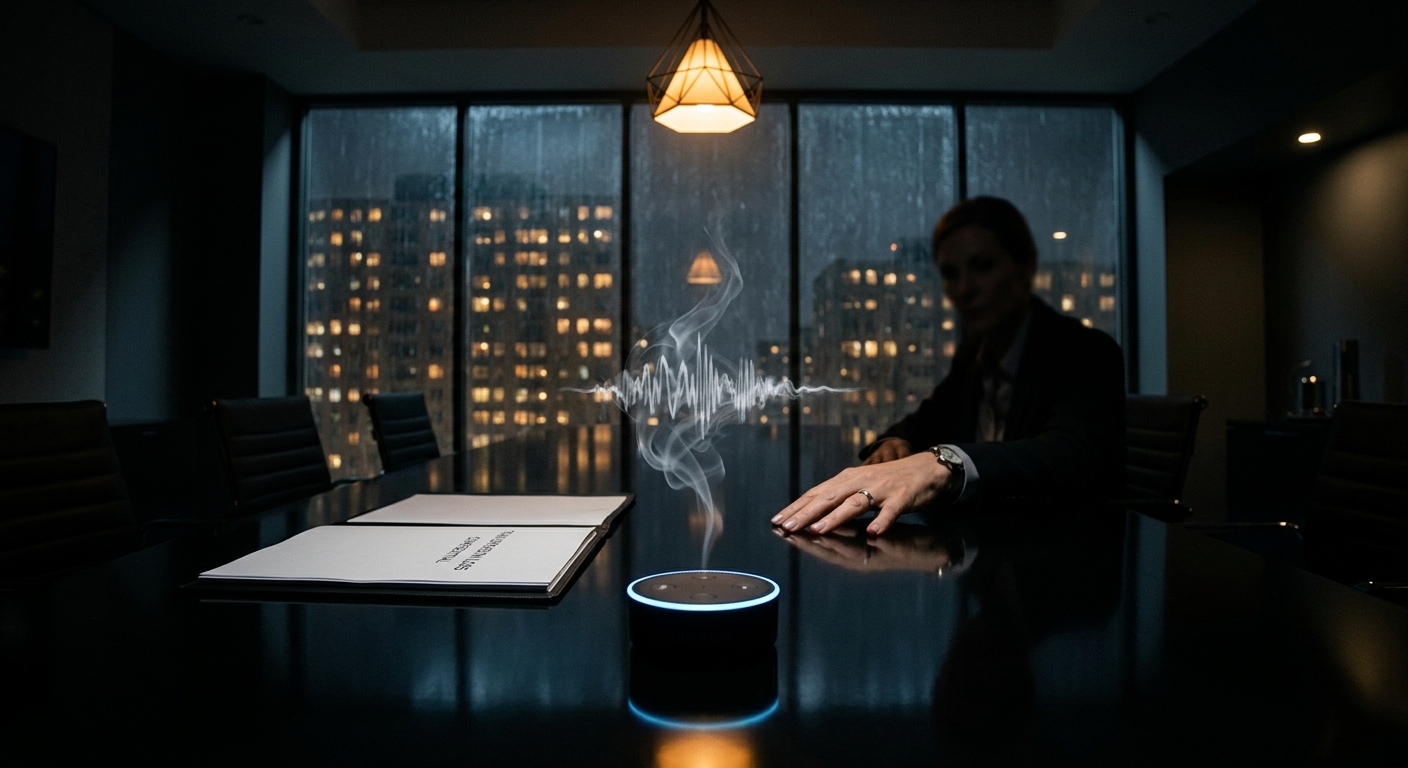
The pitch was terrifying: Cox Media Group was selling a service called “Active Listening” that claimed to use AI to capture snippets of conversations from consumers’ smart home devices — phones, smart speakers, connected TVs — and use those overheard conversations to generate targeted ads for businesses in specific geographic regions. Advertisers paid a premium for what they believed was a legally murky but technically real surveillance capability.
The FTC announced this week that the service was a lie. Cox Media Group wasn’t listening to anything. They were selling lists of email addresses purchased from data brokers — at a significant markup — and calling it AI-powered voice surveillance.
CMG will pay $880,000. Two smaller co-defendants, MindSift LLC and 1010 Digital Works LLC, will pay $25,000 each. Total: $930,000. All three are banned from collecting voice data and misrepresenting their marketing capabilities.
Two Scandals in One
This enforcement action contains two separate privacy scandals, and they run in opposite directions.
The first is the obvious one: the companies claimed to be conducting consumer surveillance through smart devices without consent. That’s deeply alarming if true. Millions of Americans have smart speakers, connected TVs, and phones with always-on voice activation in their homes. If a media company could access those audio streams, filter for relevant conversations, and use them to target ads — without users knowing or consenting — it would represent one of the most invasive forms of commercial surveillance in existence.
The second scandal is subtler: none of it was real, and advertisers paid for it anyway. The FTC’s complaint focuses on deception of advertisers, not surveillance of consumers. The companies fraudulently sold a product that didn’t exist, took money based on fabricated technical claims, and dressed up a data broker resale operation in AI language to justify premium pricing.
Both of these things should make you uncomfortable. The first because the capability was claimed to exist. The second because advertisers — companies with compliance teams and due diligence processes — paid money for a product predicated on illegally surveilling consumers, and apparently didn’t ask too many questions.
The “Active Listening” Market Is Real, Even If This Product Wasn’t
Here’s the part that doesn’t go away with the FTC settlement: the demand for something like Active Listening is real.
Advertisers have long sought more precise behavioral targeting. The dream has always been to reach consumers at the precise moment of intent — when someone is talking to their partner about needing new tires, or mentioning they’re thinking about switching banks. Traditional behavioral tracking through cookies and device identifiers can approximate this through browsing patterns. Voice would be different. It would be ambient, continuous, and deeply personal.
CMG’s service was fraudulent. But the pitch worked because advertisers wanted to believe the capability existed. And the reason they wanted to believe it is that some version of it is technically plausible — smart device microphones are always-on by design, voice data is processed in the cloud, and advertising-adjacent companies have every incentive to monetize it.
The FTC action confirms that this particular product was snake oil. It doesn’t confirm that no one is doing something like this. It doesn’t address the broader market of companies that make similar (if less explicit) claims about contextual audio targeting.
What the Settlement Requires
Beyond the fines, the consent orders include meaningful behavioral restrictions:
No voice data collection. All three companies are permanently barred from collecting audio or voice data from consumer devices for advertising purposes.
No misrepresentation of capabilities. They cannot make false or misleading claims about what their products do — including claims about the nature of their data sources, the technical methods used, or consumer consent.
No misrepresentation of geographic targeting. The “Active Listening” pitch included claims about hyper-local targeting based on conversations. That’s off the table.
Customer compensation. The settlement funds are designated to compensate advertisers who paid for the fraudulent service.
The Smart Home Privacy Problem Isn’t Solved
The FTC’s action is correctly targeted: it punishes deceptive advertising practices and fictional surveillance capabilities. But it doesn’t address the underlying privacy architecture that makes claims like CMG’s believable in the first place.
Smart devices with always-on microphones are in hundreds of millions of American homes. The terms of service for these devices are long, written in legal language, and rarely read. The data flows from these devices — what’s captured, what’s processed locally, what’s sent to the cloud, what’s retained, and who can access it — are not meaningfully disclosed to consumers in a way that allows informed decisions.
CMG lied about what they were doing with voice data. But the broader ecosystem of smart home surveillance — data collection that is real, consented to in the technical sense of a clicked EULA, and used for advertising purposes in ways consumers don’t expect — continues operating without a comparable enforcement action.
For Consumers: What This Means
If you have a smart speaker, phone, or connected TV in your home:
Your device’s microphone is technically capable of capturing ambient audio. Whether it does, beyond the “wake word” triggers, depends on the device, the software, and — increasingly — the terms of service you agreed to when you set it up.
No court has found that any major tech company has monetized this audio without disclosure. The CMG case involved a company claiming to do this, not actually doing it. But the legal and technical infrastructure for ambient audio monetization exists, and the regulatory framework governing it is thin.
The honest answer to “is someone listening through my smart speaker?” is: not in the way CMG claimed — but the question is more complicated than it should be.
The Broader Pattern: AI Washing Meets Privacy Theater
This case is part of a pattern the FTC has been pursuing aggressively: companies claiming AI capabilities they don’t have in order to command premium pricing or justify questionable data practices.
“Active Listening AI” is a particularly egregious version. But AI-washing — slapping the word “AI” on products that are fundamentally just statistical models, database queries, or in this case, data broker resales — is endemic in the adtech and martech space.
The FTC has been explicit that AI-washing violates Section 5 of the FTC Act the same way any other deceptive trade practice does. This settlement adds a specific, high-profile data point to that enforcement posture.
For consumers, the takeaway is simple: when a company says it uses AI to know things about you, ask what data it actually uses, where that data comes from, and what consent you gave for its collection. The CMG case demonstrates that the AI framing may be covering for something much more mundane — or much more invasive.