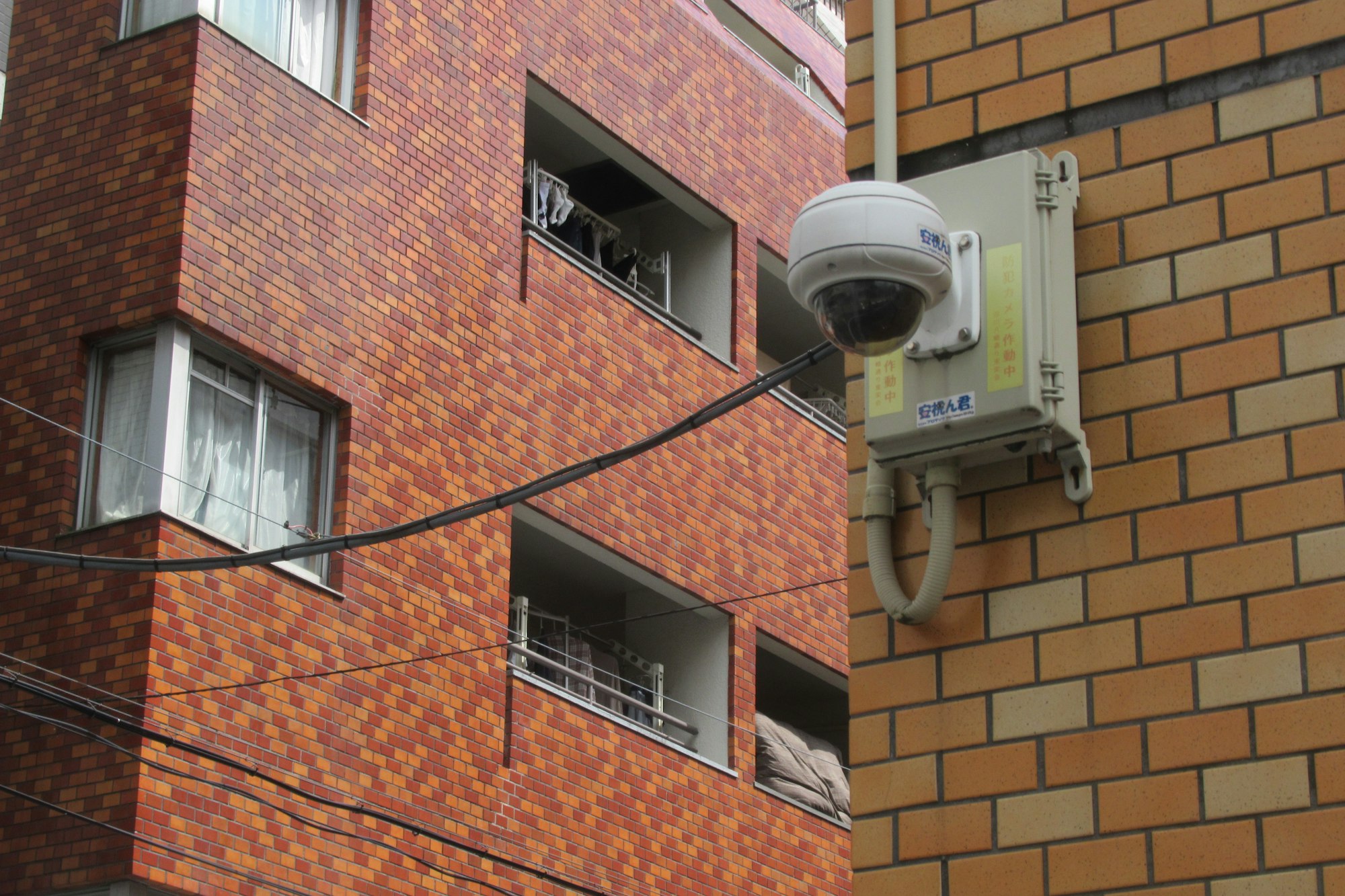
The Technological Police State
While Cambridge Analytica manipulated minds through psychological profiling, today’s police departments wield an arsenal of militarized technology that would make science fiction authors nervous. From robotic dogs that can climb stairs and survive gunfire to acoustic weapons that cause permanent hearing damage, American law enforcement has become a high-tech force equipped with tools originally designed for warfare.
The transformation is staggering: what began as community policing has evolved into a techno-military operation where officers deploy thermal imaging systems, facial recognition algorithms, cell phone interceptors, and increasingly autonomous robots. This isn’t just surveillance—it’s the deployment of military-grade weapons and tactics on American streets.
Robot Dogs: The Four-Legged Enforcers
Boston Dynamics Spot: From Labs to Law Enforcement
The most visible symbol of police militarization is Boston Dynamics’ Spot robot dog. These 70-pound, agile machines can climb stairs, navigate rough terrain, survive gunfire, and operate in hazardous environments where human officers might be at risk.
Current Deployments:
- Massachusetts State Police was “the first law enforcement agency in the country to use Boston Dynamics’ dog-like robot, called Spot” for bomb squad operations- Denver Police Department spent “$328,000” on their Spot robot, making it “the first of its kind in Colorado”- The Los Angeles Police Department acquired a Spot robot “valued at nearly $280,000” despite “community opposition”- New York City initially deployed Spot but canceled the “$94,000 contract” after public backlash
Technical Capabilities: Spot robots are equipped with:
- 360-degree, low-light cameras and robotic arms- Ability to “open doors, pick up objects, and drag up to 50 pounds”- Capability to “navigate stairs and doors” and is “not armed” according to current policies- An “open API” allowing customers to “customize Spot with its own software”
Mission Creep Concerns: While marketed for bomb disposal and dangerous situations, these robots are already expanding beyond their original scope:
- In Honolulu, police “spent about $150,000 in federal pandemic relief money” to use Spot “at a government-run tent city near the airport” to monitor homeless populations- Denver police plan to use their robot to “hopefully de-escalate situations with barricaded gunmen” and for “establishing dialogue with a negotiator”
ICE’s “Mobile Fortify” App: Expanding Biometric Surveillance
The Weaponization Question
While Boston Dynamics prohibits weaponization, this restriction is policy-based, not technological:
- Boston Dynamics “includes a clause in its lease agreements prohibiting organizations from weaponizing Spot”- However, competitors like Ghost Robotics allow customers to mount weapons, with their CEO stating “It’s just plug and play, anything you want”- The EFF warns that “mission creep is very real” and technologies given to police “for use only in the most extreme circumstances make their way onto streets during protests”
Smart Home Devices: Convenience at the Cost of Privacy?
Aerial Surveillance: Drones as First Responders
The Drone Revolution in Policing
Police drone programs have exploded across America, transforming from experimental tools to standard equipment:
- As of 2022, “over 1,000 police departments in the United States had adopted drone technology”- The FAA projects “the number of drones used by public safety agencies will be over 30,000 by 2025, representing a growth of 300% from the 10,000 in use by PSAs in 2020”
Drone-as-First-Responder (DFR) Programs
The latest trend is DFR programs where drones respond to 911 calls before officers arrive:
- Modern police drones can be “in the air in just 40 seconds” and “equip every patrol car with a drone”- Aurora, Illinois became “the first not only in Illinois but in the entire Midwest to have a drone as a first responder”- Data from Chula Vista Police Department shows “drones frequently respond to domestic violence, unspecified disturbances, and requests for psychological evaluations”
The Rise of the Machines: How Autonomous Drones Are Reshaping Warfare and Society
Advanced Capabilities
Modern police drones far exceed basic surveillance:
- AI-driven autonomous navigation allows officers to “confidently fly with just a few hours of training”- Tethered drones can provide “live video feed to command centers for hours or even days” during extended operations- During Los Angeles protests, DHS confirmed using “Predator drones” for “aerial support” to law enforcement
Federal Surveillance Integration
The most concerning development is the integration of military-grade surveillance:
- Customs and Border Patrol “confirmed it is providing ‘aerial support’ to law enforcement” during LA protests using drones “focused on situational awareness and officer safety support”- The use of “Predator B drone, known as the Reaper, to surveil protests in Minneapolis, Minnesota, by the US Customs and Border Protection Agency” demonstrates military technology deployment in domestic settings
Military Equipment Transfers: The 1033 Program
$7 Billion in Military Hardware
The Department of Defense’s 1033 Program has fundamentally militarized American policing by transferring surplus military equipment to local law enforcement:
Scale of Transfers:
- The program “has sent over $7 billion worth of excess military equipment to more than 8,000 local law enforcement agencies across the country”- Over “$1.7 billion of surplus has been transferred over to police around the country over the past decade”
Types of Equipment: The program transfers far more than office supplies:
- Equipment ranges “from handguns and bulletproof vests to assault rifles and high-caliber firearms”- About “600” Mine-Resistant Ambush Protected (MRAP) vehicles, originally costing “$800,000 per vehicle” for Iraq and Afghanistan operations- In Minnesota alone, “21 agencies have received Mine Resistant Ambush Protected (MRAP) vehicles — armored military cars designed to withstand explosions and attacks — totaling more than $14 million” since 2015
From ‘Don’t Be Evil’ to Drone Deals: Silicon Valley’s Reckless AI Arms Race
MRAP Vehicles: Battlefield to Main Street
These massive armored vehicles represent the most visible militarization:
- Over “1,000 of these vehicles were transferred from the military to law enforcement agencies” in the past decade- This includes places like “Monett, Missouri (population 9,000), which is on record as receiving two MRAP vehicles”
Weapons and Tactical Equipment
The program has distributed massive quantities of military weapons:
- From “2011 to 2014 alone, the military distributed more than 29,000 military-grade rifles to 18,000 law enforcement agencies”- Equipment includes “bayonets and grenade launchers” though the DoD claims bayonets are “repurposed as utility knives” and grenade launchers use “tear gas and smoke grenades instead of explosive rounds”
Thermal Imaging and Night Vision: Military Surveillance Technology
Advanced Thermal Systems
Police departments now deploy sophisticated thermal imaging systems originally designed for military operations:
Capabilities:
- Modern thermal imagers can “detect a human at 600 yards or more” and operate in “low-light situations as well as environmental conditions, such as fog or smoke”- The FLIR Scout Pro III has “a detection range of up to 1500 meters” for “border surveillance, marine patrols, and wide-area monitoring”- Advanced systems can perform “geotagged video recording and live video transmission” to “instantly stream encrypted thermal footage”
Military-Grade Equipment:
- Law enforcement thermal systems include “hand held thermal imagers perfect for LEOs on stakeout” and “thermal scopes for more tactical-oriented situations for FBI and SWAT maneuvers”- Thermal imaging is used for “surveillance” where officers can “observe potential criminal activity at a distance” and “build further reasonable suspicion or probable cause”
SWAT Militarization
SWAT teams represent the most militarized aspect of American policing:
- SWAT units are “equipped with specialized weapons and equipment not normally issued to regular police units, such as automatic firearms, high-caliber sniper rifles, stun grenades, body armor, ballistic shields, night-vision devices, and armored vehicles”- Equipment includes “military firearms such as assault rifles, submachine guns, riot shotguns, sniper rifles, riot control agents, smoke grenades, stun grenades, and stinger grenades”
LRAD Acoustic Weapons: Sound as a Weapon
Military Origins, Police Deployment
Long Range Acoustic Devices (LRADs) represent direct military-to-police technology transfer:
- LRADs can emit sounds “at apparent maximum levels of 137-140dB and 149-154dB respectively” and are “capable of causing severe pain, disorientation, nausea, migraines, and permanent damage”- The NYPD used “LRAD 100X’s” against “2014 Black Lives Matter protests” where officers “utilized the LRAD’s area denial function ‘deterrent tone’ fifteen to twenty times in the course of about three minutes”
Physical Impact
These weapons cause real physical harm:
- At maximum levels, LRADs are “loud enough to cause permanent hearing damage” and can cause “severe pain, disorientation, nausea, migraines”- Many police departments using LRADs “lacked specific training and written policies for use of the device” as of 2018
Stingray Cell Phone Surveillance
Mass Surveillance Capabilities
Stingray devices represent one of the most invasive surveillance technologies:
- Stingrays “mimic cell phone towers and send out signals to trick cell phones in the area into transmitting their locations and identifying information”- The ACLU has “identified 75 agencies in 27 states” using Stingray technology- Baltimore Police used Stingrays “4,300 times between 2007 and 2015”
Constitutional Concerns
These devices raise serious Fourth Amendment issues:
- When used to track a suspect, “they also gather information about the phones of countless bystanders who happen to be nearby”- The devices can “disrupt service” and potentially “prevent emergency calls to 9-1-1”
Biometric Data: The Future of Personal Identification or a Privacy Nightmare?
Facial Recognition and Biometric Tracking
Real-Time Identification
Modern police surveillance can identify individuals instantly:
- ICE’s Mobile Fortify app allows agents to identify people by “simply pointing a smartphone camera at them, accessing databases containing biometric records on over 270 million individuals”- ICE pays “at least $3,614,000 worth of contracts” with Clearview AI for facial recognition capabilities
Armed and Autonomous: The Future of Police Robots
Weaponized Systems on the Horizon
The most disturbing trend is toward armed police robots:
Current Developments:
- The Dallas Police Department’s use of “a robot with lethal force” in 2016 “demonstrated that, tactically, the use of a robot with lethal force is viable”- Proposed legislation in New York would “make it illegal to mount weapons to robots or drones” except for “law enforcement or the military”- Companies like Axon “proposed equipping drones with Tasers and cameras” before reversing course after “wide-spread backlash including resignations from its ethics board”
Manufacturer Responses:
- Boston Dynamics “published an open letter stating it will not weaponize its robots” while “other manufacturers, such as Ghost Robotics, allow customers to mount guns on their machines”- Some companies are actively marketing armed systems, with one firm “using Dallas as a case study in its pitches to customers”
Legal and Policy Vacuum
The regulation of armed police robots remains largely unaddressed:
- Legal scholars warn that “robots will likely become more advanced, diverse, and integrated into our society, and steadily cheaper”- The ACLU notes that “armed robots will be over-used” as they “allow deadly force to be applied more easily and with less risk to police officers”
The Technology Integration: A Comprehensive Surveillance State
Networked Systems
These technologies don’t operate in isolation—they’re being integrated into comprehensive surveillance networks:
- Law enforcement agencies “are spending hundreds of millions of dollars a year on surveillance technology” with “funding is in the billions and comes from various hard-to-trace sources”- Federal programs like the “Homeland Security Grant Program” have “doled out at least $28 billion to state and local agencies since 2002” for surveillance technology
Mission Creep and Escalation
The pattern is consistent across all these technologies:
- Technologies “given to police to use only in the most extreme circumstances make their way onto streets during protests or to respond to petty crime”- Police surveillance tools allow for “mass surveillance on a budget” with capabilities to “search hundreds of billions of records from 250 million mobile devices”
Constitutional and Civil Rights Implications
Fourth Amendment Erosion
This technological arsenal fundamentally challenges constitutional protections:
- Many surveillance technologies operate “without warrants” and gather information about “countless bystanders”- Aerial surveillance often occurs “without court approval” using technologies that can “peer through windows” and “use thermal imagery”
Disproportionate Impact
These technologies disproportionately affect marginalized communities:
- ACLU analysis shows “the real harms of the relatively unregulated transfer of military equipment to police forces continue to fall disproportionately on people of color”- The “net result is that already over-policed communities, such as Black and Brown ones, face the prospect of being further surveilled by robotic systems”
The Financial Scale: Billions in Surveillance Spending
The investment in militarized technology is staggering:
- State and local governments spent “$135 billion on police” in 2021- Overall police spending approaches “$100 billion” annually with much going to technology purchases- Just the 1033 Program alone transferred “$1.7 billion” in military equipment over the past decade
Corporate Profit from Militarization
The Military-Industrial-Police Complex
Major corporations profit from police militarization:
- Companies like “Axon—known for its Tasers and body-worn cameras—recently acquired drone company Dedrone, specifically citing that company’s efforts to push DFR programs”- Technology vendors provide “‘free trials’ of their systems to police agencies, sometimes for years, which avoids the need for a purchasing agreement or budget approval”
Resistance and Reform Efforts
Legislative Responses
Some jurisdictions are beginning to push back:
- New York lawmakers proposed the “Responsible Robotics Act” to “make New York the first state to ban weaponized robots for civilians”- San Francisco initially “proposed letting police robots use lethal force” then “reversed course after community pushback”
Civil Rights Advocacy
Organizations are demanding transparency and accountability:
- The ACLU supports “a ban on the use of weaponized aerial drones by domestic law enforcement agencies”- The EFF calls for banning police from “arming robots, whether in the air or on the ground, whether automated or remotely-controlled”
The Slippery Slope: From Tools to Weapons
Historical Pattern
The militarization of police technology follows a predictable pattern:
- Technologies like “TASERs and body-worn cameras” initially faced resistance but became standard through “mission creep”- Legal experts warn that “once the first crimes are committed by robots armed with lethal force, police in the United States will almost certainly balk at any prohibitions on lethally armed police robots”
The Autonomy Question
Perhaps most concerning is the move toward autonomous systems:
- “Autonomous drone technology” will soon “utilize machine learning, AI and a technology called MAVLink to operate without human direction”- Scholars warn about “robots able to use coercive force” and whether “a robot capable of assessing a dangerous situation and enabled to use a Taser or other weapon should be able to decide to do so without human input”
The Privacy Dilemma: Data Brokers, Cambridge Analytica, and Photo Metadata Exploitation
Beyond Cambridge Analytica: Physical Control vs. Mental Manipulation
While Cambridge Analytica sought to influence behavior through psychological manipulation, today’s militarized police force can enforce compliance through:
Physical Intimidation:
- Robotic dogs that create “fear” and are described as “creepy” and “alienating” by officials- Acoustic weapons that cause “permanent hearing damage”
Comprehensive Surveillance:
- Thermal imaging that can detect humans “at 600 yards or more” and see through “fog or smoke”- Cell phone interceptors that gather data on “countless bystanders”
Lethal Force Capabilities:
- Armed robots that can deliver “lethal force” remotely- SWAT teams with “automatic firearms, high-caliber sniper rifles” and “military firearms”
The Dystopian Present
Science Fiction Becomes Reality
The technologies deployed by American police departments now exceed what most science fiction authors imagined:
- Robot dogs that can climb stairs and survive gunfire- Drones with thermal imaging and facial recognition- Acoustic weapons that cause permanent injury- Cell phone interceptors that track every device in range- Military vehicles designed for war zones patrolling suburban streets
Democratic Erosion
This technological arsenal represents a fundamental shift in the relationship between police and civilians:
- Legal experts warn against living “in societies with swarms of drones patrolling our streets”- Civil rights advocates note that “whether controlled by an artificial intelligence or a remote human operator, armed police robots and drones pose an unacceptable threat to civilians”
🎧 Related Podcast Episode
Conclusion: The Militarized Future
The transformation of American policing through militarized technology represents a quantum leap beyond Cambridge Analytica’s psychological manipulation. While CA sought to influence minds, today’s police departments can control bodies through:
- Physical dominance via robotic systems and military vehicles- Sensory assault through acoustic weapons and chemical agents- Comprehensive surveillance via thermal imaging, facial recognition, and cell phone tracking- Autonomous enforcement through AI-powered drones and robots
The progression from community policing to techno-military enforcement has occurred with minimal public input or democratic oversight. Unlike Cambridge Analytica’s hidden influence, this militarization happens in plain sight—robot dogs walking city streets, drones overhead, and acoustic weapons deployed against protesters.
The Choice Ahead: We can accept the normalization of militarized policing technology as the price of “public safety,” or we can demand that law enforcement serve communities rather than control them. But unlike the Cambridge Analytica scandal, which could be addressed through regulation and corporate accountability, dismantling the militarized police state will require confronting billions in federal funding, corporate profits, and the entire philosophy of modern policing.
The technological capabilities now exist for total social control. The only question is whether democratic institutions can rein in these systems before they become entrenched as the new normal. Cambridge Analytica manipulated elections; militarized police technology can prevent them entirely.
The surveillance state isn’t coming—it’s here, armed, and autonomous.