7 Million Surveillance Nodes on People’s Faces: How Meta’s Smart Glasses Became the Biggest Bystander Privacy Disaster in History
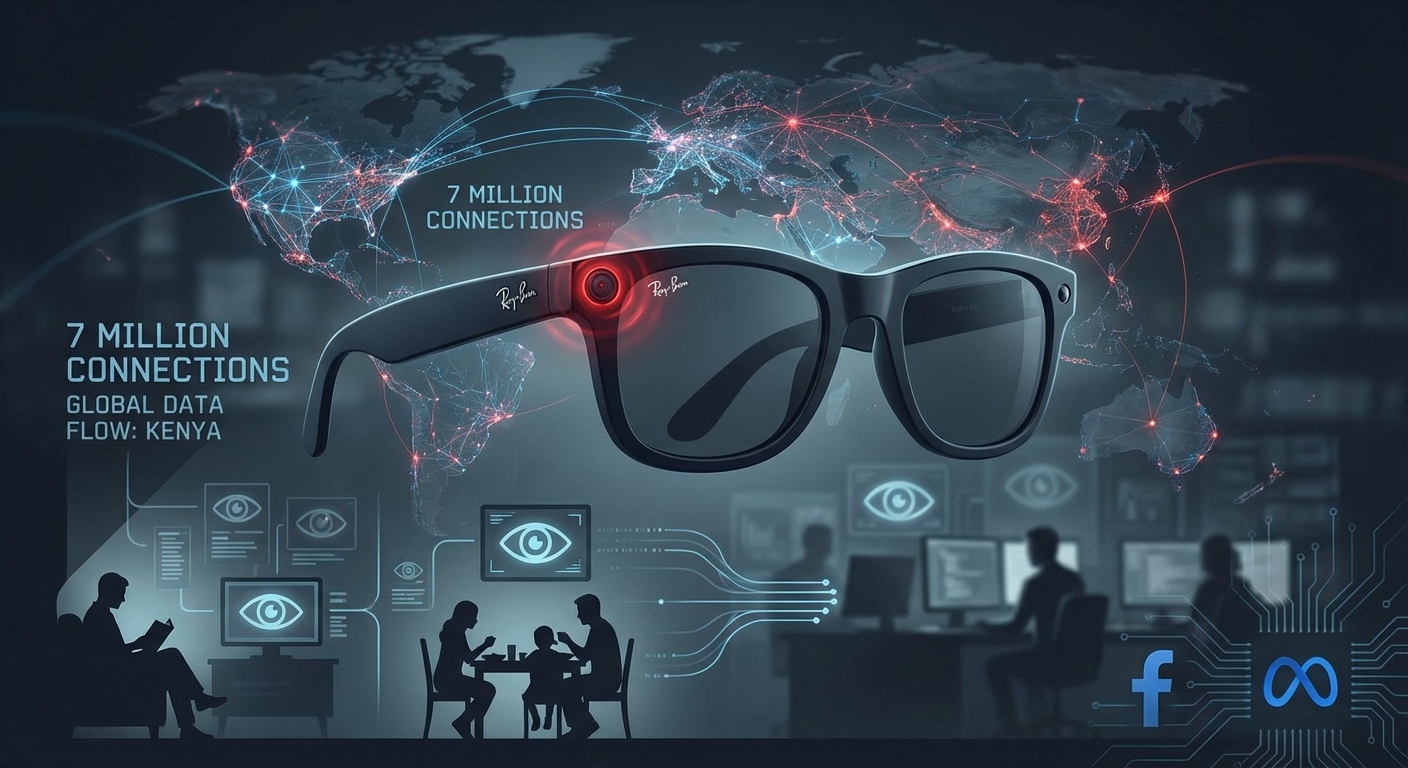
Meta sold 7 million Ray-Ban smart glasses in 2025 alone. Workers in Kenya are watching the footage. Not metadata. Not anonymized clips. The actual videos — of people undressing, people in bathrooms, people having sex, bank cards on tables, medical documents in frame. The wearers consented. Everyone else in the room did not.
The Investigation That Blew This Open
A joint investigation by Swedish newspapers Svenska Dagbladet and Göteborgs-Posten — reported across international outlets this week — has exposed the human machinery behind Meta’s AI training pipeline for its Ray-Ban smart glasses. The findings are as disturbing as they are predictable.
Contract workers employed by Sama, a data annotation firm based in Nairobi, Kenya, told investigators they are routinely required to review extremely intimate, unanonymized footage captured by the glasses. The content includes:
- Sex acts and nudity — users and bystanders recorded in bedrooms and private spaces
- Bathroom visits — people filmed without awareness in their most vulnerable moments
- Financial information — bank cards, account numbers, and documents visible in frame
- Medical records — sensitive health information captured incidentally
- People undressing — footage of individuals who had no idea a camera was pointed at them
The blurring that is supposed to protect privacy fails constantly. The contractors see everything.
As one Sama worker told investigators: “You are not supposed to question it. If you start asking questions, you are gone.”
How Your Most Private Moments End Up in Nairobi
The data pipeline works like this: when a user invokes the AI assistant by saying “Hey Meta,” the glasses capture audio and video that gets routed through Meta’s servers to Sama’s annotation facility in Nairobi. Human contractors then review and label the footage to train Meta’s AI systems — teaching the algorithm to recognize objects, environments, faces, and contexts.
The critical detail that most users don’t understand: the AI assistant and associated cameras can remain active even when the glasses are removed from the face. Footage is not processed locally. It travels across Meta’s infrastructure to different locations around the world.
Even more damning, the Swedish investigation found that salespeople consistently misinformed customers about data privacy, often telling them that everything stays locally in the app and nothing is shared with Meta. This is fundamentally incorrect — users cannot utilize the AI assistant features without agreeing to mandatory data harvesting that routes their captures through Meta’s servers to human reviewers.
The Consent Gap That Breaks Everything
Here is the part that should stop you cold.
You did not buy the glasses. You did not agree to Meta’s terms of service. You did not consent to anything. But if someone wearing Meta Ray-Bans walks into your bedroom, your bathroom, your doctor’s office, or your home — a contractor on the other side of the world may be watching you right now.
The person wearing the glasses consented. Everyone else in the room did not.
Meta’s defense is that this is all disclosed in their privacy policy. They are technically correct — buried in language so dense that 99% of users never read it. And even if they did, it would not matter, because the terms govern the wearer’s data. Not yours. You are not a party to the contract.
You are the product being annotated.
This creates a legal and ethical chasm that no terms of service can bridge. Every person recorded by someone else’s Meta glasses is a non-consenting data subject whose intimate moments may be reviewed by strangers earning a few dollars an hour to label footage so the algorithm gets smarter.
The LED Light Fiction
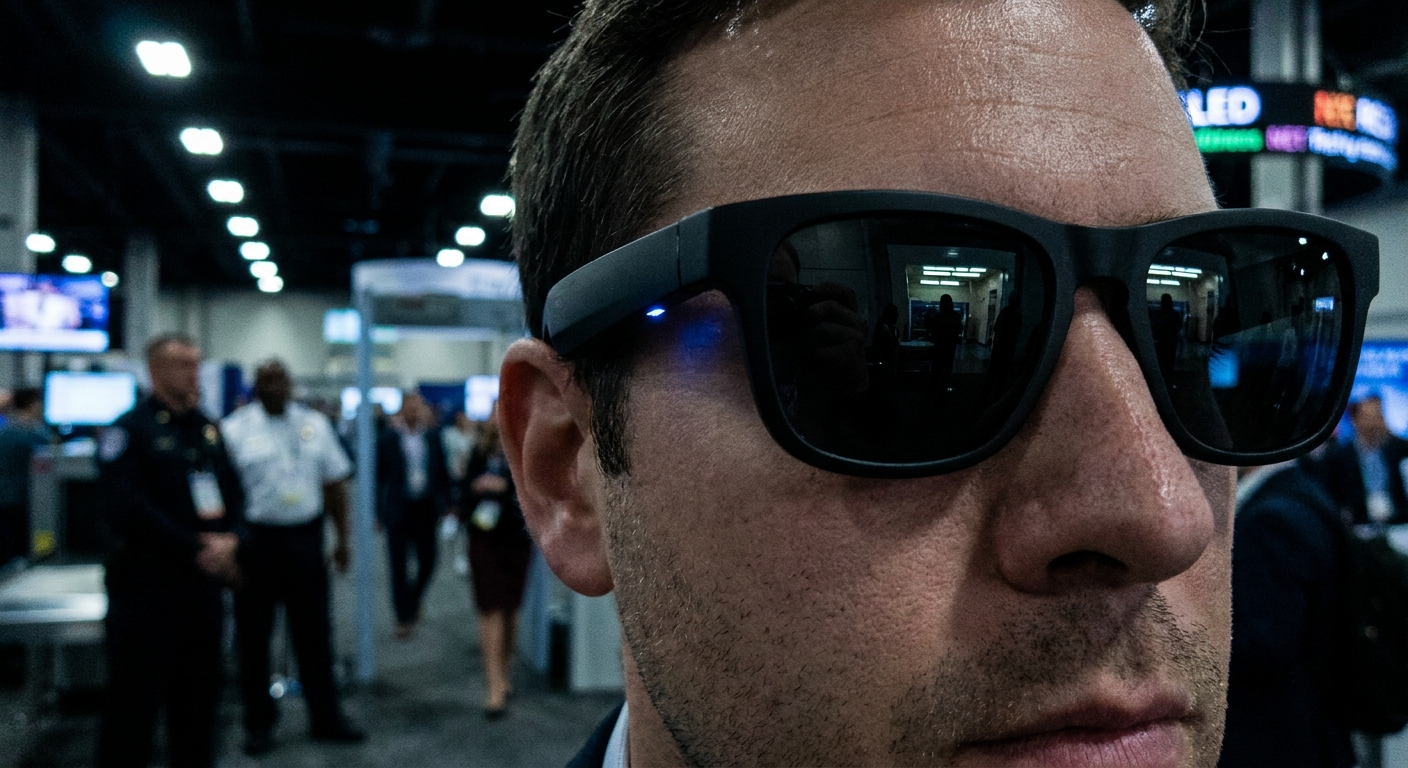
Meta’s primary concession to bystander privacy is a small white LED indicator light on the front of the glasses that illuminates when the camera is active. In theory, this light alerts nearby people that they are being recorded.
In practice, the light is nearly invisible in daylight, easily obscured by a hand or piece of tape, and meaningless to anyone who doesn’t already know what it signifies. Most people encountering someone wearing Ray-Ban Meta glasses would have no idea they are looking at a recording device.
404 Media has documented a cheap modification kit that can physically disable the recording light entirely, further destroying any pretense that the LED notification system constitutes meaningful consent.
This is not a theoretical concern. In January 2026, BBC News reported on cases where pickup artists used Ray-Ban Meta glasses to film women without their knowledge, obtain personal information using the footage, and then upload those videos to platforms like TikTok.
Google Glass Died for This. Meta Found a Workaround.
Google Glass died in 2013 because people called the wearers “Glassholes” and banned them from bars, restaurants, and movie theaters. The social backlash was immediate and fatal. The glasses looked like surveillance equipment, and people treated wearers accordingly.
Meta solved the social problem by making the glasses look normal. Ray-Bans. Fashionable. Indistinguishable from regular eyewear at conversational distance.
They did not solve the privacy problem. They hid it.
The entire product design philosophy is built on making the recording capability invisible to bystanders. The camera is embedded in the frame. The glasses look like every other pair of Ray-Bans. The recording light is barely perceptible. The result is a surveillance device that succeeds precisely because people don’t realize it’s there.
The Numbers Are Accelerating
The sales trajectory tells you where this is heading:
- 2023–2024 combined: ~2 million units sold
- 2025 alone: 7 million units sold — more than tripling the prior year
- 2026 production target: Meta and EssilorLuxottica are discussing doubling production capacity to 20 million units to meet surging demand
- Market-wide projection: Smart Analytics Global forecasts global AI smart glasses sales will reach 20 million units in 2026, with market value expanding from $1.2 billion to $5.6 billion
Every unit is a potential surveillance node — operated by someone who may not understand what they are feeding into the system, recording bystanders who never consented, and reviewed by contractors who see everything the algorithm cannot yet process on its own.
The installed base is accelerating. Apple and Samsung are both preparing competing AI smart glasses products. The question is not whether millions more camera-equipped glasses appear on faces worldwide — it’s whether any regulatory framework will exist before they do.
The EU Is Moving — But Is It Fast Enough?
The European Union is already asking questions. Seventeen Members of the European Parliament from four political groups have formally questioned the European Commission demanding answers on whether Meta’s smart glasses comply with the General Data Protection Regulation (GDPR).
The problem is legally straightforward:
- GDPR requires consent from data subjects. Bystanders captured in footage are data subjects.
- Bystanders never consented. They were never presented with terms, never agreed to recording, and in most cases never knew it was happening.
- Cross-border data transfers require safeguards. Kenya has not been granted “adequacy” status by the European Commission. Exporting EU user data — and bystander data — to Kenyan contractors without additional contractual safeguards violates GDPR’s data transfer provisions.
- The entire architecture violates the regulation by design. There is no mechanism within the product to obtain bystander consent before recording begins.
Meta’s response has been silence and a reference to terms of service that do not apply to the people actually being filmed.
If Brussels moves on GDPR enforcement, Meta faces a binary choice: disable human review in Europe and cripple the AI training pipeline, or accept fines that could reach into the billions under GDPR’s 4%-of-global-revenue penalty structure. Meta’s global revenue exceeded $160 billion in 2025 — meaning a maximum fine could theoretically reach $6.4 billion.
The Exploitation Pipeline Goes Both Ways
The privacy violation runs in two directions. The bystanders being recorded without consent are one category of victim. The contractors being forced to watch the footage are another.
Sama’s workers in Nairobi — thousands of data annotators — are tasked with labeling everyday objects in the footage. But they are also forced to process the human side of the data collection: the nudity, the sex acts, the intimate medical and financial information. They describe feeling pressured to process disturbing content without questioning the ethical implications, under threat of termination.
This mirrors the well-documented exploitation of content moderators across Meta’s platforms, where workers in the Global South absorb the psychological cost of maintaining Silicon Valley’s products while earning a fraction of what their employers charge for the resulting AI capabilities.
The glasses cost the wearer $299. The AI training they enable is worth billions. The human cost is distributed across two groups who never meaningfully consented: the people being filmed, and the people being traumatized by watching the footage.
What You Can Do Right Now
The uncomfortable truth is that individual action against ambient surveillance glasses is extremely limited. But there are steps worth taking:
If someone wearing smart glasses enters your private space — you have the right to ask them to remove or deactivate the glasses. In your home, your office, your medical appointments, you control the environment.
Know the signs — Ray-Ban Meta glasses have a small white LED near the right hinge that glows when recording. It is subtle, but if you know to look for it, you can spot active recording.
Support regulatory action — The EU’s GDPR inquiry is the most promising enforcement vector. Contact your representatives if you’re in Europe, or support organizations like the Electronic Frontier Foundation, EPIC, and Access Now that are pushing for wearable surveillance regulation globally.
Be aware in sensitive environments — Medical offices, therapy sessions, legal consultations, bedrooms, bathrooms, locker rooms — any space where you have an expectation of privacy is now potentially compromised by anyone wearing AI-enabled glasses.
Check detection tools — At least one app has emerged that can detect nearby camera-equipped smart glasses via Bluetooth signatures, alerting you when one is in range.
This Is Not a Bug. This Is the Business Model.
Seven million units sold in 2025. Production doubling in 2026. Every unit a camera. Every camera feeding footage to servers. Every server routing to human reviewers who see everything the algorithm cannot yet process.
The glasses are selling faster than ever. The contractors keep watching. And somewhere right now, someone you have never met is looking at footage of you that you never knew existed.
The question is not whether this becomes a scandal — it already is one. The question is whether the scandal arrives with regulatory teeth before the glasses are on 50 million faces and the damage becomes permanent and irreversible.
Sources
- Sweden Herald: Meta Smart Glasses Share Private Content
- Futurism: Meta Workers Say They’re Seeing Disturbing Things Through Users’ Smart Glasses
- TechCabal: Kenyan Workers Say Meta Ray-Ban AI Glasses Expose Intimate Moments
- 9to5Mac: Meta Ray-Bans Send Sensitive Videos to Human Data Annotators
- CNBC: Ray-Ban Maker EssilorLuxottica Triples Meta AI Glasses Sales in 2025
- Digital Watch Observatory: EU Pressures Meta Over Smart Glasses Privacy Breaches
- WebProNews: Meta’s AI Smart Glasses Privacy Crisis
- Apple Insider: Smart Glasses Detection App
- Hoodline: Meta Smart Glasses Streaming Private Moments to Kenya
- Bloomberg: Meta Discusses Doubling Ray-Ban Glasses Output