There is a particular kind of privacy argument that surveillance vendors hate, because it does not depend on hypotheticals, slippery slopes, or paranoia about some future authoritarian turn. It is simply this: if you build a database of where everyone goes, someone with access to it will eventually use it to follow a specific person they have a personal interest in. Not a terrorist. Not a fugitive. An ex-girlfriend. A woman they met once. A romantic partner who stopped answering their texts. The infrastructure does not care about the difference, and neither, it turns out, do a meaningful number of the people holding the keys.
In April 2026, the Institute for Justice published a study finding that at least 18 police officers around the country had been caught using Flock Safety’s automated license-plate-reader (ALPR) network to stalk a romantic interest in recent years. A separate, independently maintained database — the ALPR Abuse Library — has catalogued roughly 20 documented cases of “stalking/targeting.” These are not the cases that happened. These are the cases that happened and got discovered and got documented — which, given how rarely these systems are audited, is almost certainly a floor, not a ceiling.
What the cases actually look like
The specifics are worth sitting with, because the abstraction “officer misused the database” softens what is really going on.
According to court records obtained by 404 Media, an Orange City, Florida officer named Jarmarus Brown ran his ex-girlfriend’s license plate through Flock at least 69 times during the summer of 2024. He also searched her mother’s plate at least 24 times and her father’s plate at least 15 times. He did this so openly that a colleague, Officer Shadrich King, noticed him looking up the woman’s vehicle while they sat together in their police cruisers. King warned him he could face consequences. Brown acknowledged the warning and, per the records, kept going.
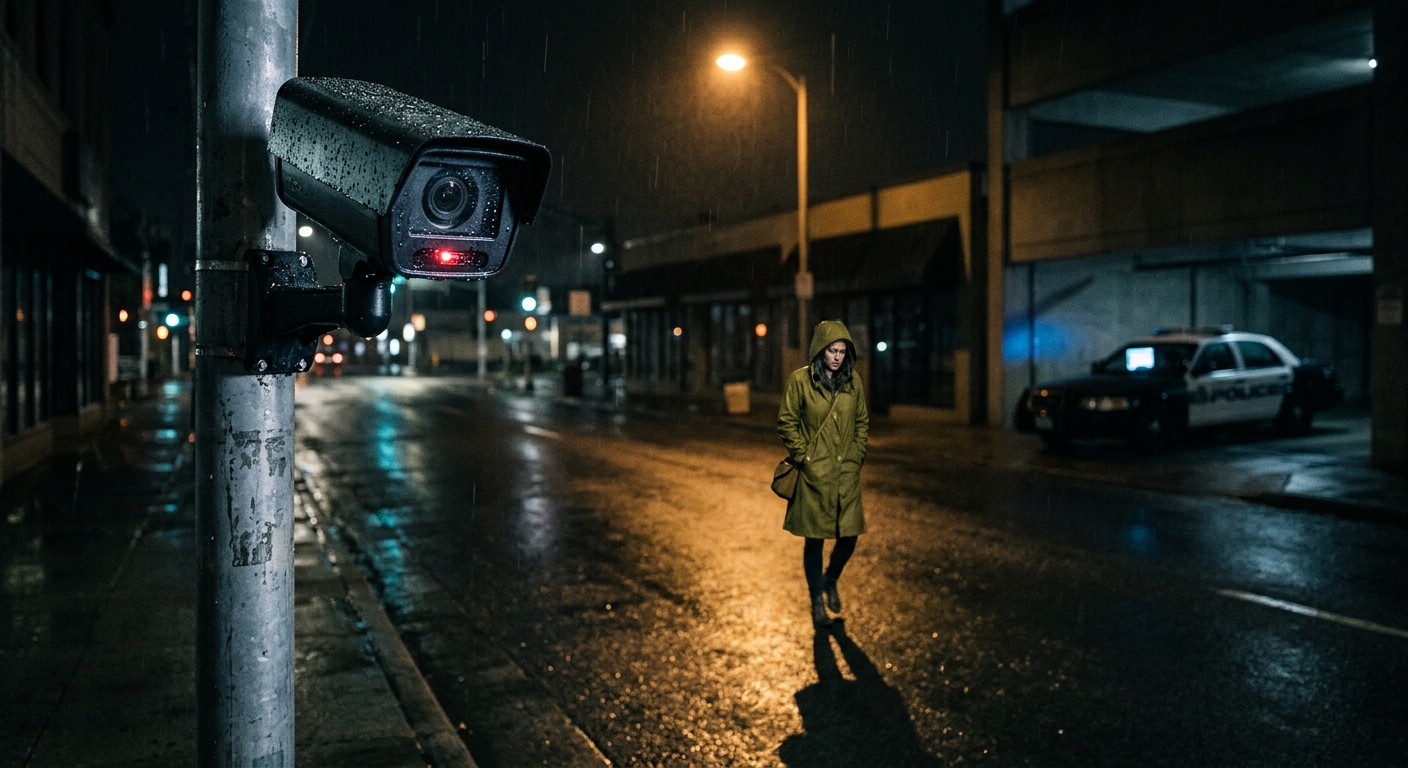
Other documented cases follow the same grammar. Reporting describes a Kansas police chief who tracked his ex-girlfriend’s car 164 times over four months. In February 2026, prosecutors charged Milwaukee Police Officer Josue Ayala with attempted misconduct in public office, alleging he searched Flock readers 179 times over two months to track a woman he was dating and her former partner. The numbers — 69, 164, 179 — are the tell. This is not a momentary lapse of judgment, an officer typing a name once out of curiosity. It is sustained, obsessive surveillance, conducted with a tool that makes following someone as frictionless as a Google search and leaves the stalker sitting comfortably in an air-conditioned patrol car.
The system logs everything — which is the only reason we know
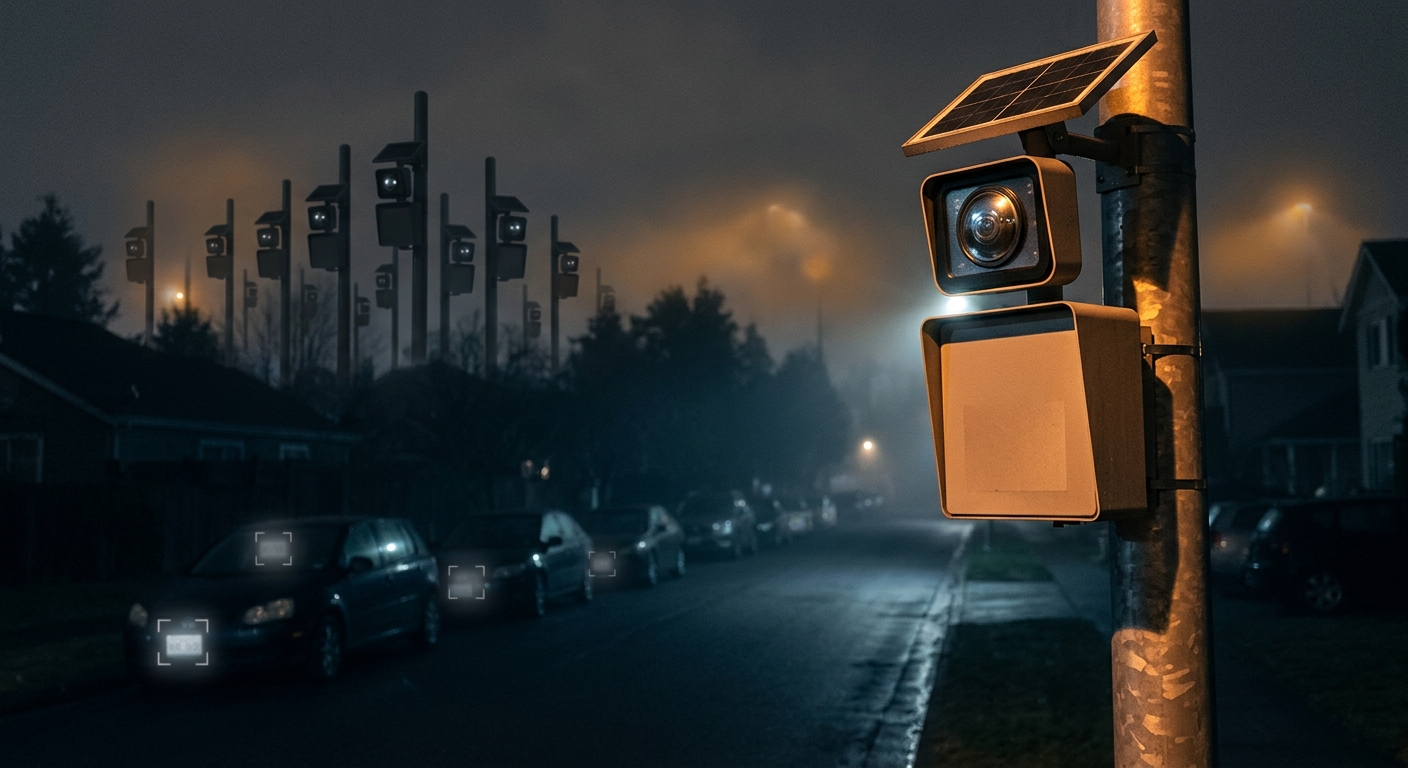
Here is the dark irony at the center of this. ALPR networks like Flock’s work by photographing every plate that passes a camera, time-stamping it, and uploading it to a database that is, in many jurisdictions, searchable by police nationwide. Drive past enough cameras and the system reconstructs your movements. Show up at a protest, a clinic, a lawyer’s office, a lover’s apartment, and you leave a trail.
Those same systems log the searches officers run against them. Every query has a name attached, an account, a stated reason. In principle, this is an accountability feature. In practice, the logging is mostly how we find out about abuse after the fact — and only when someone bothers to look. Several of the victims in these cases learned they were being tracked not because their department flagged anything, but because they searched their own plate on sites like HaveIBeenFlocked.com, which aggregate Flock audit data that some local governments have published. The surveillance dragnet caught the surveiller, but only by accident, and only because a member of the public went looking.
That should not be reassuring. A control that depends on the victim discovering her own stalking, on a third-party website, in jurisdictions that happen to have released the logs, is not oversight. It is a smoke detector that only works in the houses where someone already smelled smoke.
”A few bad apples” is the wrong frame
The reflexive defense will be that 18 officers, or 20, is a small number against the hundreds of thousands of sworn officers in the United States. But that framing misunderstands the problem. The question is not what fraction of officers are stalkers. The question is what a surveillance system does when the small fraction who are inclined to abuse it are handed a tool of this reach with this little friction and this little supervision.
Mass surveillance infrastructure is, by design, a force multiplier. It takes whatever intent the user brings and amplifies it. For a legitimate investigation, that is the selling point. For a controlling ex with a badge, it is also the selling point — it just multiplies a different kind of intent. The technology is indifferent. It will help you find a stolen car or a woman who is trying to get away from you with equal efficiency, and the database has no way of knowing which one you are doing.
This is the “secondary use” or insider-abuse problem, and it is as old as databases themselves. We have watched it play out with credit-bureau records, with state DMV files, with the NSA’s own analysts (the agency had a term, “LOVEINT,” for spying on romantic partners). The pattern is consistent enough to be a law: any sufficiently large repository of personal data will be queried for personal reasons by someone authorized to query it. Build it and it will be abused — not because cops are uniquely corrupt, but because humans are human and the access is just sitting there.
What makes Flock distinctive is scale and normalization. EFF, after analyzing roughly 12 million Flock searches, found hundreds tied to political demonstrations, plus searches used to target Romani people and to surveil women seeking reproductive care. By August 2025, members of Congress had opened a formal investigation into the company’s role in enabling surveillance of women, immigrants, and other vulnerable groups. The stalking cases are not a separate scandal from the protest-tracking and clinic-surveillance cases. They are the same scandal, viewed from the angle of personal rather than institutional power.
The privacy lesson here is not “audit better,” though departments certainly should. It is more fundamental. Every time a town installs another Flock camera, it is making a bet: that the convenience of a searchable record of everyone’s movements outweighs the certainty — not the risk, the certainty — that some of the people with access will point it at someone they have no business following. Eighteen officers, that we know of, have already collected on the other side of that bet. The cameras are still up.
Sources: 404 Media, Institute for Justice, Tom’s Hardware, EFF.