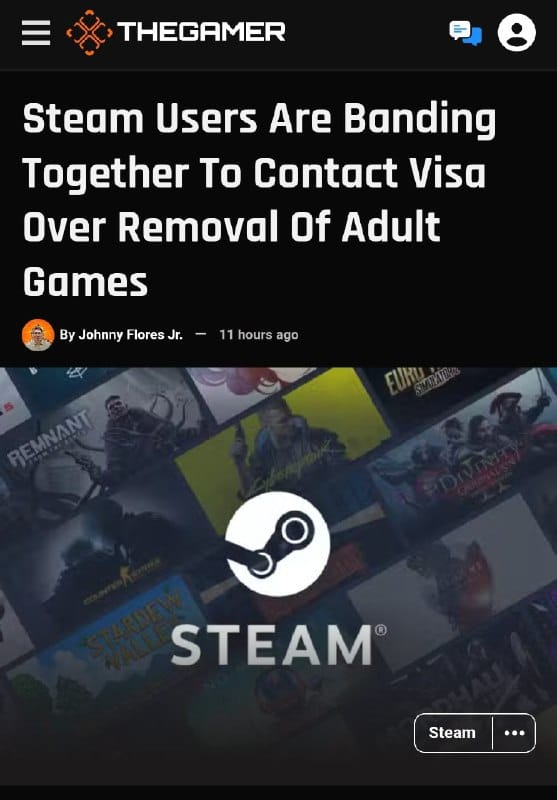
How Visa and Mastercard became the internet’s new moral police, and why gamers are pushing back
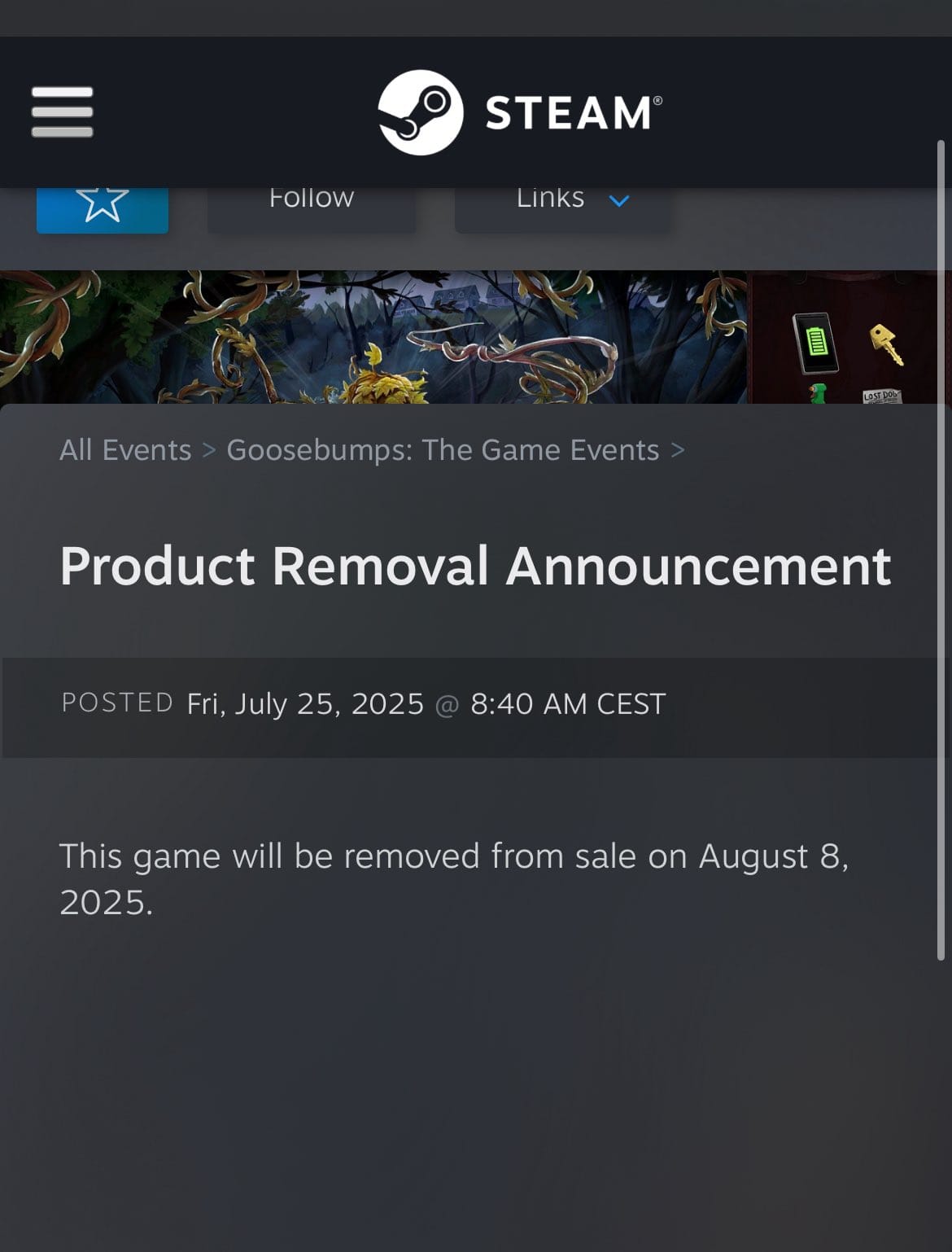
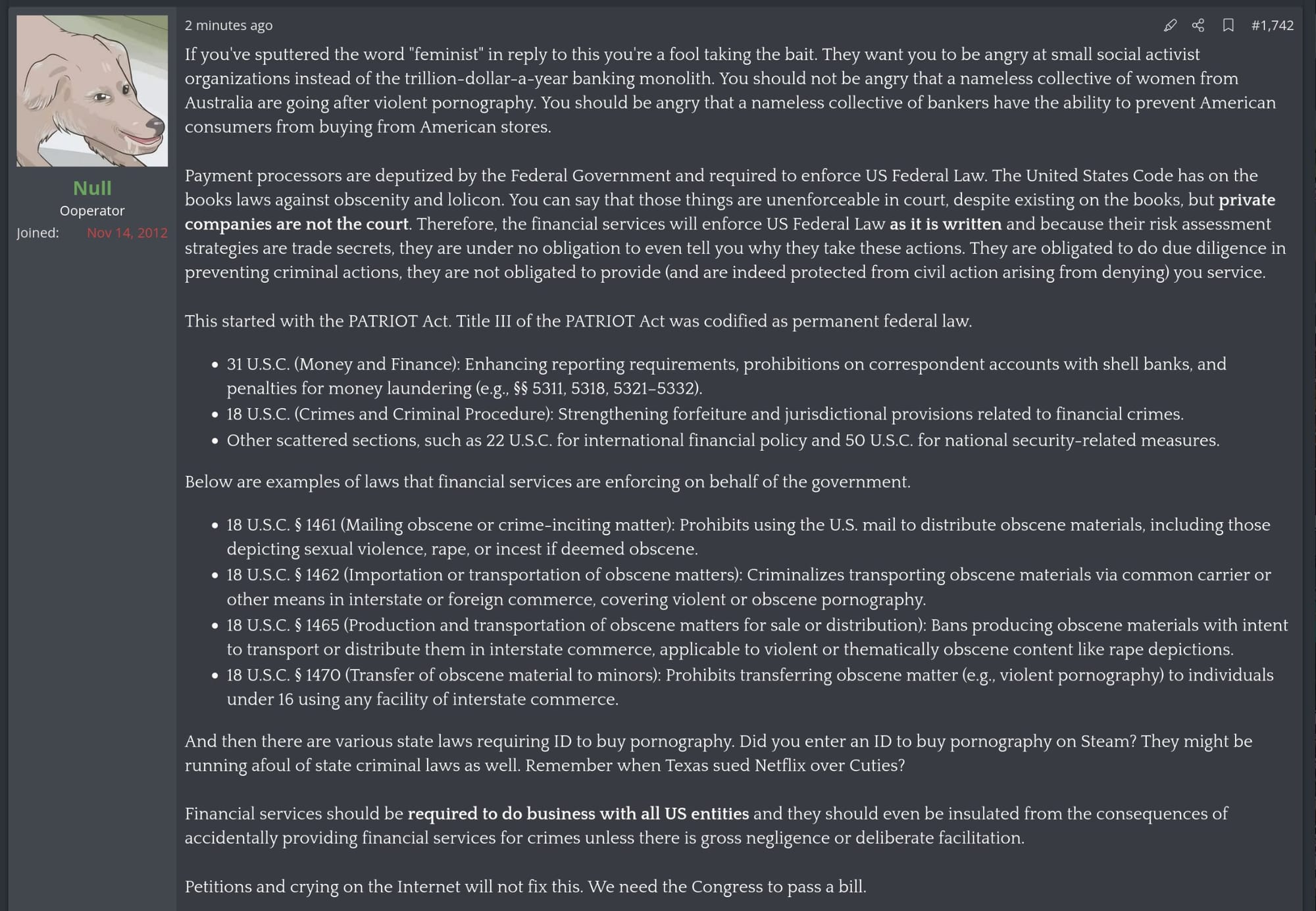
Steam users are mobilizing in an unprecedented campaign against payment processor censorship after Valve quietly updated its publishing guidelines on July 16, 2025, to prohibit “Content that may violate the rules and standards set forth by Steam’s payment processors and related card networks and banks, or internet network providers.” The result was swift and dramatic: nearly 100 adult-themed games were removed from the platform, sparking outrage across gaming communities worldwide.


The Coordinated Response
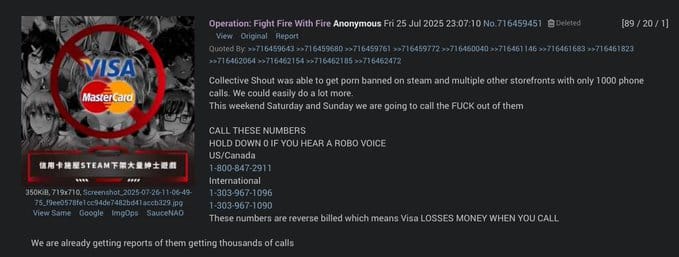
Over on Reddit’s r/Steam sub, players are working directly to contact Visa, a payment processor that has put the company in such a predicament in the first place. By using Visa’s dedicated contact form and a carefully worded message, they are hoping that things will change soon.
The coordinated message being sent to Visa reads: “I am concerned customer about Visa’s recent efforts to censor adult content on prominent online game retailers, specifically the platforms Steam and Itch.io. As a long-time Visa customer, I see this as a massive overreach into controlling what entirely legal actions/purchases customers are allowed to put their money towards.”
Visa’s Response and the Backlash
In a response shared by one gamer, Visa noted it “explicitly” prohibits illegal activity, while also sharing a commitment to “protecting legal commerce.” More specifically, the payment company noted that, “If a transaction is legal, our policy is to process the transaction. We do not make moral judgments on legal purchases made by consumers.”
“That is, in fact, an actual legitimate lie,” one user wrote in response. This sentiment captures the frustration driving the broader movement against what critics are calling “financial censorship.”
The Petition Movement Explodes
The grassroots response has been remarkable. A Change.org petition titled “Tell MasterCard, Visa & Activist Groups: Stop Controlling What We Can Watch, Read, or Play” has surpassed 77,000 signatures since launching just days after Valve’s policy change. The petition calls out what it describes as the censorship of legal fictional content and demands that companies like Visa and MasterCard cease their influence over what games can be sold.
The Collective Shout Connection
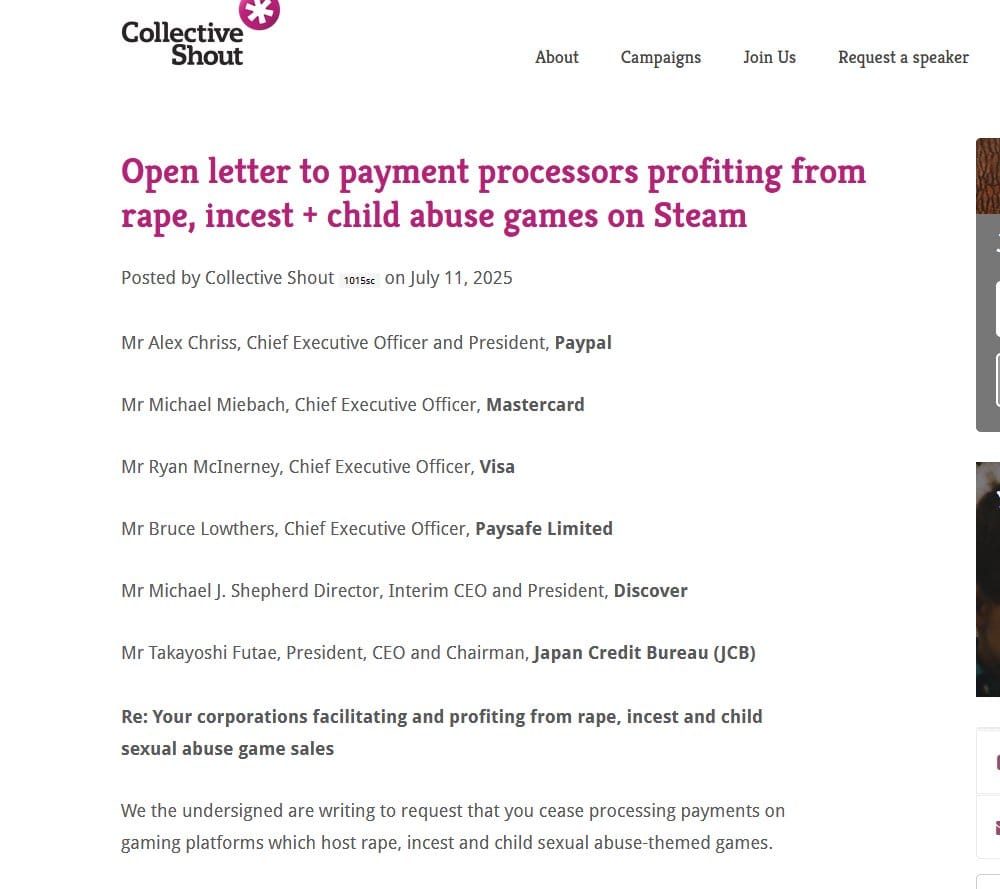
The website explained that it recently came under the scrutiny of its payment processors after an organization called Collective Shout launched a campaign against Steam and itch.io. Collective Shout, which describes itself as an Australian grassroots campaigning movement, directed its concerns to the gaming marketplaces’ payment processors.
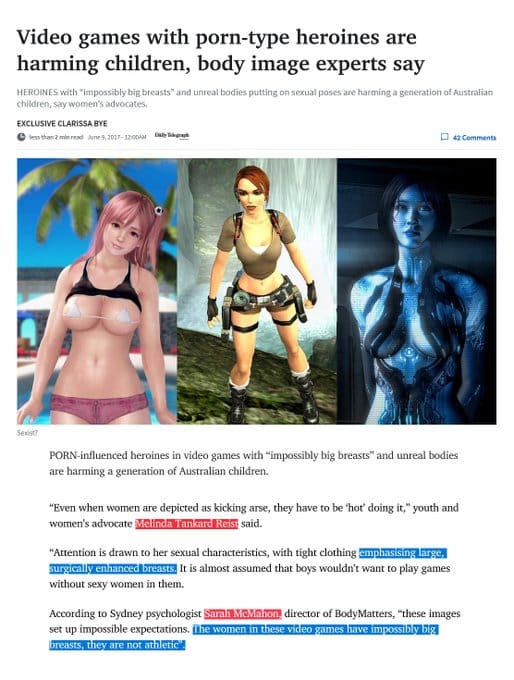
Collective Shout began in 2009, co-founded by self-described “pro-life feminist” Melinda Tankard Reist. Collective Shout describes itself as “A grassroots campaigning movement against the objectification of women and sexualization of girls in media, advertising, and popular culture”.
The group has a controversial history, including unsuccessful efforts to ban Grand Theft Auto V from sale in Australia and, notably, defending the Netflix movie Cuties, which has raised questions about their consistency.
Beyond Steam: A Pattern of Financial Pressure
This isn’t an isolated incident. It’s the quiet normalization of financial censorship and it’s going to hurt LGBTQ+ games and devs. Banks like Visa and Mastercard are now backdoor moral authorities. They already pressured Patreon, OnlyFans, and others to remove NSFW content.
Over the last couple of years, payment processors such as Visa, Mastercard and PayPal have been steadily ramping up efforts to control what people can purchase. Several Japanese stores have been targeted in this way. For example, Melonbooks, a website that specialises in independently published manga, was forced to stop accepting payments by Visa and Mastercard.
Industry Voices Speak Out
Nier creator Yoko Taro warned that payment processors like PayPal, Visa, and MasterCard have a huge amount of power due to how ingrained they are in global financial systems. Countries all over the world use them, so if one decides it won’t deal with a certain type of product, it becomes much harder to make money from it.
“It implies that by controlling payment processing companies, you can even censor another country’s free speech,” Yoko Taro stated.
The LGBTQ+ Concern
Critics worry this could disproportionately affect marginalized communities. “Queer content gets flagged as ‘explicit’ even when it’s PG. A trans dev making a personal story? ‘Too controversial.’ A surreal queer VN? ‘Sexualized.’ Financial deplatforming in action.”
Queer content, for instance, is disproportionately affected by censorship measures and could be tagged as “adult” or “NSFW” even when it doesn’t contain anything sexual.
What’s Being Organized
The resistance is taking multiple forms:
- Direct Contact Campaigns: Steam users are collectively contacting Visa and other payment processors through official channels, using carefully crafted messages to express their concerns.2. Regulatory Pressure: Some are threatening to contact the Federal Trade Commission and push for antitrust action against payment processors.3. Petition Drives: The Change.org petition continues to gain momentum, with hundreds more signatures being added by the hour.4. Alternative Payment Methods: Users are exploring ways to bypass traditional payment processors entirely.
The Hypocrisy Argument
The petition highlights what it sees as blatant inconsistency: “These same payment processors allowed platforms like OnlyFans to operate with minimal oversight, despite multiple credible reports and lawsuits alleging the presence of real sexual abuse content involving real-life minors. Yet, when it comes to entirely fictional depictions, these same companies act swiftly — shutting down creators, restricting access, and acting as global censors.”
What Valve Says
Valve issued a statement explaining: “We were recently notified that certain games on Steam may violate the rules and standards set forth by our payment processors and their related card networks and banks. As a result, we are retiring those games from being sold on the Steam Store, because loss of payment methods would prevent customers from being able to purchase other titles and game content on Steam.”
The Bigger Picture
The really big problem is that the two companies are both American, and therefore subject to American laws and social pressure. If one or the other of the cards was from a country with better consumer protections and genuine respect for free speech – like Japan or mainland Europe – the situation would be far better.
What started as concerns about specific adult games has evolved into a broader debate about corporate power, free speech, and who gets to decide what content adults can access. While some agree that certain removed content was problematic, opening the door to allowing credit card companies to become moral cops is a slope too slippery for society to function as a free one.
As this story continues to develop, the gaming community’s response demonstrates how digital rights activism is evolving in an era where payment processors wield unprecedented power over online commerce and content. Whether this grassroots pressure will be enough to change corporate policies remains to be seen, but it marks a significant moment in the ongoing battle for digital freedom.