How Google’s crackdown on Premium family sharing represents another step toward comprehensive user monitoring and the erosion of digital privacy
🎧 Related Podcast Episode
Executive Summary
YouTube has launched a comprehensive crackdown on Premium family plan sharing, implementing sophisticated location-tracking technology to verify that all family members reside at the same physical address. This enforcement, which includes monthly electronic check-ins and immediate suspension threats, represents the latest expansion of Google’s surveillance infrastructure—following closely on the heels of AI-powered age verification systems and secret video alterations. What’s being presented as anti-fraud protection is actually another building block in a comprehensive digital control system that monitors user behavior, location, and family relationships under corporate oversight.
Identity Threat Detection Calculator | Assess Your Risk
The Crackdown Revealed: From Tolerance to Total Surveillance
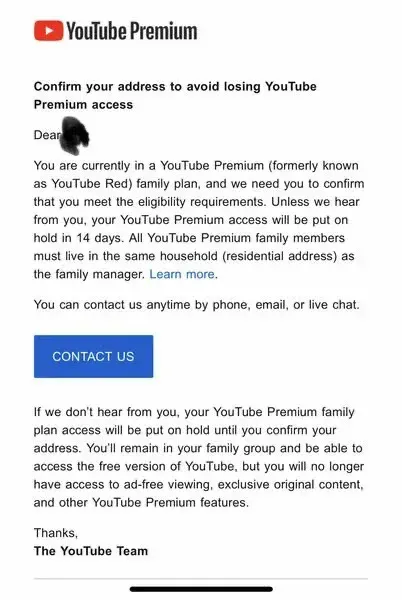
Starting in September 2025, YouTube began actively flagging Premium Family accounts where members don’t actually live in the same household as the plan manager, sending warning emails titled “Your YouTube Premium family membership will be paused” that give users 14 days to comply before losing Premium access.
The platform is conducting location-based checks using IP addresses and running these check-ins on a monthly basis, meaning the rule will be enforced continuously rather than occasionally. YouTube is using sophisticated methods, including IP address checks and device location tracking, to flag non-compliant accounts.
Social Media Risk Assessment Tool
The Technical Surveillance Architecture
Every family member must pass periodic electronic check-ins from the manager’s registered location. Device resets trigger verification requirements. Network changes can suspend access instantly. Traveling for more than a few weeks risks automatic removal from the family group.
This isn’t simply about billing verification—it’s comprehensive behavioral and location monitoring that creates detailed profiles of family structures, living arrangements, and movement patterns. The enforcement leverages location data to verify that all members reside at the same address, raising questions about data handling, especially under regulations like GDPR in Europe.
Navigating the Global Data Privacy Maze: A Strategic Imperative for Modern Businesses
The Broader Pattern: Building Comprehensive Digital Control Infrastructure
This family plan crackdown cannot be understood in isolation. It represents the latest component of Google’s expanding surveillance apparatus, building on three interconnected systems we’ve previously documented:
Creator Security Check | Privacy Assessment for Content Creators
1. AI Age Verification: Behavioral Profiling Disguised as Child Protection
As detailed in our analysis of YouTube’s AI Age Verification: The New Digital ID Era and the Global Push for Online Control, YouTube deployed AI-powered age verification across the United States in August 2025. This system analyzes user behavior patterns, viewing habits, and account activity to determine ages, creating detailed psychological profiles under the banner of “child safety.”
The age verification system requires users flagged as potentially underage to submit government IDs, credit card information, or facial recognition scans—creating massive databases of sensitive personal information linked to online activities.
2. Secret AI Video Alterations: Controlling Creator Content Without Consent
Our investigation into YouTube’s Secret AI Video Alterations: When Platforms Cross the Line revealed that YouTube had been secretly using AI to alter creators’ videos for months without knowledge, consent, or any option to opt out.
Creators discovered their content was being modified with artificial “oil painting effects,” unwanted sharpening, and subtle facial alterations that created an “uncanny valley” appearance. This represented a fundamental breach of trust between platform and creators, demonstrating YouTube’s willingness to manipulate content without permission.
3. Cross-Platform AI Surveillance Expansion
As documented in Google’s AI Age Verification Expands from YouTube to Search: The Digital ID Surveillance Net Tightens, Google extended its AI-driven age estimation system beyond YouTube into Google Search itself.
This cross-platform integration revealed that once users are flagged for age verification on one Google service, they may face similar requirements across their entire Google ecosystem—creating a unified surveillance profile that tracks behavior across multiple platforms.
The Internet Bill of Rights: A Framework for Digital Freedom in the Age of Censorship
Location Surveillance: The Missing Piece of the Puzzle
The family plan location tracking represents the geographic component of Google’s comprehensive user profiling system. While age verification profiles users psychologically and content alteration controls their output, location tracking maps their physical movements and family relationships.
The False Justification: Fighting “Abuse”
YouTube frames this enforcement as targeting “abuse” of family plans, with users “skirting the same-household requirement”. The company claims this comes after many social groups started subscribing to the Family plan to get YouTube Premium at a cheaper rate.
However, the system’s sophistication extends far beyond preventing cost-sharing among friends. The verification process operates in the background, often providing minimal warning before suspending Premium features like ad-free viewing and background play.
Real-World Impact: Legitimate Families Under Surveillance
The stricter policy is hitting many legitimate families hard. Students who study away from home, separated parents, or families split between work locations are now finding themselves locked out. Users note the problematic reality that families don’t always live in the same house, but should still be entitled to the same benefits.
Social media erupts with complaints from legitimate families caught in the crackdown. College students lose access mid-semester. Military families face suspension during deployments. Divorced parents sharing custody cannot maintain joint plans for children.
The Netflix Playbook: Industry-Wide Surveillance Normalization
This move mirrors location-based password-sharing crackdowns by Netflix and other major streaming services, with YouTube joining a long line of streaming services that have carried out similar measures. Netflix’s crackdown was one of the first in the industry and sparked massive outrage, though the company later boasted subscriber gains.
The pattern reveals how surveillance measures are being normalized across the entertainment industry:
- Initial Implementation: Platform introduces invasive monitoring “due to abuse”2. User Outrage: Legitimate users complain about privacy violations and false positives3. Revenue Justification: Companies report increased profits from forced individual subscriptions4. Industry Adoption: Competitors implement similar systems citing “industry standards”5. Normalization: Surveillance becomes accepted as standard business practice
This enforcement mirrors actions taken by rivals like Netflix and Spotify, which have cracked down on password sharing, with a family plan costing $22.99 monthly for up to six members, versus $13.99 per individual, making unauthorized sharing a lost revenue opportunity.
Technical Sophistication: Beyond Simple IP Checks
The technical implementation reveals a surveillance system far more sophisticated than basic fraud prevention:
Multi-Layered Verification System
- IP Address Monitoring: Continuous tracking of internet connection sources- Device Location Tracking: GPS and regional account settings analysis- Behavioral Pattern Analysis: Monitoring usage patterns for anomalies- Network Change Detection: Instant flagging when devices connect from new locations- Periodic Verification: Monthly electronic check-ins from registered locations
Cross-Service Integration
YouTube Premium integrates with Google One storage and other services, creating a sticky bundle that encourages loyalty. This integration means location verification data is likely shared across Google’s entire service ecosystem, creating comprehensive user profiles that include:
- Physical location patterns- Family relationship structures- Device usage across multiple platforms- Payment and billing information- Content consumption habits
Privacy Implications: Building the Digital Panopticon
Data Collection and Retention
The family plan enforcement requires collecting and analyzing:
- Precise location data from all family members- Movement patterns and travel schedules- Device information and network connections- Billing addresses and payment methods- Family relationship structures and living arrangements
Privacy concerns loom large; the use of location data raises questions about data handling, especially under regulations like GDPR in Europe.
The Surveillance Infrastructure
The technical sophistication of these verification systems suggests similar crackdowns will expand across other Google services and competing platforms, making traditional family sharing increasingly difficult to maintain.
This creates what digital rights advocates describe as a “surveillance infrastructure”—technical systems capable of monitoring user behavior that, once implemented, can be easily repurposed for broader control and monitoring purposes.
Economic Coercion: Forced Individual Subscriptions
The Financial Pressure Model
Family plan managers receive emails or app alerts when discrepancies are detected, often requiring proof of address or prompting members to switch to individual subscriptions. For families spread across different locations, the only official solution is to switch to individual Premium subscriptions, which increases the cost.
The economic impact is substantial:
- Family Plan: $22.99/month for 6 users = $3.83 per person- Individual Plans: $13.99 × 6 = $83.94/month total- Cost Increase: 265% more expensive for affected families
Revenue Maximization Strategy
Industry experts suggest this could drive up to a 10% increase in individual subscriptions, based on similar moves by peers. While some subscribers may cancel, others will upgrade or split costs legitimately, ultimately benefiting the platform’s bottom line.
The Expanding Surveillance Web: Future Implications
Platform Standardization
Netflix does it, so does Disney+, Hulu as well. HBO Max is about to tighten its rules about account sharing this month. This could set a precedent for other services, balancing innovation with stringent controls.
Government Integration Potential
The location verification infrastructure being built for “family plan enforcement” creates technical capabilities that could easily be repurposed for:
- Law Enforcement Tracking: Real-time location monitoring of users across platforms- Social Network Mapping: Understanding family and social relationships through shared accounts- Movement Pattern Analysis: Tracking user travel and location patterns- Cross-Border Monitoring: Identifying users who travel between jurisdictions
The Normalisation Process
Each expansion of surveillance capabilities—from age verification to content alteration to location tracking—establishes new precedents for what users will accept as “normal” platform behavior. This gradual normalization process makes each subsequent expansion seem reasonable by comparison.
User Resistance and Circumvention Attempts
Limited Effectiveness of Workarounds
Some users are reaching out to YouTube support to appeal their cases, though success stories are rare. Others are exploring alternatives, either downgrading to the free version with ads or looking for workarounds.
The Technical Arms Race
As with age verification systems, technically sophisticated users may attempt to circumvent location tracking through:
- VPN services to mask location- Device spoofing to fake check-ins- Network manipulation to appear co-located
However, YouTube increasingly deploys countermeasures against these workarounds, creating an ongoing arms race between platform surveillance and user privacy protection.
Constitutional and Legal Concerns
Privacy Rights Violations
The comprehensive location tracking required for family plan enforcement raises significant constitutional questions:
- Fourth Amendment Implications: Whether continuous location monitoring constitutes unreasonable search- Privacy Expectations: Users’ reasonable expectation of privacy in their location data- Consent Validity: Whether terms of service can validly consent to such extensive monitoring
Family Rights and Relationships
The system’s definition of “family” based solely on shared residence excludes many legitimate family arrangements:
- Military families with members deployed overseas- College students living away from home- Divorced parents maintaining shared custody- Extended families caring for elderly relatives- Families temporarily separated for work or medical reasons
The Broader Digital Control Agenda
Integration with Previous Surveillance Systems
The family plan location tracking represents the geographic component of a comprehensive surveillance system that now includes:
- Behavioral Profiling (AI Age Verification): Psychological analysis of user behavior patterns2. Content Control (AI Video Alterations): Direct manipulation of user-generated content3. Identity Verification (Cross-Platform AI Expansion): Requiring government ID submission4. Location Surveillance (Family Plan Enforcement): Real-time tracking of physical location and movement
The Complete Digital Profile
When combined, these systems create unprecedented comprehensive user profiles that include:
- Psychological Characteristics: Derived from viewing and search patterns- Physical Location: Real-time and historical location data- Identity Information: Government IDs and biometric data- Social Relationships: Family structures and social connections- Financial Information: Payment methods and subscription patterns- Content Creation: Original works and AI-modified versions
Connecting the Surveillance Dots: A Unified System
The Architecture of Digital Control
YouTube’s family plan crackdown represents more than revenue protection—it’s the geographic tracking component of a comprehensive digital surveillance system. When viewed alongside Google’s other recent initiatives, a clear pattern emerges:
August 2025: AI age verification system deploys across YouTube, requiring behavioral analysis and identity document submission
August 2025: Secret AI video alterations revealed, showing content manipulation without creator consent
August 2025: AI age verification expands to Google Search, creating cross-platform surveillance profiles
September 2025: Family plan location tracking implements real-time geographic monitoring
Each system provides a different data stream that, when combined, creates an unprecedented level of user surveillance and control.
The Data Integration Model
These systems don’t operate in isolation—they feed into a unified Google profile that combines:
- Behavioral data from age verification systems- Content data from video alteration systems- Identity data from cross-platform verification requirements- Location data from family plan enforcement- Relationship data from family structure monitoring
Industry Response and Competitive Implications
The Surveillance Arms Race
As YouTube joins other platforms in tightening sharing restrictions, families must choose between compliance through shared residency or accepting higher costs through individual subscriptions. This enforcement underscores a maturing subscription model in tech, where platforms prioritize profitability over leniency.
Market Consolidation Through Surveillance
The technical complexity and legal liability of implementing comprehensive location tracking systems may serve as a barrier to entry for smaller competitors, effectively consolidating market power among major platforms willing to invest in surveillance infrastructure.
What This Means for Digital Freedom
The Permission-Based Internet
The combination of age verification, content alteration, cross-platform tracking, and location surveillance represents a fundamental shift from an open internet to a permission-based system where access is mediated by corporate gatekeepers.
The End of Anonymous Access
Users may be waiting until November to buy the Samsung, but this is only the beginning of comprehensive identity verification requirements. The infrastructure being built under the banner of “family plan enforcement” creates the technical foundation for eliminating anonymous internet access entirely.
Resistance and Alternatives
As with previous surveillance implementations, user resistance will likely focus on:
- Alternative Platforms: Switching to services that don’t implement comprehensive tracking- Technical Circumvention: Using VPNs and other privacy tools to avoid surveillance- Legal Challenges: Supporting digital rights organizations challenging these practices in court- Legislative Action: Advocating for privacy protection laws that limit platform surveillance capabilities
Personal Protection: The “Gray Man” Theory
Conclusion: The Surveillance Infrastructure Takes Shape
YouTube’s family plan location tracking represents far more than an anti-fraud measure—it’s the latest component of a comprehensive surveillance system designed to monitor, profile, and control user behavior across Google’s entire ecosystem.
When combined with AI age verification, secret content alterations, and cross-platform tracking, these systems create an unprecedented level of corporate surveillance that extends far beyond what users consented to when they created their accounts.
The pattern is clear: each “security” or “anti-fraud” measure introduces new surveillance capabilities that, once implemented, can be expanded and repurposed for broader control. What begins as family plan verification evolves into comprehensive location tracking. What starts as age estimation becomes behavioral profiling. What’s presented as content enhancement becomes unauthorized alteration of user-generated material.
The infrastructure being built today under various justifications—child safety, fraud prevention, content quality—creates the technical foundation for a controlled internet where access, content, and behavior are all mediated by corporate surveillance systems.
Users face a critical choice: accept this transformation toward comprehensive digital surveillance, or actively resist by supporting alternative platforms, privacy protection tools, and digital rights legislation. The future of internet freedom may well depend on how we respond to these seemingly separate but systematically connected expansions of corporate control.
The surveillance net is tightening, one “feature” at a time. YouTube’s family plan enforcement isn’t just about shared subscriptions—it’s about building the infrastructure for a surveilled society where privacy becomes a privilege that must be constantly defended rather than a right that’s automatically protected.
This article builds on our previous investigations into Google’s expanding surveillance apparatus. For more analysis of digital privacy threats and resistance strategies, follow our ongoing coverage of the battle for internet freedom.