
Bottom Line Up Front: Under legislation expected to pass Parliament this week, Australia is introducing what officials describe as “the toughest hate laws Australia has ever seen”—a sweeping expansion of federal hate-speech and hate-association offenses that includes criminal penalties for membership in government-designated “hate groups,” expanded visa cancellation powers, and subjective speech restrictions based on how a “reasonable person” might “feel.” Combined with Australia’s already-operational mandatory age verification infrastructure and Digital ID system, this represents the completion of a comprehensive surveillance and speech-control apparatus unmatched in the Western democratic world.
Australian Kids Bypass Social Media Ban with Dog Photos and AI-Generated Faces
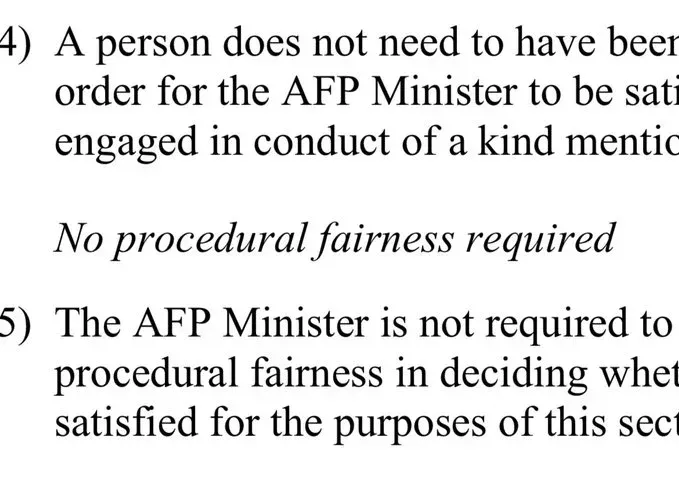
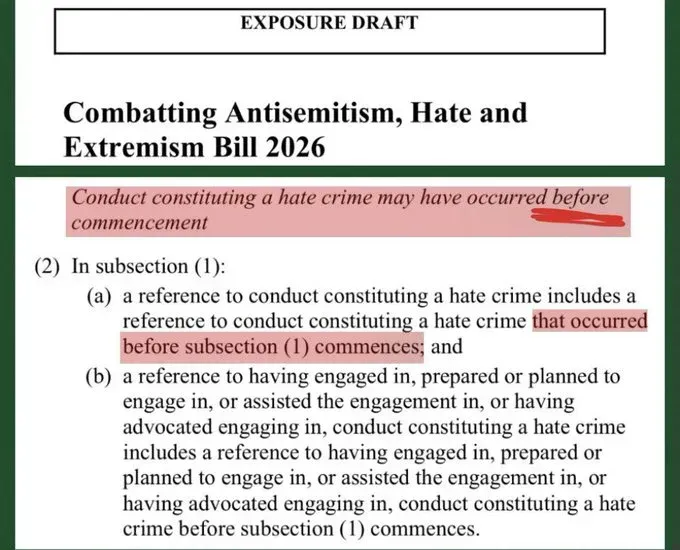
**CRITICAL PROVISIONS DISCOVERED IN EXPOSURE DRAFT:**Retroactive Criminalization: The bill explicitly applies to conduct “that occurred before commencement”—meaning Australians can be prosecuted for social media posts, speeches, donations, or associations that were entirely legal at the time.No Procedural Fairness Required: The bill states “The AFP Minister is not required to accord procedural fairness” when determining if someone engaged in hate conduct. No conviction, trial, or evidence is required—only ministerial “satisfaction.”No Criminal Conviction Required: “A person does not need to have been charged, prosecuted, convicted or found guilty” for the Minister to designate them as having engaged in hate conduct.
These provisions eliminate basic due process protections and authorize prosecution for past conduct that was legal when performed—fundamental violations of rule of law principles.
The Legislative Framework: Speech Control Through “Feelings”
The Combatting Antisemitism, Hate and Extremism Bill 2026, introduced January 12, 2026, establishes several unprecedented mechanisms for criminalizing speech and association:
New Criminal Offenses for “Promoting or Inciting Hatred”
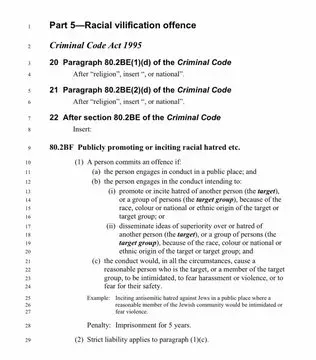
The bill creates criminal liability for publicly promoting or inciting hatred against protected groups where a “reasonable” person could “feel” intimidated, harassed, or fear violence. This subjective standard—centered not on actual threats or violence, but on how someone might feel—represents a dramatic departure from traditional criminal law principles requiring objective harm.
The racial vilification offense carries a maximum penalty of five years imprisonment, with even harsher penalties for religious or organizational leaders who engage in such speech. Religious leaders found advocating or threatening violence in their preaching or religious instruction capacity face up to 12 years imprisonment.
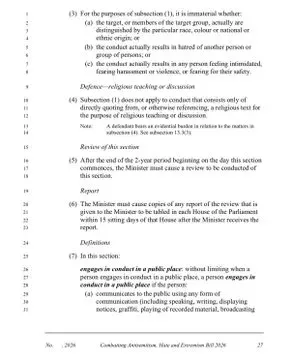
Notably, the bill includes only a narrow exemption for quoting religious texts “for the purpose of religious teaching or discussion”—a provision that has alarmed religious freedom advocates who warn that shifting political winds could redefine orthodox religious teachings as “hateful.”
Government-Designated “Prohibited Hate Groups”
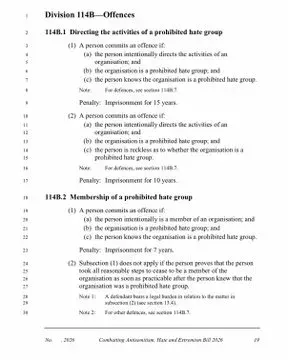
Perhaps most concerning is the establishment of a formal framework allowing the Home Affairs Minister to designate organizations as “prohibited hate groups.” Once listed, it becomes a severe criminal offense to:
- Be a member of the organization- Recruit for it- Donate to or receive funds from it- Support the group in any way
Home Affairs Minister Tony Burke explicitly stated the legislation’s purpose: to lower the threshold for criminalizing groups that have “kept themselves just below” existing legal standards. The National Socialist Network and Hizb ut-Tahrir were specifically named as targets—organizations that, according to Burke, have been “careful to not explicitly call for violence themselves.”
This admission is striking: the government is explicitly creating new criminal offenses to capture conduct that previously fell within legal boundaries. The prohibition process requires written advice from ASIO and agreement from the Attorney-General, but provides no clear, objective standards for what constitutes a “hate group” versus a legitimate political or religious organization.
As Anglican Bishop Michael Stead warned: “On what basis then is someone going to be listed as a Prescribed Hate Group? All we need is the winds of social policy to change in 20 years and Christian teachings are deemed hateful and the Anglican Church is suddenly a hate group.”
                    0:00

                        /0:38


                    1×
Retroactive Application: Criminalizing Previously Legal Conduct
Perhaps the most constitutionally problematic provision in the bill is its explicit retroactive application. According to the Exposure Draft, the legislation applies to conduct that occurred before the bill’s commencement.
The text states clearly: “A reference to conduct constituting a hate crime includes a reference to conduct constituting a hate crime that occurred before subsection (1) commences.”
This means Australians can be prosecuted for social media posts, speeches, associations, or other conduct that was entirely legal at the time they engaged in it. The fundamental legal principle of ex post facto laws—that you cannot be punished for conduct that was legal when you did it—is explicitly violated.
Consider the implications:
- A 2022 social media post criticizing immigration policy could become prosecutable in 2026- Membership in an organization that was legal in 2023 could result in criminal charges in 2027- Donations made to groups before they were designated “hate groups” could be treated as criminal conduct- Past participation in protests or rallies could form the basis for prosecution years later
The bill’s language extends beyond completed acts to include: “having engaged in, prepared or planned to engage in, or assisted the engagement in, or having advocated engaging in, conduct constituting a hate crime” - all of which can be conduct that occurred before the law existed.
This retroactive criminalization creates an impossible situation: Australians engaged in what they reasonably believed to be lawful speech and association now face criminal prosecution because the government has changed the rules. There is no way to comply with a law that didn’t exist when you acted.
No Procedural Fairness Required
Compounding the retroactive application problem, the bill contains an extraordinary provision eliminating basic due process protections. The Exposure Draft explicitly states:
“The AFP Minister is not required to accord procedural fairness in deciding whether satisfied for the purposes of this section.”
Additionally: “A person does not need to have been charged, prosecuted, convicted or found guilty of an offence or made subject to a civil order for the AFP Minister to be satisfied that the person has engaged in conduct of a kind mentioned.”
This means:
- The Minister can designate someone as having engaged in hate conduct without any criminal conviction- No criminal trial or civil proceeding is required- The person has no right to notice, hearing, or opportunity to respond before designation- No requirement to present evidence or meet any evidentiary standard- The Minister’s subjective satisfaction is sufficient for designation
This eliminates centuries-old common law protections ensuring that before government imposes serious consequences on an individual, that person has the right to know the allegations, see the evidence, and present a defense.
The practical application is chilling: the Minister can decide you’ve engaged in hate conduct based on social media posts, associations, or speech—including conduct from years ago that was legal at the time—without giving you any opportunity to defend yourself, without requiring any evidence beyond the Minister’s “satisfaction,” and without any conviction or legal finding.
This isn’t justice. This is administrative designation of guilt without trial, without evidence, without defense—and potentially for conduct that was legal when you did it.
Expanded Visa Cancellation Powers
The legislation grants the Home Affairs Minister significantly expanded powers to cancel or refuse visas based on “hateful speech or association,” with provisions to permanently bar individuals from future visa applications to Australia. This creates a new category of inadmissibility based not on criminal convictions or security threats, but on speech and ideological associations.
The character test for visa applicants now includes individuals who have:
- Previously spread “hatred or extremism” publicly (online or overseas)- Allegedly been involved in “hate conduct”- Appeared “motivated” to commit related offenses- Have alleged links to prohibited groups
The vagueness of terms like “appeared motivated” and “alleged links” provides extraordinary discretion with minimal due process protections.
                    0:00

                        /0:44


                    1×
Hatred as Sentencing Enhancement
Under the bill, “hatred” may be treated as an aggravating factor in sentencing for unrelated offenses. This means criminal conduct already punishable under existing law can receive enhanced penalties if prosecutors argue the defendant was motivated by hatred—potentially adding years to sentences for crimes that have nothing to do with speech or expression.
Aggravated hate crime offenses now carry 10-year penalties instead of seven years. Anyone threatening force or violence against persons or groups faces increased jail time from five to seven years.
The Surveillance Infrastructure Already in Place
Australia’s hate speech legislation doesn’t exist in isolation. It represents the final component of a comprehensive digital surveillance and control infrastructure that has been systematically built over the past two years:
Mandatory Age Verification Across Digital Services
As we’ve extensively documented, Australia now operates the world’s most comprehensive mandatory digital identity verification system:
Social Media Age Ban (December 10, 2025): Ten platforms—Facebook, Instagram, TikTok, X/Twitter, Reddit, YouTube, Snapchat, Threads, and others—must prevent users under 16 from holding accounts. Compliance requires extensive age assurance systems affecting all users, not just minors, with platforms facing fines up to $49.5 million per systematic breach.
Search Engine Age Verification (December 27, 2025): Google, Microsoft, and other search providers must verify the age of all logged-in users. If age assurance systems believe a signed-in user is “likely to be an Australian child” under 18, safety tools must be set at their highest setting by default. Non-logged-in users are treated as minors by default, applying the strictest content filtering.
These systems require one or more of the following verification methods:
- Government-issued ID uploads (driver’s license, passport)- Facial recognition and biometric age estimation- Credit card verification linking financial identity- Digital ID through Australia’s myID framework- AI behavioral inference analyzing search and viewing patterns- Third-party age verification services creating centralized identity databases
The Digital ID Act: Government-Backed Identity Infrastructure
Australia’s Digital ID Act 2024, operational since December 1, 2024, establishes a comprehensive nationwide digital identity verification system. While currently “voluntary” for most purposes, the myID system provides government-backed digital identity verification that increasingly interfaces with age verification requirements.
The phased rollout includes:
- Phase 1 (December 2024): Commonwealth and state government entities- Phase 2 (By December 2026): Private sector participation
The intersection between commercial age assurance and government Digital ID infrastructure creates a unified identity verification ecosystem where accessing basic internet services increasingly requires proving your identity to government-approved systems.
The Pattern: Speech Control Requires Identity Verification
The connection between hate speech laws and digital identity infrastructure is not coincidental. Effective enforcement of subjective speech restrictions—where liability depends on how someone might “feel” intimidated or harassed—requires knowing who said what and when.
Anonymous speech, pseudonymous discourse, and private communication all become significantly more difficult when:
- Major platforms must verify every user’s identity to enforce age restrictions2. Search engines must know who you are to filter content appropriately3. Government maintains lists of prohibited organizations with criminal penalties for “support”4. Speech that makes someone “feel” harassed can result in criminal prosecution
Consider the enforcement chain:
- User posts content on social media- Someone reports feeling “intimidated” or “harassed”- Platform’s age verification system has already collected user’s identity- Government subpoenas identity information- Prosecution proceeds based on subjective standard of how a “reasonable person” might feel
The technical infrastructure for comprehensive speech monitoring and enforcement now exists at scale in Australia. What was marketed as “protecting children” and “enhancing safety” has created the foundation for systematic speech surveillance.
Constitutional Concerns and Legal Challenges
Prime Minister Anthony Albanese and Home Affairs Minister Tony Burke have acknowledged the legislation’s constitutional vulnerabilities. As Albanese stated: “We have crafted this legislation in a way that’s robust and we understand, of course, that these are laws that may be challenged… But the Government stands by our drafting.”
The government’s acknowledgment that constitutional challenges are expected is telling—particularly given the bill’s explicit violations of fundamental legal principles.
Retroactive Criminalization: A Constitutional Crisis
The bill’s retroactive application represents one of the most serious constitutional issues. While Australia lacks a Bill of Rights, the principle against retrospective criminal laws is deeply embedded in common law and recognized as fundamental to the rule of law.
The High Court has previously held that retrospective criminal laws are “prima facie at variance with the rule of law” and require “clear and unambiguous language” to be valid. While not absolutely prohibited in Australia (unlike the United States), such laws face heightened scrutiny.
The bill’s explicit language stating that conduct “that occurred before subsection (1) commences” can constitute a hate crime likely meets the “clear and unambiguous” test—but that only triggers the next question: can such retrospectivity be justified?
Arguments against retroactivity:
- Fair notice: Citizens cannot comply with laws that don’t exist when they act- Predictability: Rule of law requires knowing what is prohibited before acting- Arbitrary power: Government can criminalize political opposition by redefining past legal conduct- Deterrence failure: You cannot deter conduct that was legal when it occurred
The government will likely argue that the conduct was always harmful, just not previously criminalized. But this reasoning would justify retroactive application of any criminal law—a position inconsistent with fundamental justice.
                    0:00

                        /2:53


                    1×
Due Process and Procedural Fairness Violations
The explicit elimination of procedural fairness requirements may be even more constitutionally vulnerable. While administrative law in Australia generally requires procedural fairness before government makes decisions affecting individuals, the bill attempts to legislate this requirement away.
The provision stating “The AFP Minister is not required to accord procedural fairness” directly conflicts with:
Common Law Natural Justice: Centuries of legal precedent holding that those affected by government decisions have a right to be heard.
Administrative Law Principles: The established framework requiring notice, opportunity to respond, and reasons for decisions affecting individuals.
Judicial Review Standards: Courts traditionally require procedural fairness before government imposes serious consequences on individuals.
Can Parliament simply legislate away procedural fairness? Australian courts have held that even when legislation purports to exclude procedural fairness, certain “minimum standards” of natural justice may still apply—particularly when serious consequences are at stake.
When the consequences include:
- Criminal prosecution for conduct that was legal when performed- Visa cancellation and permanent exclusion from Australia- Designation as a member or supporter of a “hate group”- Enhanced sentencing for other crimes based on “hatred” motivation
The absence of any procedural protections is likely to attract intense judicial scrutiny.
Absence of Explicit Free Speech Protections
Unlike the United States’ First Amendment, the Australian Constitution does not explicitly guarantee freedom of expression. The High Court has recognized only an implied freedom of political communication—narrower protection that applies primarily to speech necessary for Australia’s system of representative democracy.
This limited constitutional protection means Australian governments have substantially greater latitude to restrict speech than their American counterparts. Recent court decisions in the United States blocking similar age verification and content restriction laws would likely not succeed in Australia’s constitutional framework.
The “Implied Freedom” Test
Australian courts evaluate speech restrictions under a two-part test:
- Does the law effectively burden freedom of political communication?2. If so, is the law reasonably appropriate and adapted to serve a legitimate end?
The government will argue the hate speech provisions target violence and threats, not political discourse. However, the subjective “feelings” standard and broad definitions of “hatred” and “extremism” inevitably capture political and religious speech—particularly speech critical of government policies on immigration, multiculturalism, or foreign conflicts.
Vagueness and Overbreadth Concerns
The Australian Human Rights Commission has raised concerns about where “the boundary between harmful speech and legitimate expression should be drawn.” The bill’s reliance on subjective standards—what might make someone “feel” intimidated—provides insufficient clarity about what conduct is actually prohibited.
Criminal laws are expected to provide fair notice of what is prohibited. When liability depends on unpredictable subjective reactions, speakers cannot reliably determine what speech is legal. This chilling effect on legitimate discourse may itself violate the implied freedom of political communication.
International Precedent and the Global Speech Control Movement
Australia’s comprehensive approach to online regulation—age verification, digital identity, and hate speech restrictions—is increasingly influential internationally:
United Kingdom: Age verification enforcement began July 25, 2025 under the Online Safety Act, targeting adult content and expanding to social media platforms. The UK intends to allow Digital IDs created in Australia and other countries to be used by UK citizens.
European Union: The European Parliament voted November 26, 2025 to establish strict age limits for social media (age 13 minimum, age 16 for unrestricted access), with implementation through EU Digital Wallet verification.
Singapore: Following Australia’s announcement, Singapore indicated in January 2025 it shares the same objectives for age-restricting social media and is “engaging Australian counterparts to understand the developments better.”
Brazil: The Digital ECA requires age verification “at each access attempt” for any service “likely to be accessed by minors”—the world’s most comprehensive scope.
The pattern is consistent: governments implementing age verification infrastructure cite “child safety” while building systems that verify the identity of all users. Once operational, these systems enable enforcement of increasingly broad content restrictions—from pornography to “misinformation” to “hate speech” to political dissent.
The Justice Centre has been warning Canadians for months about the dangers of the United Kingdom’s Online Safety Act, which has already led to a wave of arrests over social media posts since it came into force in 2023.
Now, another alarming example of government overreach has…— Justice Centre for Constitutional Freedoms (@JCCFCanada) January 12, 2026
Religious Freedom and the “Teaching” Exemption
The bill’s narrow exemption for religious texts deserves particular scrutiny. Religious officials may reference religious texts “for the purpose of religious teaching or discussion,” but face 12 years imprisonment for “advocating or threatening violence against groups” in their religious capacity.
The practical application is murky:
- Does reading passages from religious texts that describe divine judgment against certain behaviors constitute “threatening violence”?- If a Christian minister teaches that homosexuality is sinful based on biblical texts, and a congregant claims to “feel” threatened or harassed, has a crime occurred?- What constitutes “religious teaching” versus political advocacy when religious teachings have political implications?
As Prime Minister Albanese acknowledged: “I encourage you to read the Old Testament and see what’s there and see if you outlaw that what would occur. So we need to be careful.”
The acknowledgment that portions of religious texts could potentially violate the new laws is itself revealing. The government’s solution—a narrow teaching exemption—places the burden on religious communities to navigate uncertain boundaries while facing potential criminal prosecution.
Former Liberal senator Gerard Rennick asked pointed questions: “Who decides what a hate crime is? Why don’t the ones introduced last year suffice? If they didn’t work, why does Albanese think more hate crimes will stop terrorism?”
The Dangerous Precedent: Criminalizing Pre-Legal Conduct
Home Affairs Minister Burke’s explicit statement that the bill “will lower that threshold” to criminalize organizations “careful to not explicitly call for violence themselves” represents a fundamental shift in criminal law philosophy. But the retroactive application provisions take this to an even more troubling level.
The combination of retroactive criminalization and elimination of procedural fairness creates a perfect storm of government overreach:
Step 1: Retroactive Designation - The government identifies conduct that was legal when it occurred (social media posts, organizational memberships, donations, speech at rallies).
Step 2: Ministerial Determination - The AFP Minister, without providing procedural fairness, determines that this past legal conduct now constitutes “hate conduct.”
Step 3: No Defense or Appeal - The individual has no right to notice, hearing, or defense before designation. No conviction is required. The Minister’s satisfaction is sufficient.
Step 4: Criminal Prosecution - The individual faces prosecution for conduct that was legal when performed, designated through a process with no procedural protections.
Step 5: Enhanced Penalties - Past conduct can be used as aggravating factors for current offenses, dramatically increasing sentences.
This isn’t a hypothetical chain of events—this is precisely what the bill’s language authorizes.
The Retroactive Application Threat to Digital Archives
The retroactive provisions have particularly troubling implications in the digital age. Every Australian with a social media presence has years or decades of posts, comments, shares, and likes—all permanent digital records that could potentially be reinterpreted as “hate conduct” under new standards.
Consider:
- A 2018 Facebook post criticizing immigration levels—could this be reinterpreted as “inciting hatred” against ethnic groups?- A 2020 tweet expressing religious views on sexuality—does this constitute “promoting hatred” that makes someone “feel” harassed?- A 2019 donation to an organization that’s now designated a “hate group”—is this retroactively criminal conduct?- Attendance at a 2021 protest that included speakers now deemed “extremist”—does this show association with prohibited activities?
The digital permanence of online activity means virtually every Australian has created a record that could potentially be weaponized under these provisions. And with no requirement for procedural fairness, there’s no opportunity to explain context, intent, or how standards have changed since the original conduct.
Australia’s Digital ID Push: Kids, Censorship & the End-of-Year Online Identity Mandate
Political Weaponization: Not a Bug, but a Feature
Critics who warn about political weaponization of these powers are told they’re being paranoid or alarmist. But the bill’s design makes political abuse not just possible but practically inevitable:
No Objective Standards: What constitutes “hatred” or “extremism” is subjective and changes with political winds.
Ministerial Discretion: Designation as a hate group or determination of hate conduct depends on ministerial “satisfaction” without objective criteria.
No Procedural Safeguards: The explicit elimination of procedural fairness means no checks on arbitrary decision-making.
Retroactive Application: Past legal conduct can become criminal, allowing any government to prosecute previous political opposition.
Digital Surveillance Infrastructure: Age verification and identity systems ensure all online speech can be monitored and attributed.
A government determined to silence critics needs only to:
- Designate their organizations as “hate groups” (using the Minister’s discretion)2. Find past social media posts or speeches expressing strong opinions3. Determine (without procedural fairness) that these constitute “hate conduct”4. Prosecute under retroactive provisions for conduct that was legal when performed
The infrastructure for this exists. The legal authority is being created. Only political restraint prevents abuse—and political restraint is a weak protection when power changes hands.
Consider the implications:
- Organizations engaging in entirely legal advocacy can be designated “hate groups” retroactively- Members who joined when the organization was legal become criminals overnight- Financial supporters face prosecution for donations made before prohibition- The chilling effect extends far beyond actually prohibited groups to any organization that might potentially be designated
As critics noted, “the activists they have illegally imprisoned have committed no crimes, so the regime now announces a new, huge hate speech law that will retroactively make their activism illegal.”
Privacy Implications: The Convergence of Systems
The true privacy implications emerge when considering how these systems interconnect:
Identity Verification Everywhere: Australians must now verify their identity to access social media, use search engines, and engage in online discourse. This verification data exists in databases across platforms and government systems.
Behavioral Monitoring: Age verification systems using AI inference and behavioral analysis create detailed profiles of users’ interests, habits, and psychological patterns—ostensibly for age estimation but retained for other purposes.
Speech Surveillance: Once platforms know users’ real identities, speech that violates hate speech laws can be directly attributed and prosecuted. Anonymous political discourse becomes practically impossible.
Association Tracking: Determining membership in or “support” for prohibited organizations requires monitoring what groups people join, what content they share, and what causes they financially support.
Visa and Immigration Control: Speech and associations monitored domestically affect visa decisions, creating a comprehensive system where online activity has real-world consequences for international travel and immigration.
Financial Surveillance: Age verification through credit cards and the prohibition on providing funds to designated groups means financial transactions are monitored for compliance with speech restrictions.
The result is a comprehensive digital identity and monitoring infrastructure that would have been politically impossible to implement as a single, explicitly labeled “surveillance system.” Instead, it was constructed piece by piece—first for “child safety,” then for “combating hate,” then for “national security”—until the architecture of a surveillance state stands operational.
Australia’s Social Media Ban: The Privacy Nightmare Hidden Behind “Child Protection”
The Effectiveness Question: Will It Work?
Even accepting the government’s stated goals at face value, significant questions remain about whether this approach will achieve its objectives:
Circumvention is Straightforward: VPNs mask Australian location, allowing access through foreign IP addresses. Teens already report using Yope, Lemon8, and other services outside regulatory oversight. Determined speakers will find platforms outside Australian jurisdiction.
Migration to Less Regulated Spaces: As Dr. Catherine Page Jeffery of the University of Sydney noted, if young people migrate to less regulated platforms and become more secretive, they are less likely to talk to parents about concerning material they encounter—the opposite of the legislation’s goal.
Definitional Ambiguity: What constitutes “hatred” versus legitimate criticism? When does religious teaching become “threatening violence”? The subjective standards provide insufficient guidance while creating massive potential for abuse.
Political Weaponization Risk: Once infrastructure exists to designate “hate groups” and prosecute “hateful speech,” the temptation to use these tools for political purposes becomes overwhelming. Today’s government may target neo-Nazis and Islamic extremists; tomorrow’s government may have different priorities.
Technical Limitations: Age verification technologies have significant accuracy limitations and bias issues. Facial recognition systems exhibit higher error rates for people of color and women. Document verification excludes millions without proper identification.
What This Means for Digital Privacy and Freedom
Australia’s comprehensive approach represents a watershed moment for digital rights:
The End of Anonymous Online Discourse: Between age verification requirements, hate speech enforcement, and prohibited group monitoring, maintaining anonymity while engaging in political discourse becomes increasingly difficult.
A Chilling Effect on Legitimate Speech: When criminal liability depends on subjective interpretations of how speech makes others “feel,” speakers self-censor far beyond what’s actually prohibited.
Precedent for Global Adoption: Other democratic nations watch Australia’s experiment closely. If this comprehensive approach becomes normalized, expect similar frameworks to emerge across the UK, EU, Canada, and beyond.
Infrastructure That Outlasts Justification: The technical systems being built—identity databases, behavioral monitoring, content filtering—will persist regardless of whether specific laws are modified or repealed.
Normalization of Government Gatekeeping: A generation growing up under mandatory identity verification and content restrictions may view government control of online spaces as normal rather than exceptional.
Australia Advances National Facial Recognition Network Despite Privacy Concerns
The Road Ahead: Parliamentary Process and Resistance
The bill has been referred to the Parliamentary Joint Committee on Intelligence and Security for review, with public submissions accepted. However, the government is pushing for rapid passage, with Parliament recalled specifically to pass this legislation.
Opposition responses have been mixed:
- Nationals leader David Littleproud criticized combining hate speech and gun laws into one bill as “disrespecting Parliament”- Coalition forces are calling for even stricter measures while expressing concern about specific provisions- Religious leaders across denominations have raised concerns about the hate group designation and religious freedom implications- Civil liberties organizations warn of unprecedented restrictions on speech and association
The Australian Human Rights Commission acknowledged the laws aim to protect individuals from harm but noted they “raise concerns about where the boundary between harmful speech and legitimate expression should be drawn.”
Connecting to Our Previous Coverage
This hate speech legislation must be understood in context of Australia’s broader digital transformation:
- Australia’s Digital Revolution: Age Verification and ID Checks Transform Internet Use - Our comprehensive analysis of the age verification infrastructure that makes speech monitoring possible2. Breaking: High Court Challenge Threatens Australia’s World-First Social Media Ban - Constitutional challenges to age verification that parallel concerns about hate speech laws3. Australia’s Unprecedented Digital Age Verification Regime Now Active - The operational reality of mandatory identity verification systems4. Tech Giants Pledge Compliance but Warn of Major Challenges - Platform perspectives on implementing comprehensive identity verification5. Analysis of Online Age Verification Mandates - Our technical deep-dive into the privacy and security implications of mandatory verification systems
Australia’s Digital ID and the Israeli Connection: AU10TIX’s “Digital Twins” Technology
🎧 Related Podcast Episode
Conclusion: The Architecture of Digital Control
Australia has systematically constructed the most comprehensive digital surveillance and speech-control infrastructure in the Western democratic world. What emerges is not the result of any single authoritarian impulse but rather the accumulation of measures—each justified by compelling-sounding rationales:
- Age verification to protect children from pornography and social media harms- Digital ID to enhance cybersecurity and combat identity theft- Hate speech laws to prevent violence and protect vulnerable communities- Prohibited group designations to counter terrorism and extremism
Yet the cumulative effect creates something unprecedented: a system where Australians must verify their identity to access basic internet services, where speech can be criminalized based on subjective emotional reactions, where government maintains lists of prohibited organizations with criminal penalties for membership, and where comprehensive monitoring infrastructure tracks associations, behavior, and discourse.
But the Combatting Antisemitism, Hate and Extremism Bill 2026 adds dimensions that transform this from concerning surveillance infrastructure into something more sinister:
Retroactive Criminalization: The explicit authority to prosecute conduct that was legal when performed eliminates any pretense of fair notice or rule of law. Every Australian’s digital history becomes potential evidence for future prosecution under standards that didn’t exist when they spoke or acted.
Elimination of Due Process: The explicit statement that “no procedural fairness is required” for ministerial determinations strips away centuries of common law protections. Government can designate you as having engaged in hate conduct without notice, without hearing, without evidence, without defense.
Ministerial Discretion Without Accountability: The power to designate organizations as “hate groups” and individuals as having engaged in “hate conduct” rests on subjective ministerial “satisfaction” with no objective standards and no procedural safeguards.
Comprehensive Digital Surveillance: The age verification and digital ID infrastructure ensures that every Australian’s online activity is tracked, recorded, and attributable—creating the surveillance capacity necessary to enforce these retroactive and subjective speech restrictions.
The question is no longer whether Australia has built a surveillance state—the infrastructure exists and is operational. The question is whether democratic norms, constitutional limits, and citizen resistance can constrain how that infrastructure is used.
When government can:
- Prosecute you for social media posts made years ago that were legal at the time- Designate you as supporting “hate groups” without any procedural protections- Make these determinations based on subjective standards of what might make someone “feel” harassed- Track all your online activity through mandatory identity verification systems- Cancel your visa or enhance your criminal sentence based on past legal speech
…you no longer live in a free society. You live in a society where freedom exists only at the government’s discretion.
For the rest of the world watching Australia’s experiment: the path from “child safety” to comprehensive speech control is shorter than you might think. And the path from speech control to retroactive prosecution of political opposition is even shorter.
Once the infrastructure exists, once procedural fairness is eliminated, once retroactive criminalization is normalized—there is no technical or legal barrier to totalitarian abuse. Only political restraint remains. And political restraint evaporates quickly when power changes hands.
The architecture of digital control is now complete. The elimination of procedural fairness makes it operational. The retroactive application makes resistance impossible. What remains to be seen is whether Australians will accept living under it.