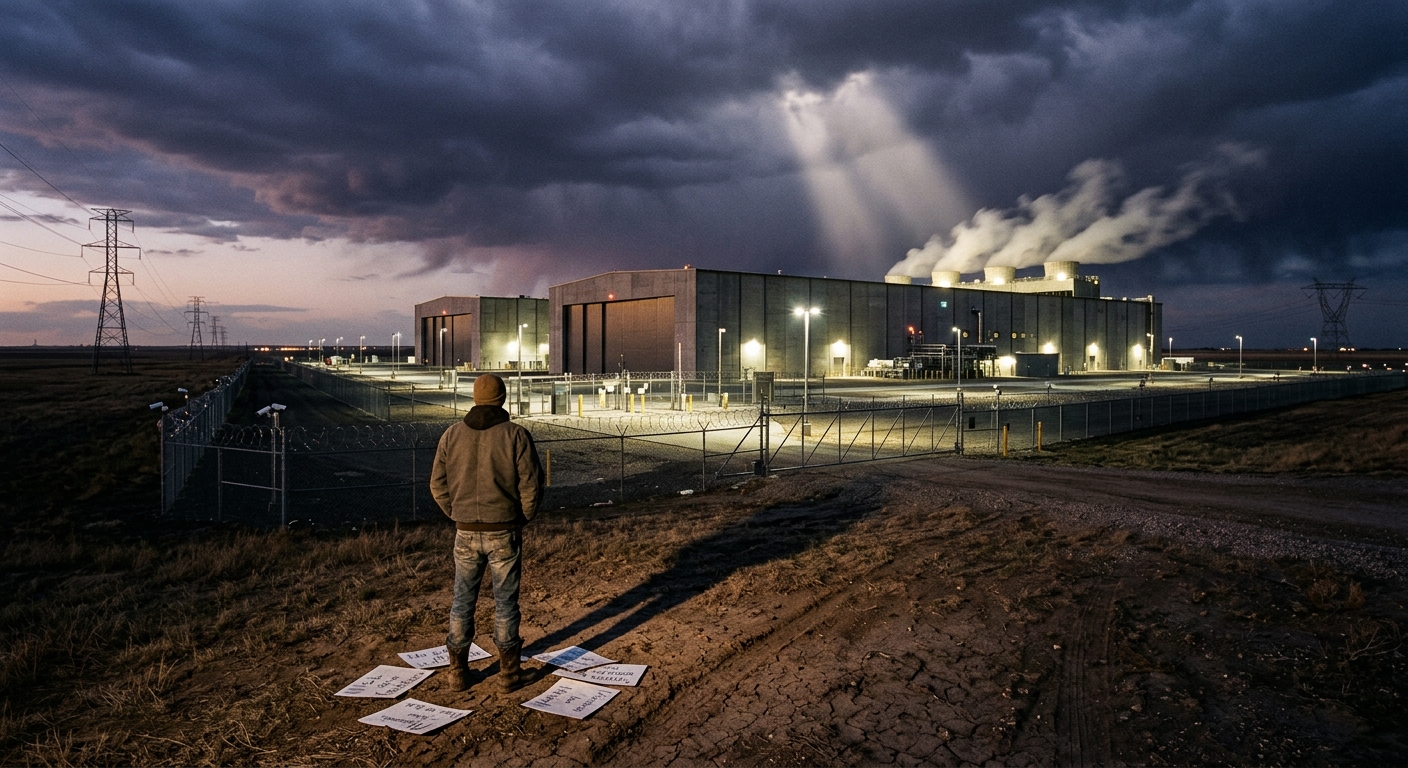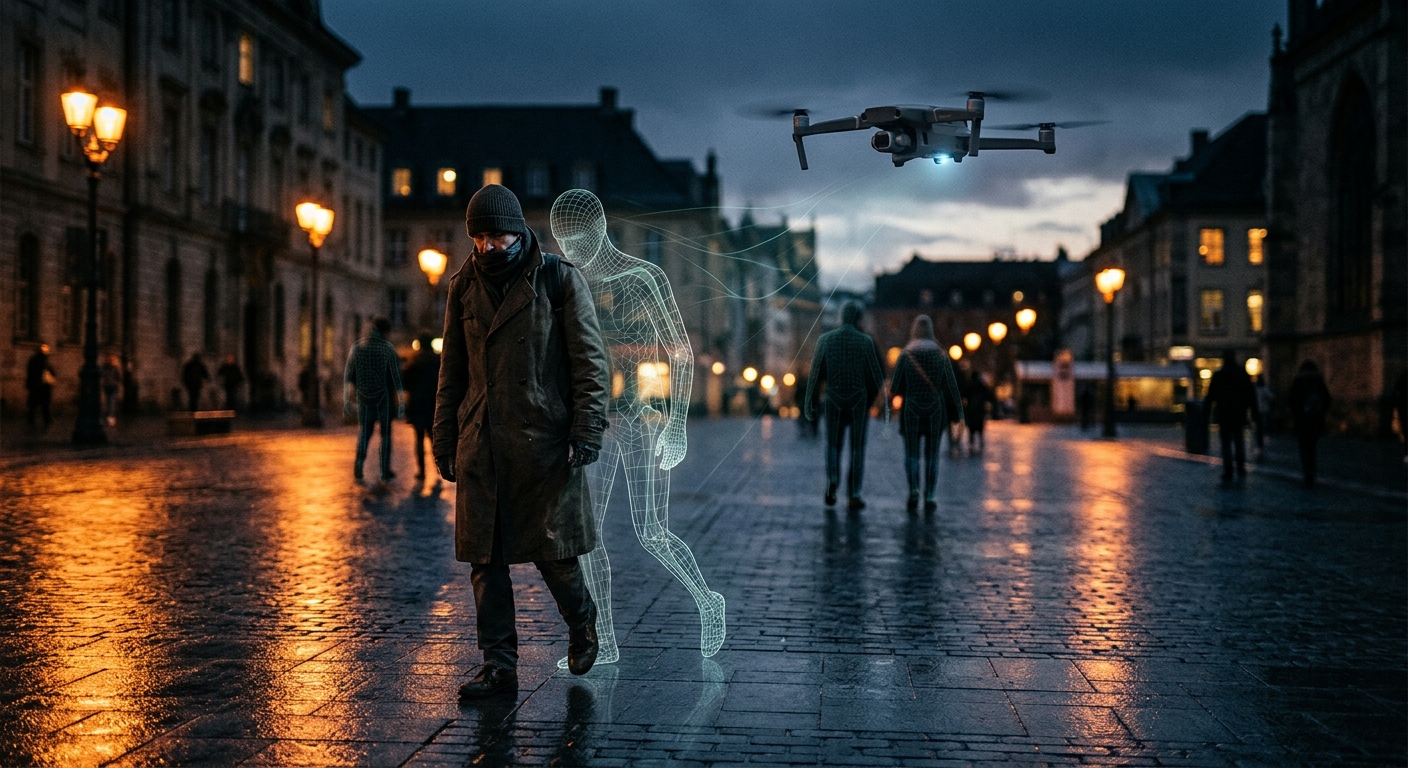
Two stories arrived in the same week, from the same institution, pointing in exactly opposite directions. On 10 June 2026, the Home Office announced PoliceAI: a new national centre, a record £140 million over three years, forty additional live facial recognition units, and a promise to put AI in the hands of every force in England and Wales. Two days later, the news broke that a Derbyshire police officer was under criminal investigation for allegedly using AI to fabricate evidential material across a number of cases — a case Derbyshire Police and the Crown Prosecution Service believe to be the first of its kind in the UK.
You do not have to be a cynic to notice that one of these stories is about giving police more powerful AI, and the other is about what happens when a single officer uses AI to frame people. They are not separate news items. They are the same news item, told from two ends.
What we actually know
Take the facts carefully, because the temptation to inflate them runs in both directions. On the Derbyshire side, the verified contours are narrow. A serving officer has been removed from frontline duties. A criminal investigation is underway, with the officer facing a potential charge of perverting the course of justice for allegedly using AI to create evidential material in “a number of cases.” The CPS is engaging with defence teams and the courts in affected cases. No one has been named. No arrests have been made. The investigation is, in the official phrasing, in its early stages. We do not know how many prosecutions are tainted, whether anyone was convicted on fabricated material, or what “AI-generated evidence” concretely means here — a doctored image, a synthesised document, an invented transcript. Those details matter enormously and they are not yet public.
On the policy side, the figures are firmer because they come from a government press release. PoliceAI is backed by £75 million within a broader £140 million AI investment over three years. The headline capability — the one that should make privacy-minded readers sit up — is forty more live facial recognition units, tripling current capacity, alongside large-scale pilots in up to ten forces over 2026–27 before scaling to all forty-three forces by 2027. The Policing Minister, Sarah Jones, framed it as freeing up the equivalent of 3,000 officers. A public registry of AI tools in use across policing, built with CENTRIC at Sheffield Hallam University, is promised “by the autumn.”
So: a glossy, well-funded expansion of AI across policing, and a quiet criminal investigation into AI being weaponised inside policing. Both true. Both this week.
The accountability gap is the point
The government’s pitch leans hard on a comforting word: responsible. PoliceAI is described as a centre for the “responsible” development, piloting and scaling of AI. The registry is offered as proof of transparency. This is the standard reassurance — that scale and oversight will advance together, that the tooling will be governed.
The Derbyshire case is what that reassurance looks like when it meets contact with reality. Here is the uncomfortable sequencing: the alleged misconduct was apparently caught, and is now being investigated, not by some purpose-built AI-governance apparatus, but through the ordinary, slow, human machinery of professional standards and the CPS. The accountability did not come from the system being modernised. It came in spite of it. And it came after the fact — after the evidence may already have shaped charging decisions, after defence teams now have to be told their cases may rest on fabrications.
This is the gap that should worry anyone watching policing tech. Capability is being procured on a three-year, £140 million timetable. The oversight to match it — the registry — arrives “by the autumn,” a first version, of unspecified completeness, after the live facial recognition units are already funded. The order of operations tells you what the priority is. You build the surveillance first and document it later.
There is a deeper asymmetry, too. A rogue officer fabricating evidence by hand leaves traces: a forged signature, an inconsistent statement, a photograph that does not match the scene. AI collapses the cost and raises the fidelity of fabrication. A plausible synthetic document, a convincing generated image, a fluent invented transcript — these are precisely the artefacts that are hardest to challenge and easiest to produce at volume. The Derbyshire case, whatever its eventual details, is a demonstration that the tools now flowing into every force are dual-use by nature. The same generative capability that summarises 800 hours of footage can manufacture the footage’s contents. You cannot procure one without procuring the other.
Trust is not a press release
The case for AI in policing is not nothing. Triaging digital evidence is a genuine bottleneck; redaction is genuinely tedious; the backlog is real. None of that is in dispute, and a privacy blog that pretended otherwise would be arguing in bad faith. The question is never whether the tools are useful. Useful tools are exactly the ones that get abused, because they are the ones that get deployed everywhere.
What the same-day collision exposes is that the safeguards are arriving in the wrong order and at the wrong scale. Live facial recognition — the most rights-corrosive item in the package, a technology that turns every public street into a checkpoint — is being tripled before there is any settled statutory framework governing its use in England and Wales. The “responsible AI” centre is funded; the independent oversight of whether any of this is lawful, proportionate, or accurate is comparatively starved. And the one concrete accountability mechanism on offer, the tool registry, is voluntary in spirit and months from existing.
Meanwhile, a single officer, allegedly, has shown how little it takes to turn these tools against the people they are supposed to protect. One officer, caught by accident, by the old methods. The honest question PoliceAI raises is not “will AI help police fight crime.” It is: when AI is in 43 forces and 40 new facial recognition vans, and the next officer fabricates evidence — or the system itself misidentifies someone, which is the same harm by a different route — what catches it? The registry? The press release? Or, again, an investigation that arrives long after the damage is done?
A justice system’s legitimacy rests on a simple bargain: the state may use force, but it must be able to show its working. AI, deployed at scale and audited after the fact, quietly breaks that bargain. It makes the state’s working harder to inspect at exactly the moment the state is asking for more trust. The Derbyshire investigation is the warning the £140 million announcement should have come with — printed, this time, on the same day.