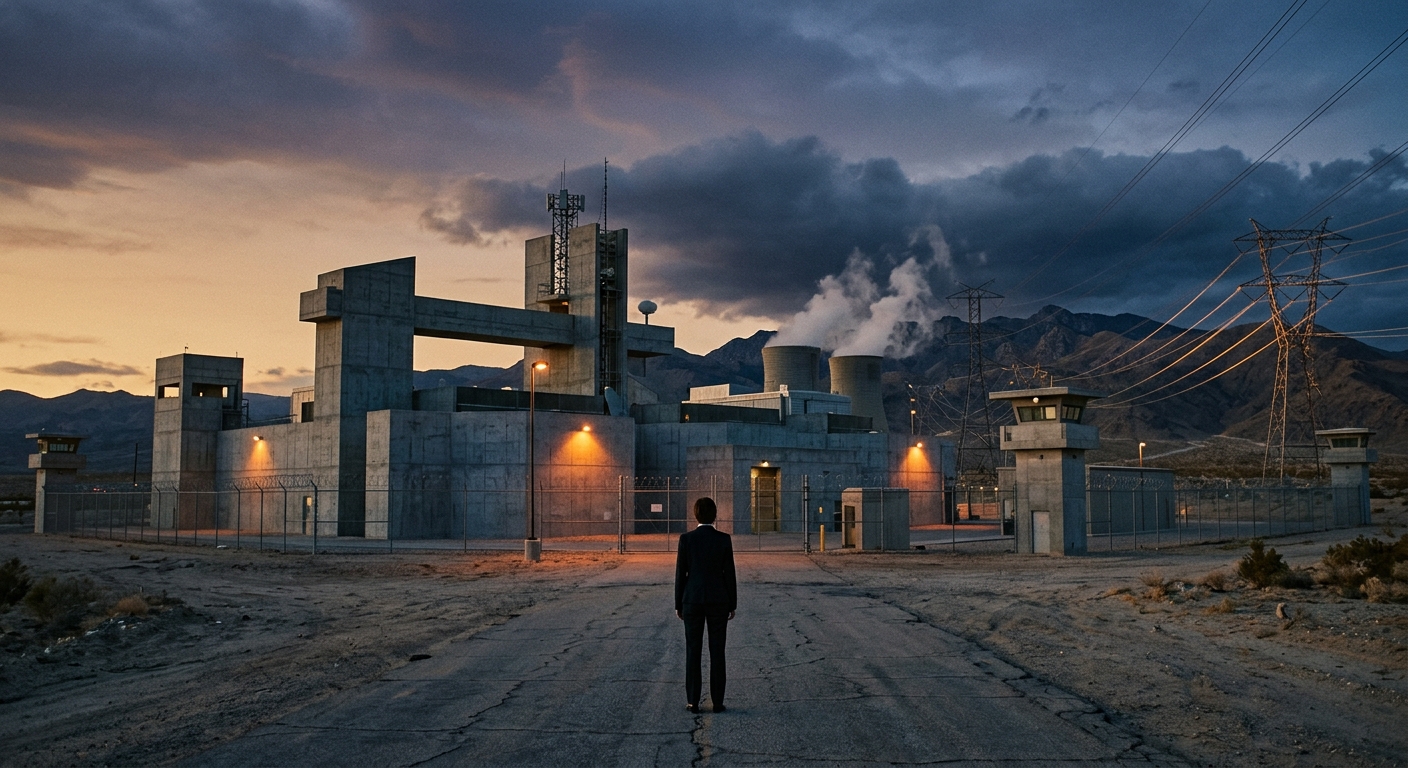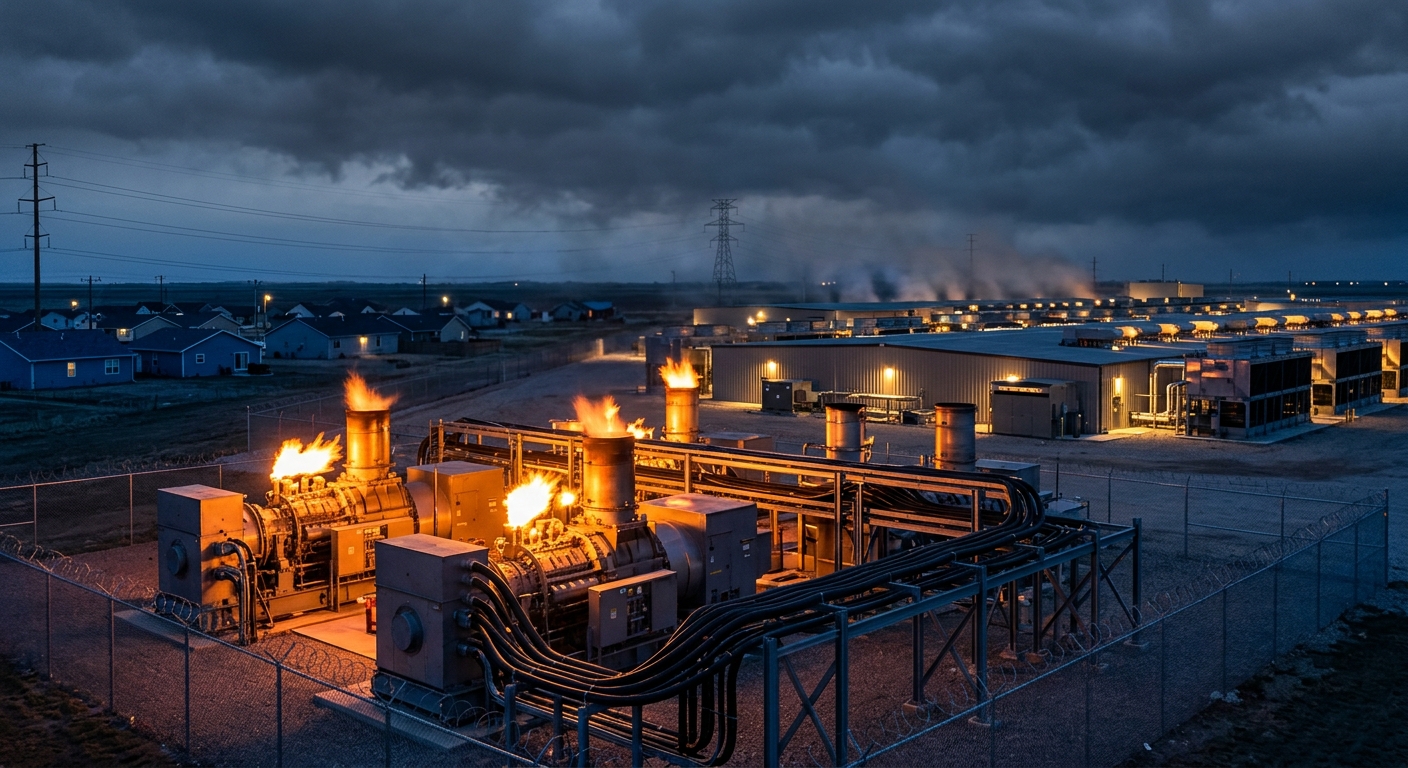
There is a claim circulating widely enough that it needs addressing directly: that the White House “classified AI data centers as military installations,” granting them the legal protections of a military base and stripping local governments of zoning authority over them.
That is not what the order says. The real mechanism is less dramatic in its wording and more consequential in its effect, and it is worth getting right — because the accurate version is harder for the industry to rebut.
What Executive Order 14318 actually does
EO 14318, “Accelerating Federal Permitting of Data Center Infrastructure,” was signed on 23 July 2025 and published in the Federal Register on 28 July.
It creates a category called a Qualifying Project. A data center or associated component qualifies if it involves:
- at least $500 million in capital expenditure, or
- more than 100 megawatts of incremental load, or
- it protects national security, or
- it is designated by the Secretary of Defense, Interior, Commerce, or Energy.
For projects in that class, the order directs agencies to identify NEPA categorical exclusions — pre-approved determinations that a category of action does not require environmental review. It establishes a presumption that federal financial assistance covering under 50% of project cost does not trigger NEPA at all. And it authorizes the Federal Permitting Improvement Steering Council to move Qualifying Projects onto the FAST-41 track, with the Executive Director able to designate a project and publish an expedited review schedule to the Permitting Dashboard within 30 days.
Note the “national security” prong. It is a route into an expedited federal permitting category, not a reclassification of the building into a military facility. No zoning preemption clause exists in the order, and a private data center on private land in your county is still subject to your county’s zoning — which is exactly why the local fights described elsewhere in this series are still happening and still winning.
The exaggerated version of the story lets the industry win the argument by correcting it. Do not hand them that.
The part that is genuinely new: federal land
The mechanism that actually removes local process is separate, and it is real.
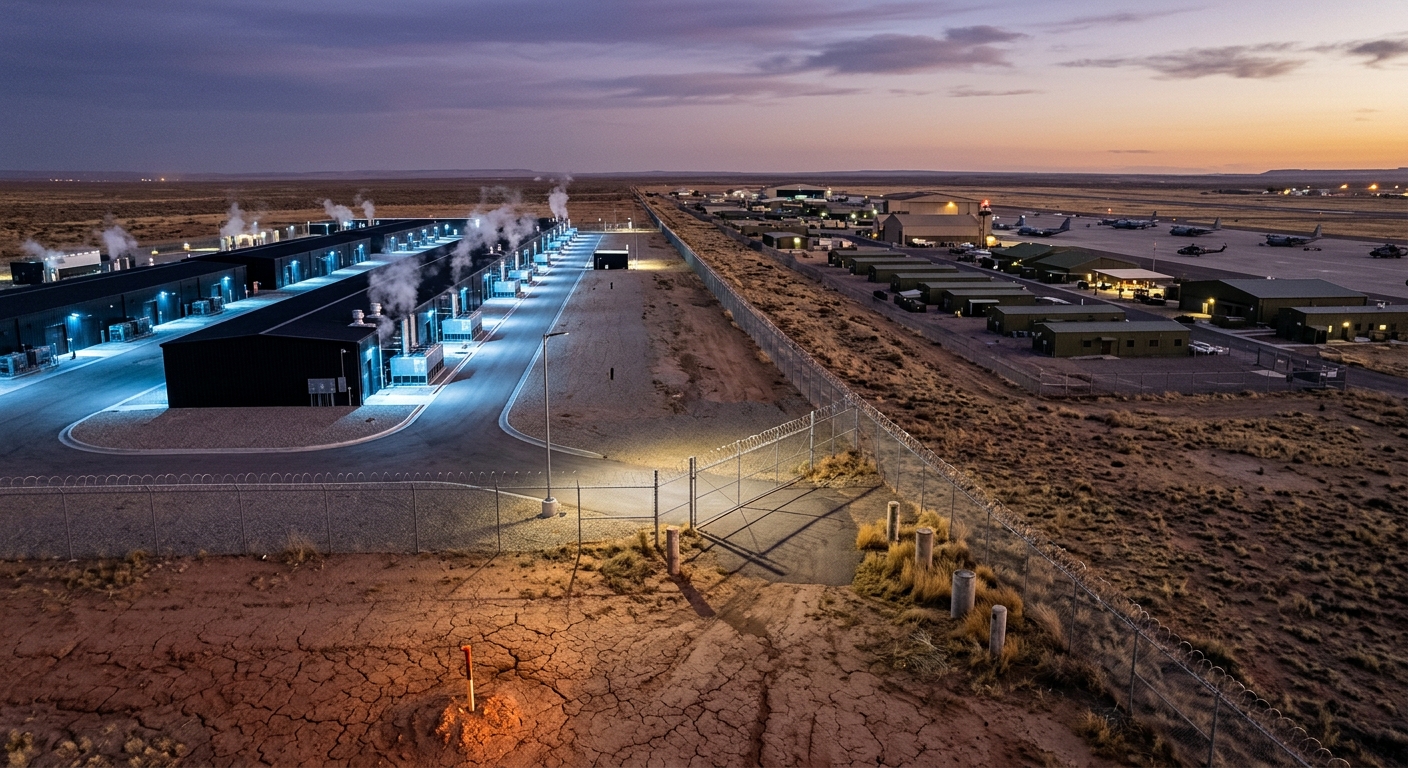
The Army is running an Enhanced Use Lease program to lease underutilized land on installations to commercial data center developers. Four sites have been under review: Fort Hood and Fort Bliss in Texas, Fort Bragg in North Carolina, and Dugway Proving Ground in Utah.
Conditional awards have been made:
- Carlyle, for approximately 1,384 acres at Fort Bliss, Texas. Initial operating capability projected for fiscal year 2027.
- CyrusOne — a portfolio company held jointly by funds managed by KKR and BlackRock — for approximately 1,201 acres at Dugway Proving Ground, Utah. Initial operating capability projected for fiscal year 2029.
Two and a half thousand acres, held by two private capital vehicles, on land where the county commission has no jurisdiction, the state open-meetings act does not apply, and the state public records statute does not reach.
That is the transparency story. Not a legal reclassification of private buildings, but the relocation of buildings onto ground where the local documentary record simply never comes into existence.
The numbers Congress noticed
The Enhanced Use Lease program has drawn genuinely bipartisan opposition, which is not common in defense policy.
The No AI Data Centers on Federal Lands Act, introduced on 23 July 2026, would permanently prohibit large AI data centers on federally owned or managed land, including military bases. Democratic and Republican members have lined up behind it together.
The figures they cite are the reason. The Fort Bliss site alone could require more power than all 460,000 electricity customers in El Paso combined. And Defense Department documentation rates water risk in that area as “Extremely High” — a facility requiring evaporative cooling, sited in the Chihuahuan Desert, on the same aquifer system that supplies a metropolitan area of nearly a million people.
Separately, a proposed amendment to the fiscal 2027 defense authorization bill would bar companies from installing or operating data facility equipment containing certain printed circuit boards, advanced semiconductors, and chipsets that the Defense Department deems a national security risk — a supply-chain provision that could complicate the same projects from a different direction. A House NDAA provision has been reported as potentially derailing the Army’s plans outright.
So the Executive Branch is accelerating and Congress is, on a bipartisan basis, attempting to stop it. That fight is unresolved, and it is the single most important open question in American data center siting right now.
What the accelerationists get right
The case for EO 14318 is not empty and should be stated fairly.
Federal permitting genuinely is slow, and slowness is not neutral. A NEPA process that takes four years for a facility that takes eighteen months to build is not producing better environmental outcomes; it is producing delay, litigation risk priced into capital costs, and a strong incentive to site the workload abroad instead. Categorical exclusions exist precisely because reviewing every action de novo is not a coherent use of agency capacity.
Federal land can be a better siting outcome on the merits. Dugway Proving Ground is an enormous, already-disturbed military reservation. Building there rather than on farmland outside a growing exurb has genuine advantages in noise, traffic, viewshed, and habitat.
And the compute-sovereignty argument is not fabricated. If frontier and near-frontier capability increasingly runs on infrastructure sited outside the United States, that has real consequences for jurisdiction over the data inside it — a point that cuts in favor of domestic siting even for people who dislike the buildings.
The problem is not that these arguments are wrong. It is that every one of them is an argument for speed, and none of them is an argument for opacity. You could grant expedited review and still require metered power and water disclosure, ownership transparency, and public comment. The order does the first and not the second.
Why the venue matters more than the rules
Here is the structural point this series keeps returning to.
Communities have almost no substantive legal right to know what happens inside a data center. What they have is procedural leverage — the abatement negotiation, the rezoning hearing, the conditional use permit, the interconnection docket. Those are the moments when a developer needs something and can be asked questions as the price of getting it. Nearly everything the public has learned about power draw, water draw, and ownership this year came out of one of those proceedings, or out of a records request filed against one.
Site the facility on Fort Bliss and none of those proceedings occur. There is no county agenda item, no state-law public comment period, no abatement to negotiate, no local records custodian to serve. The Freedom of Information Act still applies to the federal agency, with its national security and commercial confidentiality exemptions fully intact — and against a leasehold held by a private equity fund on a defense installation, those exemptions are load-bearing.
The rules did not change. The venue did. In practice, that is the same thing.
What it means in practice
Two things are true at once, and both should be reported accurately.
EO 14318 did not turn private data centers into military installations, and anyone repeating that claim will be corrected by an industry representative at the exact moment their credibility matters most. What it did was build a fast lane for projects above $500 million or 100 MW, with NEPA categorical exclusions and FAST-41 scheduling.
And the Army is separately leasing thousands of acres on active installations to Carlyle and CyrusOne, in places where local government has no role and where the only remaining transparency mechanism is FOIA against the Department of Defense. Congress is trying to stop it on a bipartisan basis. The 2027 NDAA is where that gets decided.
What you can do
- Get the claim right when you make it. “$500 million or 100 MW gets you a NEPA categorical exclusion and a FAST-41 slot” is accurate, verifiable from the Federal Register, and much harder to wave away than “they classified them as military bases.”
- Watch the Permitting Dashboard. FAST-41 covered and transparency projects are published there with review schedules. It is the one place the federal government affirmatively lists which data centers it is fast-tracking, and almost nobody looks at it.
- Contact your representatives about the FY2027 NDAA. The federal-lands provision is live legislation with bipartisan support, which makes it the rare fight where constituent contact plausibly changes an outcome.
- File FOIA on the Enhanced Use Leases themselves. The lease instruments, the water and power commitments, and the environmental assessments for Fort Bliss and Dugway are agency records. Expect exemptions, but the redaction pattern alone is informative.
- If a project near you disappears, check federal land nearby. Local rejection increasingly means relocation rather than cancellation, and the replacement site will not appear on any agenda you are watching.