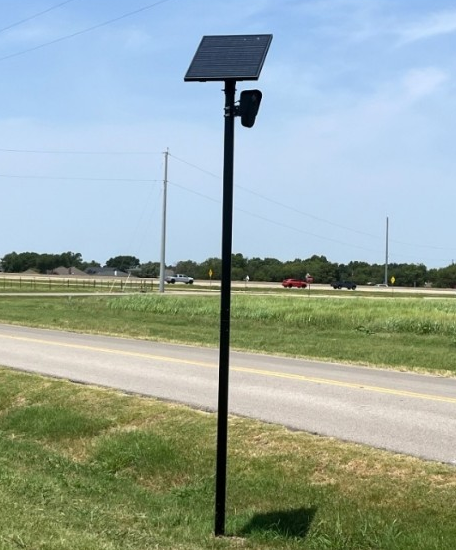
From neighborhood watch cameras to federal dragnet: the explosive growth, constitutional battles, and security failures of the nation’s dominant ALPR system
December 18, 2025 - In less than eight years, Flock Safety has transformed from a neighborhood security startup into America’s most pervasive surveillance infrastructure, operating over 90,000 automated license plate reader (ALPR) cameras across 5,000+ communities in 49 states. The Atlanta-based company now scans more than 20 billion vehicles monthly, claims involvement in 10-12% of all solved crimes in the United States, and has achieved a staggering $7.5 billion valuation following a $275 million funding round in March 2025.
Federal Surveillance Exposed: How CBP Gained Secret Access to Over 80,000 AI Cameras Nationwide
But as Flock’s cameras multiply across American streetscapes—often installed without public input or city council approval—a cascade of revelations has exposed a surveillance apparatus far more invasive and poorly secured than advertised. Secret data sharing with federal immigration enforcement. Plans to aggregate personal information from data breaches. Multiple constitutional lawsuits challenging warrantless tracking. Security vulnerabilities allowing unauthorized access. And a pattern of violating state privacy laws while building what civil liberties groups call “a digital dragnet” over American roads.
This is the story of how one company built the infrastructure for a surveillance state—and how communities are fighting back.
The Explosive Growth of Flock’s Empire
Flock Safety’s rise has been meteoric. Founded in 2017 by CEO Garrett Langley with the stated mission to “eliminate crime,” the company initially marketed solar-powered license plate readers to homeowner associations and neighborhood watch groups as a tool to reduce package theft and vehicle break-ins.
The pitch was compelling: affordable, turnkey surveillance cameras that could automatically scan every vehicle entering a neighborhood, compare license plates against police databases of stolen vehicles or wanted suspects, and alert law enforcement in real-time. For resource-strapped police departments, Flock offered a force multiplier—the ability to track suspects across jurisdictions without additional staffing.
The Surveillance State Emerges: UK Police Live Facial Recognition Explodes Without Legal Framework
By 2024, Flock had installed cameras in over 4,000 cities across 42 states and employed more than 900 people. The company’s technology portfolio has expanded far beyond simple license plate readers to include:
Falcon and Sparrow Cameras: The company’s flagship ALPR devices that photograph every passing vehicle, reading license plates and identifying distinguishing characteristics like make, model, color, roof racks, bumper stickers, and even specific damage patterns to create unique “vehicle fingerprints.”
Flock Raven: Audio gunshot detection systems launched in 2021, similar to ShotSpotter, that record 5-second audio clips and use AI to detect gunfire. In October 2025, Flock announced these devices would begin listening for “human distress,” including screams.
Flock Nova: A controversial “public safety data platform” launched in early 2025 that aggregates ALPR data with Records Management Systems (RMS), Computer-Aided Dispatch (CAD), jail systems, open-source intelligence (OSINT), and public records—initially planned to include data from breaches before public backlash.
Flock Alpha Drones: Following the October 2024 acquisition of Aerodome, Flock announced U.S.-manufactured Drone as First Responder (DFR) systems, with multiple drone models launching in 2025.
FreeForm AI Search: Natural language vehicle search capabilities allowing officers to query the system with descriptions like “blue SUV with racing stripe” or “white F-150 with ladder in back.” The system now extends to searching people’s characteristics in video footage.
Major corporate clients have embraced the technology. Flock’s customer roster includes four of the National Retail Federation’s Top 10 retailers, seven of the 10 largest U.S. shopping malls, and ten of the 40 largest U.S. health systems. Private sector clients include Lowe’s, Simon Property Group, Kaiser Permanente, FedEx, Pyramid Management Group, Academy Sports + Outdoors, and Dierbergs Markets.
In October 2025, Flock announced a partnership with Amazon’s Ring security products, allowing residents with Ring cameras to optionally share video data with public safety agencies during legal investigations—creating an even more comprehensive surveillance network that extends from public streets into private driveways and doorsteps.
The Network Effect: “You Show Me Yours, I’ll Show You Mine”
What makes Flock uniquely powerful—and uniquely invasive—is its nationwide data-sharing model. Police departments contracting with Flock can choose to share their ALPR data with no other departments, with specific named departments, with all departments in their state, or with the entire Flock network nationwide.
But Flock has designed its system to incentivize maximum sharing: if a police department chooses to share their data with the entire nationwide network, that department can also search the entire nationwide network. As one Flock training video demonstrates, enabling nationwide data sharing is as simple as clicking a button labeled “Enable National Lookup.”
This creates a force multiplier effect where cameras installed by a homeowner association in suburban Arizona can be searched by police departments in Virginia, Texas, California, or anywhere else in the country that participates in the network—all without warrants and often without the knowledge of the residents being tracked.
According to audit logs obtained by the ACLU of Massachusetts, one Flock network documented over 450,000 searches of the nationwide database in just a 30-day period. The scale makes case-by-case oversight impossible.
Network audits reveal frequent vague or tautological search justifications. Officers enter terms like “investigation” or “susp” instead of substantive information about what they’re investigating. Even when Flock prohibits officers from accessing search data without providing specific reasons, police can easily evade these guardrails by entering generic terms or declining to provide specific details about their investigations.
The Federal Surveillance Scandal
For months, Flock Safety maintained it had no contracts with federal agencies. This claim unraveled spectacularly in August 2025.
Illinois Discovers the CBP Connection
Illinois Secretary of State Alexi Giannoulias conducted an audit that revealed Flock Safety had permitted U.S. Customs and Border Protection (CBP) to access cameras on Illinois roads and surveil drivers—a clear violation of Illinois’ 2023 state law prohibiting the sharing of license plate data with police departments investigating issues related to out-of-state abortions or undocumented immigrants.
The violation was compounded by a shocking revelation: Flock leadership was unaware the company was even running a pilot program with CBP. The company’s own executives didn’t know federal agencies had access to their surveillance network.
The Scope Revealed
Investigative reporting by 404 Media and the Associated Press subsequently exposed that Border Patrol had gained access to at least 1,600 license plate readers across 22 states through Flock’s network—potentially far more when including other ALPR vendors like Rekor and Vigilant Solutions.
The scope was breathtaking. CBP’s access to Flock’s network was far more robust and widespread than previously reported, contradicting earlier claims by Flock Safety that federal access was limited to rare, one-to-one sharing agreements. Border Patrol had requested access from agencies nationwide, with departments across multiple states agreeing to share data.
Many local police departments discovered they were participating in federal surveillance without their knowledge. One police department told 404 Media it “did not know or understand” it was sharing data with CBP—highlighting a fundamental breakdown in transparency about how surveillance data was being used by federal authorities.
The Immigration Enforcement Connection
Partially redacted police search logs obtained by the Colorado ACLU and reviewed by NBC News showed that law enforcement agencies accessed Denver’s Flock ALPR data in more than 1,400 immigration searches since 2024, including searches simply labeled “ICE.”
This occurred despite Denver’s sanctuary city status and policies designed to prevent local police from participating in federal immigration enforcement.
Five Virginia counties—Fairfax, Chesterfield, Isle of Wight, Loudoun, and Stafford—shared Flock data with federal authorities for immigration enforcement despite prohibitions against such operations, according to law enforcement logs analyzed by the Virginia Center for Investigative Journalism. About 50 immigration-related enforcement searches were conducted in Flock data in these counties between June 2024 and April 2025.
In one particularly egregious case, the Drug Enforcement Administration used a local police officer’s stolen password to access Flock’s cameras to search for an individual suspected of an “immigration violation”—without the officer’s knowledge or consent. The Palos Heights Police Department only discovered the breach after it had occurred and subsequently enabled multi-factor authentication.
California Violations
In California, where state law explicitly prohibits sharing license plate reader data with federal agencies, it was reported that several state and municipal law enforcement agencies nonetheless shared data with federal immigration authorities. Southern California law enforcement agencies violated the state’s sanctuary policies more than 100 times in 2025 through Flock data sharing.
Research by the University of Washington found that multiple law enforcement agencies using Flock cameras across Washington state either enabled data sharing with U.S. Border Patrol or had their cameras accessed by Border Patrol without explicit authorization.
Flock’s Response and Pause
Following the Illinois audit revelations and mounting public pressure, Flock announced in August 2025 that it was suspending all federal pilot programs, including with CBP and Homeland Security Investigations (HSI).
CEO Garrett Langley acknowledged in a blog post that while Flock doesn’t have a direct contractual relationship with Department of Homeland Security agencies, the company had “engaged in limited pilots” with CBP and HSI “to assist those agencies in combatting human trafficking and fentanyl distribution.”
However, Langley made clear that compliance with state and local laws is ultimately the responsibility of local agencies, not Flock: “In some states and jurisdictions, local law enforcement work with federal authorities to enforce immigration offenses. It is a local decision. Not my decision, and not Flock’s decision.”
Critically, Flock does not remove agencies from the network or cancel contracts for violations of its policies prohibiting use of data for immigration enforcement.
The “pause” is widely viewed as temporary. “The best bet on how this will go with the Flock pause is that they will claim to have fixed it. Somehow they’ll claim to have changed their system somehow and then they will resume the contracts,” Seth Hall from the Trust SD Coalition told CBS8. “That is because Flock is a for-profit mass surveillance company and the federal government especially right now is very clearly in the market for mass surveillance technology.”
The Nova Controversy: When Surveillance Meets Data Breaches
In May 2025, 404 Media reported that Flock was developing a new product called “Nova” that employees internally described as a “public safety data platform” designed to supplement ALPR data with information from multiple sources—including data breaches.
According to the report, Flock employees expressed concerns that some of the data powering Nova came from breaches, including information from a hacked parking meter. The revelations suggested Nova would enable law enforcement to track specific individuals without warrants by aggregating:
- License plate reader data- Open-source intelligence (OSINT)- Public records information- Commercially available data- Data from breaches (initially planned)
The concept was essentially creating a comprehensive surveillance dossier system that would allow police to query a person’s name, phone number, or address and receive aggregated information drawn from multiple databases—much of which individuals would have no idea had been collected or combined.
Flock’s Reversal
Following public outcry and internal concerns, Flock announced it would not supply “dark web data”—meaning data purchased from known data breaches or stolen data. The company claimed this decision resulted from its internal “Policy Evaluation” process.
In a blog post titled “Correcting the Record,” Flock stated that Nova would supply only:
- Public records information- Open-Source Intelligence (OSINT)- License Plate Reader (LPR) data- Agency-supplied data from Records Management Systems (RMS), Computer-Aided Dispatch (CAD), and jail systems
However, civil liberties advocates remain skeptical. Matthew Guariglia, senior policy analyst for the Electronic Frontier Foundation, warned: “If the reports about Flock Nova are true, this is precisely the kind of dystopian panopticon we’ve warned about. We’ve often warned that data from automated license plate readers—already a digital dragnet that captures information about millions of people who’ve committed no crimes—could be combined with other data streams to further invade people’s privacy.”
The fact that Flock even considered incorporating breach data into a law enforcement product raises fundamental questions about the company’s commitment to privacy and ethical boundaries.
Nova is currently available in “Early Access” to select law enforcement agencies and is being actively deployed despite the controversy.
Security Failures: Stolen Credentials and Missing MFA
Even as Flock builds a surveillance network tracking hundreds of millions of Americans, the company has struggled with basic security practices that left its systems vulnerable to unauthorized access.
The Multi-Factor Authentication Problem
In November 2024, lawmakers raised alarms about stolen police credentials exposing Flock surveillance cameras to hackers and unauthorized federal access. The Palos Heights Police Department discovered that the DEA had used a local officer’s stolen password to access Flock’s cameras without the officer’s knowledge or the department’s authorization.
When TechCrunch investigated, Flock revealed that the company only switched on multi-factor authentication (MFA) by default for all new customers starting in November 2024. As of November 2025, 97% of law enforcement customers had enabled MFA—leaving approximately 3% of customers, potentially dozens of law enforcement agencies, operating without this basic security protection.
Flock refused to provide specific numbers of law enforcement customers without MFA, wouldn’t say if any federal agencies were among the remaining customers, and declined to explain why the company doesn’t require its customers to switch on the security feature.
This means that for years, police credentials for accessing a massive surveillance network tracking hundreds of millions of vehicles were protected by nothing more than username and password combinations—easily stolen, shared, or misused.
Physical Security Vulnerabilities
In November 2025, an independent security researcher published a white paper compiling security findings about Flock hardware and software. The research revealed significant vulnerabilities in Flock’s physical devices.
According to researchers and reporting by 9News, Flock cameras were found to be vulnerable to physical tampering. As one security expert put it, they could be compromised in “30 seconds with a stick.”
The researcher had been in contact with Flock Safety throughout 2025 and notified the company of findings earlier in the year. Flock posted a customer advisory addressing the vulnerabilities, registered them with the National Vulnerability CVE database via MITRE, and has continued to report findings.
However, the discovery that such critical surveillance infrastructure could be physically compromised so easily raises questions about the security of the data collected and the integrity of evidence derived from these systems.
Both Aurora and Denver Police said they require multi-factor authentication for Flock logins, despite no company mandate requiring it. Security expert Jordan, who analyzed the vulnerabilities, noted: “It’s up to the communities to be the ones to force some type of regulation to make sure that these things are up to security standards.”
Constitutional Challenges: The Fourth Amendment Fights Back
Flock’s rapid expansion has triggered a wave of constitutional litigation challenging whether warrantless ALPR surveillance violates Fourth Amendment protections against unreasonable searches.
The Norfolk Lawsuit: A Landmark Case
The most significant legal challenge comes from Norfolk, Virginia, where the city partnered with Flock Safety in 2023 to install 172 ALPR cameras creating what Police Chief Mark Talbot described as “a nice curtain of technology” that would make it “difficult to drive anywhere of any distance without running into a camera somewhere.”
In October 2024, Norfolk residents Lee Schmidt and Crystal Arrington, represented by the Institute for Justice, filed a federal lawsuit arguing that the 176 cameras (four were added after the initial deployment) create a surveillance system that violates the Fourth Amendment by tracking residents’ movements for 30 days without warrants.
The plaintiffs’ experience is chilling. Court filings revealed that between February 19 and July 2, 2025, Flock cameras logged Schmidt’s location 526 times—approximately four times per day.
“It’s a crazy high number. It was shocking,” Schmidt told NBC News. “The creepiness level just went straight up.”
The Court’s Reasoning
In February 2025, Chief Judge Mark S. Davis of the Eastern District of Virginia rejected the city’s motion to dismiss the lawsuit, citing the Supreme Court’s decision in Carpenter v. United States (2018), which held that using cell phone location data to track someone’s movements is a search requiring a warrant under the Fourth Amendment.
Judge Davis wrote: “A reasonable person could believe that society’s expectations, as laid out by the Court in Carpenter, are being violated by the Norfolk Flock system.”
He continued: “The complaint alleges facts notably similar to those in Carpenter that the Supreme Court found to clearly violate society’s expectation of privacy: law enforcement secretly monitoring and cataloguing the whole of tens of thousands of individuals’ movements over an extended period.”
Flock Tries to Intervene—And Fails
In June 2025, Flock Safety attempted to intervene in the lawsuit to defend its business model. Chief Judge Davis denied the motion as “untimely,” delivering a stinging rebuke: “Flock made a conscious gamble to not show up to the platform on time; it is not this Court’s fault that the train had already left the station by the time Flock arrived.”
The judge noted that Flock had sat on the sidelines hoping the court would dismiss the case and only attempted to intervene once it became clear the lawsuit would proceed.
Federal Government Weighs In
In September 2025, U.S. Attorney Lindsey Halligan filed a statement of interest defending Norfolk’s use of Flock cameras, arguing that no American can reasonably expect privacy on public roads and that Norfolk’s surveillance system is perfectly constitutional.
Relying on decades-old cases that predate modern surveillance technology, the Department of Justice’s position is that photographing license plates in public spaces doesn’t constitute a search under the Fourth Amendment—regardless of how comprehensively or systematically it’s done.
The case is scheduled for trial in fall 2025, with discovery closing in summer 2025. The outcome could set precedent for thousands of communities across the United States.
San Jose Lawsuit: California Constitutional Challenge
In November 2025, the Electronic Frontier Foundation (EFF) and ACLU of Northern California filed a lawsuit in Santa Clara County Superior Court challenging San Jose police’s warrantless searches of ALPR data as violations of the California Constitution.
Filed on behalf of the Services, Immigrant Rights and Education Network (SIREN) and the Council on American-Islamic Relations – California (CAIR-CA), the lawsuit argues that the California Constitution provides even stronger privacy protections than the Fourth Amendment, specifically at Article I, Section 13 (ban on unreasonable searches) and Article I, Section 1 (guarantee of privacy).
“This is not just about data or technology—it’s about power, accountability, and our right to move freely without being watched,” said CAIR-San Francisco Bay Area Executive Director Zahra Billoo.
The lawsuit names the city, Police Chief Paul Joseph, and Mayor Matt Mahan as defendants and asks the court to stop the city and its police from searching ALPR data without first obtaining warrants.
Washington State: The Public Records Battle
In November 2025, a Skagit County judge delivered a major blow to Flock Safety’s attempts at opacity, denying requests from the Washington cities of Stanwood and Sedro-Woolley to shield Flock camera data from public disclosure under Washington’s Public Records Act.
The cities had sought a declaratory judgment to classify Flock footage as exempt, arguing it constituted sensitive investigative material. The court disagreed, ruling that images from Flock surveillance cameras are public records subject to disclosure.
The decision has significant implications for transparency and accountability, allowing researchers, journalists, and civil liberties organizations to analyze how the technology is being used and potentially misused.
The Broader Legal Landscape
Multiple other jurisdictions have faced or are considering legal challenges:
- In Illinois (March 2025), the U.S. District Court for the Northern District of Illinois found that license plate readers do not violate the Fourth Amendment—though this decision predates the more protective reasoning in the Norfolk case.- In California (June 2024), a Norfolk Circuit Court judge ruled that collecting location data from Flock ALPRs constitutes a search under the Fourth Amendment and cannot be used as evidence without a warrant. The ruling likened ALPR location databases to tracking devices, whose warrantless use by police was previously found unconstitutional in United States v. Jones.
The legal battlefield is expanding rapidly, with cases pending or recently filed in multiple jurisdictions. The fundamental question is whether 21st-century surveillance technology can be governed by 20th-century Fourth Amendment precedents that never contemplated AI-powered cameras creating permanent searchable databases of everyone’s movements.
Community Pushback: Cities Cancel Contracts
As revelations mount about federal access, constitutional concerns, and security vulnerabilities, communities are pushing back. Since summer 2025, at least eight cities have canceled or paused Flock contracts, or let them lapse after local protests:
Austin, Texas: One of the first major cities to cancel its contract following concerns about federal immigration access to camera data.
Sedona, Arizona: After community organizer Sandy Boyce, a 72-year-old Trump voter, led a grassroots coalition that united conservatives and progressives in opposing the cameras, the City Council voted unanimously on September 9, 2025 to end Sedona’s contract. Four cameras had been installed with plans for eight more.
Oak Park, Illinois: Voted August 5, 2025 to shut off its eight Flock cameras, with seven positioned within two blocks of the Oak Park-Chicago line. The vote followed revelations about CBP access and concerns over potential use in immigration investigations.
Evanston, Illinois: Announced September 26, 2025 it would shut off its 19 Flock license plate readers effective immediately.
Eugene and Springfield, Oregon: Both cities suspended their Flock contracts in December 2025 following vocal community opposition and concerns about federal access. Eugene police said the city’s cameras were included in a broad search by federal agencies of more than 80,000 cameras nationwide.
Scarsdale, New York: Canceled contract following privacy concerns.
Gig Harbor, Washington: Let contract lapse after community opposition.
San Marcos, Texas and Mountlake Terrace, Washington: Both voted not to renew contracts in late 2025.
Additional cities including Cambridge, Massachusetts; Hillsborough, North Carolina; Redmond, Washington; Verona, Wisconsin; and Hays County, Texas (including suburban Austin) have also cut ties.
Syracuse, New York and other municipalities are actively considering cancellation.
The Denver Battle
Denver presents a particularly contentious case study. Mayor Mike Johnston initially signed a Flock contract without city council approval and without input from his own surveillance policy task force. The pilot program started with 18 cameras, then expanded to 111 for $339,000—still under the $500,000 threshold requiring council approval.
Denver City Council member Sarah Parady admitted the expansion occurred with minimal oversight: “We did get a short presentation around February 2024. It was a slide about what they were doing to combat auto theft. I didn’t latch onto it the way I should have. It is bats---. We should have been a little less guileless, more savvy about this whole situation.”
When hundreds of Denverites packed a town hall meeting in protest, citing “serious concerns” over Flock’s “ethics, transparency and credibility” and the company’s “disregard for honesty and accountability,” Mayor Johnston nevertheless acted unilaterally to extend the contract.
Johnston had stated unequivocally that the system had never been used for immigration enforcement—an assertion researchers found impossible to substantiate and that was later contradicted by ACLU-obtained search logs showing over 1,400 immigration-related searches.
The controversy is compounded by Flock’s significant political influence. The company has spent $690,000 on political lobbying in 2025 to date, raising questions about how backroom influence shapes municipal surveillance decisions.
The Privacy Stakes: What’s Really at Risk
Critics argue that Flock’s surveillance network represents a fundamental transformation in the relationship between citizens and the state—one that occurs without meaningful consent, democratic deliberation, or constitutional safeguards.
The Scope of Tracking
With over 90,000 cameras performing 20 billion scans monthly, Flock has created the infrastructure for comprehensive tracking of American vehicle movements. The 30-day data retention period means police can “travel back in time” to trace anyone’s movements over the past month—determining where they went, when they went there, how long they stayed, and who they associated with based on vehicles seen together.
As one officer told privacy researcher Elser in a moment of unguarded confidence: “You know we have cameras in that town. You can’t get a breath of fresh air in or out of that place without us knowing.”
This level of comprehensive surveillance was technologically impossible just a decade ago. Now it’s operational in thousands of communities.
The Chilling Effect
The knowledge that one’s movements are being tracked and recorded can change behavior even when no laws are being broken. Individuals might avoid attending protests, visiting certain neighborhoods, seeking healthcare services, or associating with particular people if they know their travel patterns are being monitored and permanently recorded.
This is especially concerning for immigrants in sanctuary cities, abortion clinic patients and staff in states where traveling for reproductive healthcare is criminalized, and participants in lawful protests who face potential government scrutiny.
The Lack of Accountability
The voluntary nature of Flock’s privacy policies means compliance is optional. The company doesn’t remove agencies from its network or cancel contracts when violations occur. Local law enforcement agencies can simply decide to share data with federal authorities regardless of state laws or company policies.
Network search audit logs reveal that meaningful oversight is practically impossible at scale. With 450,000 searches in a 30-day period in a single network, and vague justifications like “investigation” accepted as sufficient, there’s no realistic way to ensure officers are using the system appropriately.
Mission Creep and Function Expansion
Flock’s evolution from simple license plate readers to comprehensive surveillance ecosystem demonstrates the risk of mission creep. The company now offers:
- Audio surveillance (Raven gunshot detection, soon including “human distress” detection)- Video surveillance (expanding beyond vehicles to search for people characteristics)- Drone surveillance (aerial tracking and real-time response)- Data aggregation (Nova platform combining multiple databases)- Integration with private cameras (Ring partnership bringing doorbell cameras into the network)
Each expansion increases the comprehensiveness of surveillance and reduces the spaces where citizens can move without being tracked, recorded, and analyzed by AI systems feeding law enforcement databases.
The Business of Surveillance
Flock Safety’s financial success demonstrates the lucrative nature of the surveillance-industrial complex. The company’s $7.5 billion valuation following its March 2025 funding round makes it one of the most valuable private security technology companies in the world.
The company crossed $300 million in annual recurring revenue (ARR) in 2024, representing approximately 70% year-over-year growth. This explosive growth has attracted major venture capital investment:
- Lead investor: Andreessen Horowitz- Major backers: Greenoaks Capital, Bedrock Capital- Additional investors: Meritech Capital, Matrix Partners, Sands Capital, Founders Fund, Kleiner Perkins, Tiger Global, Y Combinator
The business model is subscription-based. Cameras cost approximately $2,500-$3,000 per camera per year (Flock raised prices from $2,500 to $3,000 in 2024, but allowed existing customers to lock in five-year contracts at the lower rate). With tens of thousands of cameras deployed, the revenue compounds quickly.
Flock markets cameras not just to law enforcement but to homeowner associations, businesses, schools, and property owners—all of which can opt to share their camera feeds with police, dramatically expanding the surveillance network without requiring government expenditure or public approval.
The company has invested in a new 100,000 square foot manufacturing facility in Atlanta to serve increased demand, emphasizing U.S.-based manufacturing as a selling point.
Flock’s CEO Garrett Langley frames the company’s mission in aspirational terms: “We started Flock to make an impact on the communities throughout the United States, which began with our vision of eliminating crime.”
But critics question whether “eliminating crime” justifies eliminating privacy.
The Technology: How It Actually Works
Understanding Flock’s capabilities helps contextualize privacy concerns.
Camera Operation
Flock’s Falcon and Sparrow cameras are solar-powered, mounted on poles or existing infrastructure, and connected via cellular networks. Each camera:
- Captures high-resolution images of every passing vehicle’s rear license plate2. Extracts the license plate number using optical character recognition (OCR)3. Analyzes other vehicle characteristics using computer vision: make, model, color, body type, roof racks, bumper stickers, aftermarket modifications, visible damage4. Creates a unique “vehicle fingerprint” combining all identifying characteristics5. Uploads data in real-time to Flock’s cloud servers6. Compares license plates against National Crime Information Center (NCIC) database and local/state police watchlists7. Alerts nearby officers instantly if a match is found8. Stores all data (matches and non-matches) in searchable databases for 30 days
The AI Enhancements
Flock has layered sophisticated AI capabilities onto basic ALPR technology:
FreeForm Search: Natural language queries across the entire camera network. Officers can search for “blue SUV with racing stripe” or “white pickup with ladder” without knowing specific license plate numbers.
Plate Swap Detection: The system identifies when the same license plate appears on multiple different vehicles over 30 days—a tactic criminals use to evade detection.
Multi-State Insights: For cases involving cross-state criminal activity (human trafficking, narcotics distribution, organized retail crime), the system tracks vehicles as they move between states.
Behavioral Pattern Analysis: The aggregated data allows officers to see patterns—which vehicles appear together repeatedly, which vehicles frequent certain locations, which vehicles travel unusual routes at suspicious times.
The Data Aggregation
Nova takes this further by combining ALPR data with:
- RMS data: Every past police interaction, arrest, incident report- CAD data: 911 call history, dispatch records, emergency response patterns- Jail data: Booking records, release dates, court dates- OSINT: Social media profiles, public posts, online activity- Public records: Property ownership, vehicle registration, business licenses- Cross-agency data: Information from other participating law enforcement agencies
The result is a comprehensive dossier that can be generated in seconds by querying a name, address, phone number, or license plate—enabling what civil liberties groups describe as “warrantless investigations” into people who haven’t been charged with crimes.
The Palantir Connection
Flock’s systems integrate with predictive policing platforms including Palantir, the controversial data analytics company known for its work with intelligence agencies and immigration enforcement.
This integration means Flock’s surveillance data can feed into Palantir’s broader analytical frameworks, potentially enabling:
- Predictive risk assessment: Algorithmic determination of who police should target- Network analysis: Mapping social connections based on vehicle co-location- Behavioral prediction: Identifying “suspicious” patterns that trigger enhanced surveillance
The combination of comprehensive vehicle tracking (Flock) with sophisticated data analytics and prediction (Palantir) creates an infrastructure for algorithmic policing that civil liberties advocates have warned about for years.
What’s Next: The Trajectory of Surveillance
Flock Safety shows no signs of slowing its expansion. The company’s roadmap includes:
More cameras: Continued deployment in thousands of additional communities
More capabilities: Every existing Flock LPR camera can be upgraded to video-enabled at no cost to customers, announced in Q2 2025
More drones: Multiple U.S.-manufactured drone models launching throughout 2025
More integration: Ring partnership expands to include doorbell cameras; potential future partnerships with dashcam companies could turn millions of private vehicles into mobile surveillance platforms
More data: Nova platform continues rolling out to additional agencies despite controversy
More private sector adoption: Healthcare, financial services, retail, and industrial firms increasingly deploying Flock technology
The company has publicly stated its goal is to “eliminate crime” in America—an aspirational vision that necessarily implies comprehensive surveillance of all American movement and activity.
The Questions We Must Answer
Flock Safety’s explosive growth forces American society to confront fundamental questions about privacy, liberty, and the kind of country we want to be:
On Consent and Democracy:
- Should surveillance infrastructure tracking hundreds of millions of people be deployed without explicit democratic authorization?- Is it acceptable for HOAs and private businesses to opt residents into government surveillance networks?- Should federal agencies access local surveillance systems despite state sanctuary laws?
On Constitutional Protections:
- Does tracking everyone’s movements for 30 days constitute a “search” requiring warrants under the Fourth Amendment?- Are 20th-century Fourth Amendment precedents adequate for 21st-century AI surveillance?- How does comprehensive tracking square with freedoms of assembly, association, and movement?
On Security and Accountability:
- If a $7.5 billion surveillance company can’t secure its systems with basic MFA, should it be trusted with tracking hundreds of millions of people?- When violations of state privacy laws occur, who is held accountable—the company, the local agency, or no one?- What prevents mission creep when there’s no legislative framework governing deployment?
On Efficacy and Proportionality:
- Does Flock’s claimed 10-12% involvement in solved crimes justify comprehensive surveillance of the innocent 99.9%?- Are there less invasive approaches that could achieve similar public safety benefits?- What’s the opportunity cost of spending hundreds of millions on surveillance versus traditional policing?
On Equity and Discrimination:
- Do ALPR systems perpetuate existing patterns of over-policing in minority communities?- How is data used to track immigrants, abortion patients, and protesters exercising First Amendment rights?- What protections exist against using this infrastructure for political targeting?
🎧 Related Podcast Episode
Conclusion: The Crossroads
America stands at a crossroads. In less than a decade, a single private company has built surveillance infrastructure that would have seemed dystopian just years ago—and it’s expanding rapidly with minimal oversight, questionable security, and constitutional challenges mounting in courts nationwide.
The choice before us is whether to accept this surveillance reality as the new normal, or whether to demand meaningful constraints, democratic authorization, and constitutional protections before allowing this infrastructure to become permanent and pervasive.
Communities across the country are making their voices heard. Eight cities have canceled contracts. Multiple constitutional lawsuits are proceeding. State legislatures are passing new restrictions. Public awareness is growing.
But Flock’s venture capital backing, political lobbying, and aggressive expansion continue. The company has the resources to outlast public outrage, lobby for favorable legislation, and normalize comprehensive surveillance through sheer ubiquity.
The question is not whether surveillance technology will continue advancing. The question is whether Americans will accept being tracked, recorded, and analyzed every time they drive—without warrants, without meaningful oversight, and without the ability to opt out.
For Norfolk resident Lee Schmidt, who was tracked 526 times in less than five months by a system he never consented to, the answer is clear: “The creepiness level just went straight up.”
The lawsuit he and Crystal Arrington brought may determine whether that “creepiness” violates the Constitution—and whether Americans retain any reasonable expectation of privacy on public roads.
The outcome will affect not just the 5,000 communities where Flock currently operates, but the thousands more where the company plans to expand. It will determine whether “eliminating crime” means eliminating privacy. And it will answer whether we build the infrastructure for a free society or a surveillance state.
For cybersecurity professionals, privacy advocates, and policy makers: The Flock Safety case study represents a critical inflection point in the evolution of surveillance technology. The company’s rapid deployment, federal agency integration, data aggregation ambitions, and security failures offer lessons for jurisdictions worldwide facing similar pressures to adopt comprehensive surveillance systems. The constitutional challenges proceeding through U.S. courts may establish precedents that govern surveillance technology for decades—making this moment in 2025 a pivotal one for the future of privacy rights in the digital age.
Related Privacy & Surveillance Coverage
Biometric Surveillance & Digital ID Systems
- ICE’s Mobile Fortify App: Expanding Biometric Surveillance - How U.S. immigration enforcement deployed smartphone-based facial recognition for domestic surveillance- Mexico’s Biometric Dystopia: The Mandatory Digital ID - Analysis of Latin America’s most comprehensive biometric surveillance system- Global Digital ID Systems Status Report 2025 - Comprehensive tracking of mandatory biometric identification programs worldwide
Federal & Law Enforcement Surveillance
- Federal Surveillance Exposed: CBP’s Secret Access to 80,000+ AI Cameras - Investigation into how federal agencies gained warrantless access to nationwide surveillance networks- Flock’s Dashcam Partnership: Every Car a Mobile Surveillance Unit - The expansion of automated surveillance into private vehicles
Age Verification & Privacy Erosion
- The Global Age Verification Disaster - How “child safety” measures create surveillance infrastructure- When Privacy Activists Fight Back: UK’s Digital Surveillance - Examining resistance to the UK Online Safety Act’s age verification mandates
Smart City & IoT Surveillance
- The Sensor City: How Smart Devices Are Transforming Urban Life - Comprehensive look at CCTV cameras with facial recognition, gunshot detection sensors, and crowd monitoring systems in modern cities- The Surveillance Blind Spot: How Smart Offices Are Eroding Workplace Privacy - How workplace IoT devices create comprehensive behavioral profiles without meaningful consent- When Cities Fall: Municipal Cyberattacks Threaten Your Smart Office - How municipal cyber weakness has become a business risk factor for smart offices