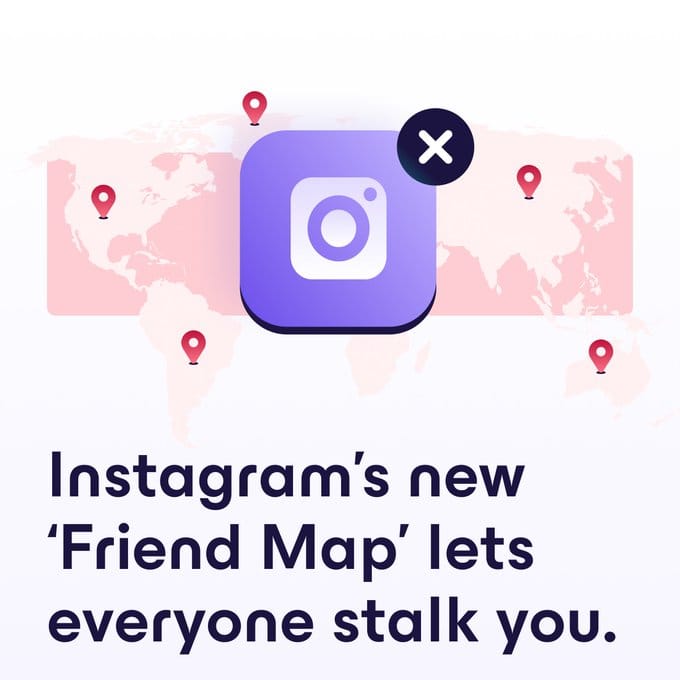
Instagram’s “Friend Map” sounds like a fun way for friends to share their location. Unfortunately, Meta thinks your friends include Meta’s own employees, advertisers, and cops.
The Latest Location Tracking Controversy
Instagram rolled out its new “Friend Map” feature in early August 2025, promising users a “lightweight way to connect” by sharing real-time locations with friends. The feature allows users to see where their friends are in real time, updating whenever they open the app or return to it if it’s running in the background. Sound familiar? It should—this is essentially Instagram’s answer to Snapchat’s controversial Snap Map feature that has raised privacy red flags since 2017.
Meta Faces Multi-State Lawsuit Over Alleged Underage User Engagement
But here’s the twist that makes this particularly concerning: despite Meta’s claims that “Instagram Map is off by default, and your live location is never shared unless you choose to turn it on,” users across social media platforms are reporting a different reality. Multiple firsthand accounts from users indicate that location information may appear even when users have not opted in or enabled the new feature.
The Opt-In That Isn’t Really Opt-In
Despite not opting in, disabling the feature, and turning off location services for the Instagram app, followers are still able to see their location. Meta’s explanation? Hidden within the new Friend Map’s privacy menus is a line stating that the feature may use a user’s IP address to estimate their general location if device-level location settings are turned off.
Ken Paxton Secures $1.4 Billion Settlement with Meta Over Biometric Data Violations
This isn’t just about technical glitches—it represents a fundamental misunderstanding of consent in the digital age. When users explicitly disable location sharing, they expect that to mean their location won’t be shared. Period. But Meta’s approach suggests a different philosophy: unless you navigate through multiple layers of settings and understand the technical nuances of IP geolocation, you might still be broadcasting your whereabouts.
The Snapchat Parallel: A Pattern of Privacy Problems
Instagram’s Friend Map bears striking similarities to Snapchat’s Snap Map, which has faced criticism since its 2017 launch. When Snap Map was first introduced, it raised privacy concerns for parents and child safety advocates, with experts warning about the risks of location sharing, including an invasion of privacy and the risks for vulnerable users like teenagers.
Meta’s Tracking Pixels: A Major Privacy Concern and Legal Precedent
Like Instagram’s current rollout, Snapchat initially claimed “location-sharing is off by default for all users and is completely optional”. Yet the setup was not clear about how data was shared, and users could inadvertently broadcast where they lived to every one of their contacts.
Both platforms share concerning characteristics:
- Precise location tracking down to specific buildings and addresses- Persistent background updates that continue even when not actively using the app- Complex privacy settings that require constant management- Default assumptions that users want to share more than they actually do
Facebook’s 2012 Controversy: Ethical Dilemmas in Psychological Experimentation
Who Are Your Real “Friends” on Meta’s Platform?
The term “Friend Map” is misleading marketing. Your location data doesn’t just go to your actual friends—it becomes part of Meta’s vast data collection apparatus. Based on recent reports, Meta experienced a 675% surge in accounts shared with law enforcement between 2014 and 2024, and Meta maintains detailed guidelines for law enforcement access to user data.
Meta’s privacy policy reveals the company shares user information in several concerning ways:
- In response to legal requests, like search warrants, court orders, production orders or subpoenas from law enforcement and other government authorities- With integrated partners who use Meta’s products, who can always access information that’s public on the platform- For advertising purposes, where Meta uses logs from this Meta Pixel software to build a profile of you for advertising
Your location data, once collected, becomes part of this broader ecosystem. While Instagram tells users it doesn’t use location from the maps feature to target ads, this narrow promise doesn’t address how location data might be used for other purposes or shared with third parties.
The Broader Data Harvesting Context
Instagram’s Friend Map launch comes amid revelations about Meta’s increasingly aggressive data collection practices. Researchers recently caught Meta using tactics that one expert called similar to those of digital crooks to secretly compile logs of people’s web browsing on Android devices. These “scuzzy” tactics surprised even privacy experts who thought they’d seen every trick.
This context matters because it reveals Meta’s approach to user consent and privacy. The company consistently pushes the boundaries of what users expect, implementing features that default to sharing more information rather than less, with complex opt-out processes that many users never discover.
In the Instagram app:
➡️ Messages → Map → ⚙️ Settings → “No one”
Then go one step further:
🍏 iOS: Settings → Privacy → Location Services → Instagram → “Never” 🤖 Android: Settings → Location → App permissions → Instagram → “Deny”
4/5— Proton Mail (@ProtonMail) August 8, 2025
Protecting Yourself: Lessons from ProtonMail
ProtonMail, a privacy-focused email service, recently shared important tips about protecting your location privacy on social media platforms. Their advice emphasizes several key principles:
Turn Off Location Services Entirely: The most effective protection is to disable location access for Instagram at the device level. Go to your phone’s settings, selecting privacy, then location, and turning off location for Instagram entirely.
Understand the Scope: Even if you haven’t enabled the Friend Map feature, Instagram may still be collecting location data through other means—IP addresses, tagged locations in posts, and metadata from photos.
Regularly Audit Privacy Settings: Location sharing settings can change with app updates or policy changes. ProtonMail recommends regularly reviewing all privacy settings, not just when new features launch.
Consider the Default: If a company’s business model relies on data collection, features will default to sharing more, not less. Always assume you need to opt out rather than opt in.
Snapchat Safety Guide: A Technical Deep Dive into Privacy and Protection
The Teenager Trap
Perhaps most concerning is the impact on young users. Several lawmakers raised concerns about how location-sharing features could cause harm to younger users, with representatives writing that “Instagram’s proposed feature will require the tracking of young people and their devices’ locations”.
New Mexico’s Legal Battle Against Meta: A Stand Against Child Exploitation on Facebook and Instagram
Privacy experts warn that location-sharing features can be particularly risky for younger app users, as “these features might feel fun and social, but they create unnecessary risks that teens and many adults don’t necessarily understand”.
The dangers extend beyond abstract privacy concerns:
- Stalking and harassment: Users worried that bad actors could exploit the map feature by spying on others- Safety risks for vulnerable individuals: The feature is “incredibly dangerous to anyone who has a restraining order and actively making sure their abuser can’t stalk their location online”- Unintended consequences: Young users may not understand the long-term implications of location sharing
Snapchat’s Privacy Concerns and CSAM Issues Since 2010
Taking Action: How to Protect Yourself
Based on privacy experts’ recommendations and ProtonMail’s guidance, here’s how to protect yourself:
Immediate Steps:
- Disable Instagram’s location access entirely through your phone’s settings2. Turn on “Ghost Mode” or equivalent privacy settings in any location-sharing apps3. Review and limit who can see your location in all social media apps4. Install Privacy Badger or similar browser extensions to block tracking
Ongoing Practices:
- Regularly audit app permissions and privacy settings2. Question defaults: Assume new features will share more data unless you specifically opt out3. Educate family members, especially teenagers, about location privacy risks4. Consider alternatives: Use privacy-focused alternatives when possible
Snapchat Privacy and Security: A Detailed Technical Guide
The Bigger Picture
Instagram’s Friend Map represents more than just another social media feature—it’s part of a broader trend where tech companies normalize constant surveillance under the guise of social connection. The pattern is clear: launch features that default to oversharing, make privacy settings complex and buried, then claim users “chose” to share their data.
The comparison with Snapchat’s Snap Map reveals how these concerns aren’t new or unique to one platform. Geolocation features remain under-regulated in many jurisdictions, creating opportunities for misuse, such as stalking or unauthorised surveillance.
When ProtonMail warns that “your friends include Meta’s own employees, advertisers, and cops,” they’re highlighting a fundamental truth about modern social media: your data isn’t just shared with people you choose—it becomes part of vast commercial and governmental surveillance networks.
Privacy Settings Explained: A Guide to TikTok, Snapchat, and LinkedIn
The Path Forward
The solution isn’t to abandon social media entirely, but to approach it with clear eyes about the true costs of “free” platforms. Companies like Meta have built trillion-dollar businesses by extracting and monetizing user data. Features like Friend Map aren’t primarily about helping friends connect—they’re about creating new streams of valuable location data.
Until regulators catch up with the reality of modern data collection, users must take responsibility for their own privacy. That means understanding that in Meta’s world, your “friends” include anyone willing to pay for access to your data—whether that’s advertisers trying to sell you products or law enforcement agencies building profiles of citizens.
The next time a social media platform launches a “fun” new feature that wants to know where you are, remember: if you’re not paying for the product, you are the product. And in this case, your location is part of the package deal.
Meta’s Tracking Pixels: A Major Privacy Concern and Legal Precedent
ProtonMail’s privacy tips remind us that protecting digital privacy requires constant vigilance and proactive steps. In an era where location data is increasingly valuable to corporations and governments alike, the default should always be privacy first.