The alarming push to link digital identities to every social media post under the guise of “protecting democracy”
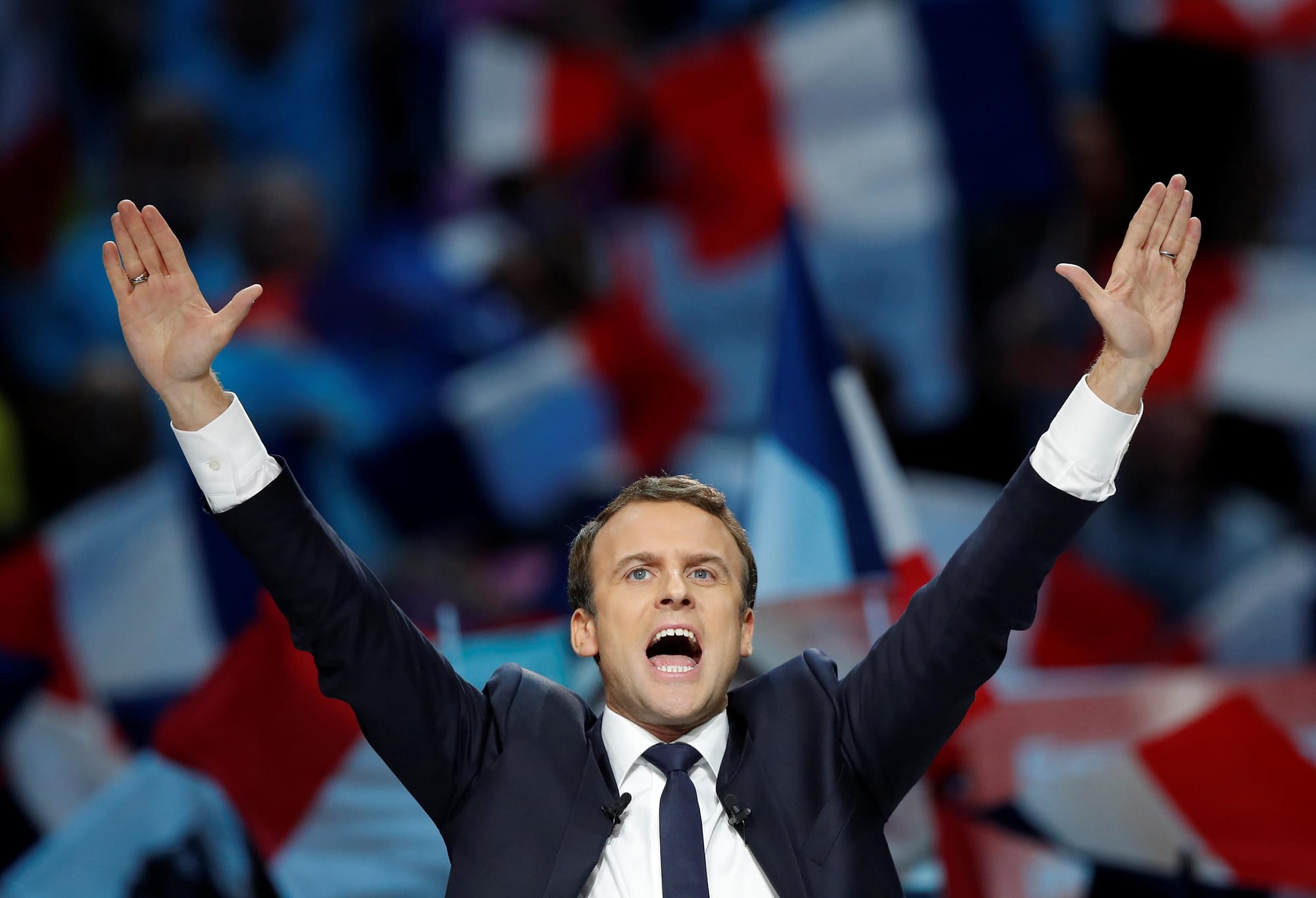
If you haven’t been paying attention to what’s happening in Europe, you should be. French President Emmanuel Macron just declared open season on free speech online, and he’s using every bureaucratic tool at his disposal to make it happen. Speaking at the Paris Peace Forum on October 29, 2025, Macron didn’t mince words: Europeans are “completely wrong” to use social media for news and should return to traditional public media and “established outlets.”
Let that sink in. A sitting president telling citizens they shouldn’t trust their own ability to discern information online, and should instead rely solely on government-approved news sources. If that doesn’t send chills down your spine, you haven’t been paying attention to history.
The “Trust Only State-Approved Media” Playbook
Macron claims social media platforms are driven by a “process of maximum excitement” designed to maximize advertising revenue, which he says is destroying democratic debate. He singled out X (formerly Twitter) as being “dominated by far-right content” and accused owner Elon Musk of engaging in “political and reactionary activism on a global scale.” TikTok, he warned, poses similar dangers.
But here’s what’s really going on: Over 40 percent of people under 30 and nearly half of 18- to 30-year-olds now rely on social media for news. That’s an entire generation getting information outside the traditional gatekeepers. And that terrifies establishment politicians.
Macron is urging Europe to “take back control of our democratic and informational life” through what he calls a stronger “European agenda of protection and regulation.” Translation: government control of online speech.
The Real Agenda: Digital Identity = The Death of Anonymity
Here’s where this gets truly dangerous. Macron keeps talking about eliminating “fake accounts” online. Sounds reasonable at first, right? But the only way to truly eliminate fake accounts is to eliminate anonymity itself. If Macron is serious about ending fake accounts—and he keeps insisting he is—the only mechanism to achieve this is mandatory digital identity verification for every online post.
And guess what? The infrastructure for this totalitarian vision already exists. The EU’s eIDAS regulation requires every member state to issue digital identities. France has France Identité, Germany has eID, Italy has SPID. Originally designed for banking, healthcare, and tax purposes, these IDs can easily be integrated into social media platforms.
Under the revised eIDAS 2.0 regulation that entered into force in May 2024, EU Member States must provide EU Digital Identity Wallets to all citizens by the end of 2026. These wallets will store everything from ID documents to diplomas, health records, and professional certificates.
Connect the dots: Digital identity wallets + social media regulation = every post you make online traceable to your government-issued ID. No more pseudonyms. No more anonymous whistleblowing. No more privacy.
The Brussels Bypass: Regulating Away Democracy
Macron has a problem at home—his government has no stable majority, his authority has evaporated, and his approval ratings have collapsed to just 11 percent. But in Brussels, the regulatory machinery still answers to him.
The EU’s Digital Services Act already gives regulators the power to police what they call “systemic risks” online—a term vague enough to cover disinformation, hate speech, or anything deemed destabilizing to democracy. Platforms can be fined up to 6 percent of global turnover, which forces them to over-police content long before Brussels even intervenes.
This is the playbook: When you can’t win elections or pass legislation democratically, you regulate through unelected bureaucrats in Brussels. The result is the quiet erosion of free speech across an entire continent.
The “Information Integrity” Scam
At the same Paris Peace Forum, 29 countries signed a political declaration committing to “enhanced multilateral action for information integrity and independent media.” The Paris Declaration emphasizes supporting “independent media” through mechanisms like the International Fund for Public Interest Media (IFPIM).
But “independent media” funded by governments isn’t independent—it’s state-subsidized propaganda with extra steps. The declaration talks about combating “information manipulation and foreign interference” while simultaneously calling for governments to determine what constitutes legitimate information.
Macron accused social media of radicalizing young minds, claiming that searching for “Islam” on TikTok leads to Salafist content by the third video. This is the same tired argument we’ve heard before: “Think of the children!” It’s always about protecting children or fighting terrorism or stopping foreign interference. But the real target is always the same—citizens’ ability to speak freely without government surveillance.
What This Means for Privacy and Freedom
The combination of mandatory digital identity verification and expansive content regulation creates a perfect storm against privacy:
1. The End of Anonymous Speech Whistleblowers, dissidents, activists, and everyday citizens who want to speak truth to power without retaliation will have nowhere to hide. Every opinion you express online will be permanently tied to your government ID.
2. Chilling Effects When people know their real identity is attached to every post, they self-censor. Controversial opinions disappear. Debate dies. Only “safe” government-approved discourse remains.
3. Surveillance Infrastructure The EU Digital Identity Wallet system requires interoperability across all member states and integration with both public and private services. This creates a pan-European surveillance network where your digital activities can be tracked across borders and industries.
4. Mission Creep What starts as “fighting fake accounts” inevitably expands. Today it’s mandatory ID for social media. Tomorrow it’s for commenting on news articles. Next week it’s for any online forum. Before you know it, you can’t participate in digital life without government permission.
5. Weaponized Enforcement Who decides what constitutes “disinformation” or “hate speech” or content that “destabilizes democracy”? Whoever controls the regulatory apparatus. And when that regulator is politically motivated—as they always are—enforcement becomes a weapon against political opponents.
The Real Threat to Democracy
Macron claimed that “we cannot form a free opinion or vote freely if we don’t know how to establish a proper relationship with facts” and that platforms have abandoned “informational neutrality.” But the irony is staggering.
Traditional media has never been neutral. State-subsidized media certainly isn’t neutral. The only difference is that social media gave regular people the ability to bypass traditional gatekeepers and share information directly. And that’s what terrifies the political class.
The biggest threat facing Europe isn’t people discussing immigration on X or watching political content on TikTok. The biggest threat is politicians like Macron who want to eliminate the digital public square entirely and replace it with a licensed, government-monitored space where only approved opinions can be expressed.
What “Online Safety” Really Means
Let’s be brutally honest about what’s happening here. When politicians talk about “online safety,” they’re not worried about your safety. They’re worried about their own.
“Online safety” means safety for politicians who don’t want to face criticism. It means safety for failed policies that can’t withstand public scrutiny. It means safety for establishment institutions that are losing their monopoly on information.
The narrative that this is about “protecting children” is particularly cynical. Yes, there are legitimate concerns about children’s online activities. But mandatory digital identity verification for all users doesn’t protect children—it surveils everyone. It’s using children as rhetorical shields for a power grab.
The Slippery Slope Is a Cliff
This isn’t a hypothetical future—it’s being implemented right now. Macron has already announced that France will ban social media access for children under 15 within “a few months” if the EU doesn’t act first. He’s called for banning any social media platforms that don’t disclose their algorithmic bias—and of course, the government gets to determine what constitutes “bias.”
By December 2027, certain regulated industries including banks, credit institutions, and payment service providers will be required to accept EU Digital Identity Wallets for customer verification. The integration with financial services creates additional leverage to force adoption.
Every step of this plan is carefully designed to make digital identity mandatory through the back door. Can’t access banking without it. Can’t access government services without it. Can’t post on social media without it. Eventually, you won’t be able to participate in modern life without giving the government 24/7 surveillance access to your digital existence.
Resistance Is Not Futile
The good news is that this totalitarian vision isn’t inevitable. But it requires people to recognize what’s happening and push back before it’s too late.
For individuals:
- Use privacy-focused services and platforms while you still can- Support decentralized and encrypted communication tools- Resist any attempt to link your real identity to online accounts- Use VPNs and privacy tools to protect your digital footprint- Push back against the “if you have nothing to hide” narrative
For businesses and platforms:
- Don’t voluntarily implement digital identity requirements beyond what’s legally mandated- Build in privacy protections and minimize data collection- Support users’ right to pseudonymous and anonymous speech- Resist government pressure to become surveillance tools
For policymakers (the few who still care about freedom):
- Oppose any expansion of mandatory digital identity requirements- Protect anonymous speech as a fundamental right- Limit government’s power to regulate online content- Sunset existing surveillance authorities rather than expanding them
The Bottom Line
Macron’s crusade against social media isn’t about protecting democracy—it’s about controlling it. It’s about ensuring that the only information citizens receive comes through channels the government can monitor, influence, and shut down when necessary.
His vision is of a Europe where free speech is tolerated only when it’s traceable, and where platforms pre-emptively silence anything that might draw a regulator’s glare.
This is the digital equivalent of requiring government permission to speak in a public square. It’s the death of privacy and the birth of a panopticon state where every word you write, every opinion you express, and every idea you share is permanently linked to your government-issued identity and subject to retroactive punishment.
The warning signs are all there. The infrastructure is being built. The legal framework is in place. The only question is whether citizens will recognize the threat before it’s too late.
Because once anonymity is gone, it’s not coming back. And once the government controls who can speak and what can be said online, “democracy” becomes whatever those in power decide it means.
The war on free speech isn’t coming. It’s already here. And it’s being waged by the very people who claim to be defending democracy.
What are your thoughts on Macron’s push for digital identity integration with social media? Are these legitimate concerns about online safety, or a dangerous power grab disguised as protection? Share your views—while you still can anonymously.