An in-depth analysis of the interconnected web of censorship, control, and corporate compliance transforming the global internet in 2025
🎧 Related Podcast Episode
Executive Summary
In July 2025, a perfect storm of regulatory enforcement, payment processor pressure, and activist campaigns converged to fundamentally alter the internet as we know it. What began as targeted campaigns against adult content on gaming platforms rapidly evolved into a comprehensive restructuring of online freedoms across multiple jurisdictions. This article examines how the confluence of the UK’s Online Safety Act, payment processor censorship, EU Digital Services Act enforcement, and proposed US legislation like KOSA is creating an unprecedented era of digital control that extends far beyond its stated aims of protecting children.
The Catalyst: Collective Shout and the Payment Processor Campaign
The Beginning of Financial Censorship
The current crisis began in April 2025 when Australian activist group Collective Shout, founded by self-described “pro-life feminist” Melinda Tankard Reist, launched a campaign targeting Steam and Itch.io over a game called “No Mercy.” Unable to get direct responses from the platforms, Collective Shout pivoted to pressuring payment processors including Visa, Mastercard, and PayPal.
On July 16, 2025, Valve quietly updated Steam’s publishing guidelines to prohibit “Content that may violate the rules and standards set forth by Steam’s payment processors and related card networks and banks, or internet network providers.” The deliberately vague language gave payment processors unprecedented power to determine what content could be sold on the platform.
In Addition to COPPA and KOSA for Child Safety Bills
The result was immediate and devastating:
- Nearly 100 adult-themed games were removed from Steam- Itch.io deindexed thousands of games from search and browse pages- Legitimate artistic works caught in the crossfire, including:The award-winning indie game “Mouthwashing”- The horror RPG series “Fear & Hunger”- The critically acclaimed “Consume Me” Over 77,000 signatures accumulated on a Change.org petition opposing the censorship
The Hypocrisy and Inconsistency
Critics quickly noted the blatant hypocrisy in Collective Shout’s approach. The organization had previously defended the controversial Netflix film “Cuties” while simultaneously campaigning against Grand Theft Auto V and attempting to ban Detroit: Become Human for depicting domestic violence - content specifically designed to create empathy for abuse victims. More tellingly, payment processors that now claim moral authority had previously allowed platforms like OnlyFans to operate with minimal oversight despite credible reports of real abuse content.
As Nier creator Yoko Taro warned: “It implies that by controlling payment processing companies, you can even censor another country’s free speech.”
COPPA Compliance Guide: Children’s Privacy Requirements
Collective Shout’s Damage Control
As backlash intensified, Collective Shout attempted damage control. When contacted by TheGamer, the organization denied calling for the complete removal of adult games from Itch.io, claiming they only targeted specific titles. However, they admitted to orchestrating the payment processor pressure campaign that resulted in blanket censorship. Their response that “Steam did not respond to us” was used to justify bypassing platforms entirely and going straight to financial chokepoints.
The reality is that everyone - Steam, Japan, the UK government, the Australian government, and Itch.io - all “pandered to Visa,” creating what critics describe as a “spineless” capitulation to unelected corporate moral police.
The UK Online Safety Act: From Theory to Enforcement
July 25, 2025: The Day Everything Changed
The UK’s Online Safety Act, which received Royal Assent in October 2023, entered its most controversial phase on July 25, 2025. The age verification requirements transformed overnight from theoretical provisions to enforced reality, triggering:
- A 1,400% surge in UK VPN signups according to Proton VPN- Mass implementation of invasive age verification across platforms- The withdrawal of services like Bellesa and BitChute from the UK market- Reddit, Discord, X, and even non-adult platforms implementing ID verification
The Failures of Age Verification
Within hours of implementation, the supposed “robust” age verification systems proved laughably inadequate. Users discovered they could bypass Discord’s age checks using:
- AI-generated pictures- Fortnite character screenshots- Images from video games like Death Stranding- Any high-resolution game character with facial features
This immediate failure suggests that facial scanning will inevitably be removed in favor of government ID verification only - creating a comprehensive surveillance infrastructure under the guise of child protection.
Snapchat’s Privacy Concerns and CSAM Issues Since 2010
The Scope Creep
What was sold as protection for children quickly expanded far beyond adult content. The Act requires age verification for any service that allows user interaction, including:
- Social media platforms- Video sharing sites- Dating applications- Online forums- File sharing services- Educational platforms like Wikipedia
Horror games became collateral damage, with platforms preemptively banning titles that might be deemed “harmful” despite containing no sexual content - only atmospheric horror elements that have been part of gaming culture for decades.
The Political Monitoring Revelation
In a chilling development, reports emerged of an “elite team of police officers” assembled by the Home Office to monitor social media for “anti-migrant sentiment.” This division aims to “maximise social media intelligence,” with critics like Nigel Farage warning it represents “the beginning of the state controlling free speech.”
Evidence suggests authorities are already using the Act to suppress legitimate political discourse:
- Footage of protests outside asylum-seeker hotels being blocked- Anti-immigration content from parliamentary speeches labeled as “not safe for kids”- The irony that 16-year-olds may soon be able to vote in the UK, yet are deemed too immature to view political content
The VPN Ban Threat
Labour MP Sarah Champion has already launched campaigns against VPNs, with the party showing historical support for restricting their use. As one Labour source revealed: “We could ban the use of Virtual Private Networks after their use has skyrocketed to avoid the restrictions imposed by the Online Safety Act.”
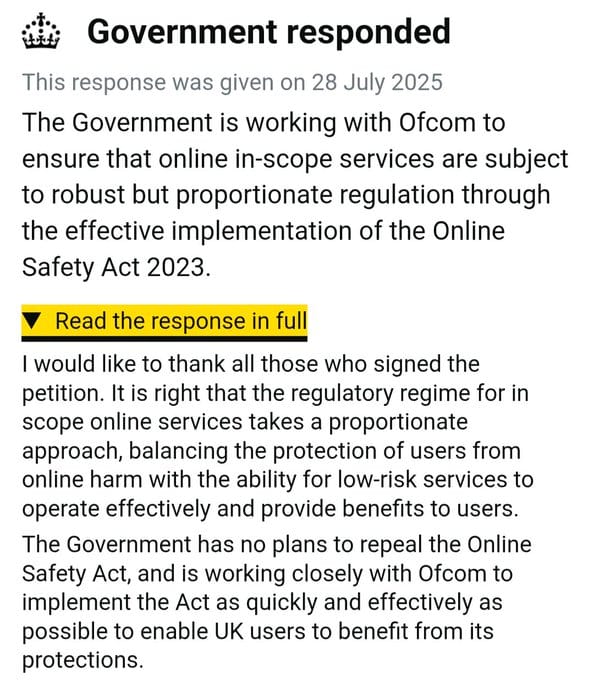
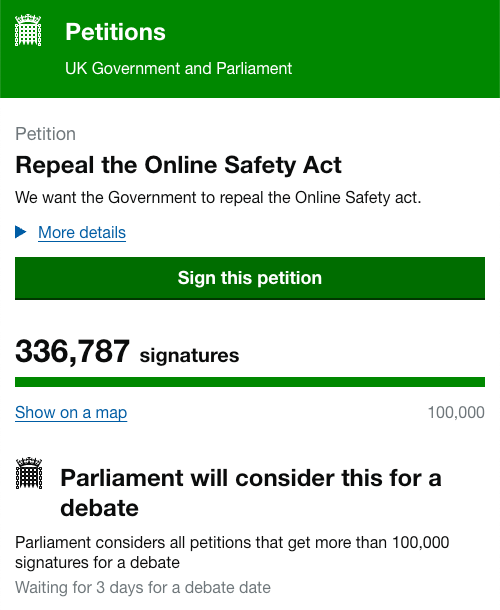
The petition to repeal the Online Safety Act has gathered over 280,000 signatures, with citizens warning that “the scope of the Online Safety act is far broader and restrictive than is necessary in a free society.”
Russia’s WhatsApp and VPN Restrictions: Separating Fact from Fiction
The Global VPN Crackdown
Russia’s Escalation
Russia passed restrictive VPN legislation in July 2025, with the State Duma approving amendments that:
- Introduce fines up to 500,000 rubles (~$6,300) for advertising VPNs- Penalize “intentional searching for extremist materials” with fines of 1,000-5,000 rubles- Target VPN services providing access to banned sites for blocking by Roskomnadzor- Create a pathway to ban WhatsApp, with sources claiming “there’s a 99-percent chance it will happen”
Apple’s Evolving Approach to Combatting Child Sexual Abuse Material (CSAM)
The government is pushing domestic alternatives like “Max” - a messaging app with no end-to-end encryption that reserves the right to share user data with security services. Despite official denials about an August 1 WhatsApp/VPN ban, the trajectory is clear: Russia is systematically eliminating tools for circumventing state censorship.
UK’s Infrastructure Attacks
Beyond potential legislation, UK authorities are attacking VPN infrastructure through corporate pressure. Cloudflare’s unprecedented blocking of pirate sites for UK users represents a new escalation - one that specifically targets VPN users. Unlike traditional ISP blocks that VPNs easily bypass, Cloudflare’s geo-blocking at the CDN level catches users even when connected to UK-based VPN servers.
This represents the first time a major content delivery network has participated in UK content blocking, affecting approximately 200 domains and setting a dangerous precedent for infrastructure-level censorship.
Freedom of Speech and Censorship: The Growing Battle in the UK
Wikipedia’s Stand: The Canary in the Digital Coal Mine
The Legal Challenge
The Wikimedia Foundation’s legal challenge to the UK Online Safety Act represents a crucial test case. If Wikipedia is classified as a “Category 1” service (platforms with over 7 million monthly UK users), it would face requirements that fundamentally undermine its model:
- Mandatory identity verification for contributors- Content moderation systems incompatible with collaborative editing- Privacy violations that could expose editors to authoritarian regimes- Potential implementation of a “quota-based” system limiting UK access
The High Court hearings on July 22-23, 2025 marked the first legal challenge to the Act’s categorization framework. Wikipedia has threatened to block UK access entirely rather than comply with requirements that would destroy its collaborative model.
The Broader Implications
Wikipedia’s case highlights how regulations ostensibly aimed at protecting children threaten fundamental internet infrastructure. The encyclopedia received 776 million views from the UK in June 2025 alone, making it a critical educational resource now under threat.
The EU Digital Services Act: The Brussels Effect Goes Global
Congressional Pushback
On July 25, 2025, the US House Judiciary Committee released a scathing report titled “The Foreign Censorship Threat: How the European Union’s Digital Services Act Compels Global Censorship and Infringes on American Free Speech.”
Key findings include:
- The DSA forces platforms to change global content policies, not just EU-specific ones- European censors labeled the statement “we need to take back our country” as “illegal hate speech”- Political speech, including humor and satire, is being systematically targeted- The “Brussels Effect” means EU regulations become de facto global standards
Age Verification Goes Continental
The European Commission’s July 14, 2025 guidelines on protection of minors introduced:
- A blueprint for age verification across all EU member states- Requirements for “highly effective age assurance” technologies- Plans to extend verification beyond 18+ content to all age ranges- Integration with forthcoming EU Digital Identity Wallets
Sites across Europe are already implementing restrictions, with search engines defaulting to “safe mode” settings that users cannot change - even as adults with verified accounts.
Search Engine Restrictions: The Silent Lockdown
Multiple reports indicate search engines are implementing “safe mode” restrictions by default in certain jurisdictions:
- UK users report Bing SafeSearch stuck on “strict” settings regardless of account age- Google search results increasingly filtered without user consent- Educational and medical content caught in overly broad content filters- Microsoft Edge users unable to disable SafeSearch even with administrator privileges- VPN usage becoming essential for accessing unfiltered information
The infrastructure for this censorship is already in place - users just haven’t realized the extent of the filtering until they try to access legitimate content that’s been algorithmically deemed “unsafe.”
@kosa
The American Response: KOSA Rising
The Kids Online Safety Act
Reintroduced in Congress in May 2025 after stalling in 2024, KOSA represents the US attempt to match European digital control measures. The bill would:
- Establish a “duty of care” requiring platforms to prevent various undefined “harms”- Mandate age verification across all platforms accessible to minors- Give state attorneys general power to sue platforms for content decisions- Create potential for politically motivated enforcement
Despite passing the Senate 91-3 in 2024, KOSA stalled in the House due to free speech concerns. However, with support from figures like Donald Trump Jr. (“We can protect free speech and our kids at the same time from Big Tech”) and Elon Musk, its eventual passage seems increasingly likely in 2025.
Australia’s Social Media Ban: The Extreme Model
The World’s First Under-16 Ban
Australia passed the world’s first complete social media ban for users under 16 in November 2024, with implementation set for December 2025. The Online Safety Amendment (Social Media Minimum Age) Act represents the most draconian approach yet:
- No parental consent exceptions- Fines up to AUD $50 million for non-compliance- Applies to Facebook, Instagram, Reddit, Snapchat, TikTok, and X- YouTube exempt due to “educational” content- Critics describe it as “arbitrary, draconian, and entirely out of proportion”
The legislation passed with minimal consultation - 15,000 submissions were crammed into a 24-hour window, with submitters asked to limit responses to 1-2 pages. A secret last-minute deal between Labor and Coalition removed crucial exemption frameworks that would have allowed platforms to demonstrate safety improvements.
The STOP HATE Act: How Congress Plans to Outsource Censorship to Advocacy Groups
The Infrastructure of Censorship
The Payment Processor-Government Nexus
What’s emerging is a sophisticated system where:
- Activist groups pressure payment processors2. Payment processors threaten platforms’ financial viability3. Governments cite payment processor requirements to justify regulation4. Regulations give payment processors legal cover for censorship5. The cycle repeats with expanded scope
Key Players in the New Ecosystem
- Payment Networks: Visa, Mastercard, PayPal, Stripe controlling financial access- CDN Providers: Cloudflare implementing geo-blocking beyond ISP level- Age Verification Providers: Yoti, AllpassTrust, Persona collecting biometric data- Platform Operators: Forced to choose between compliance or market exit- Government Regulators: Ofcom, EU Commission, eSafety Commissioner expanding enforcement- Activist Groups: Collective Shout, NCOSE driving targeted campaigns
Protecting Minors: The Importance of Safeguarding Children’s Online Privacy
Case Studies in Collateral Damage
Itch.io’s Massacre
The indie gaming platform that served as a haven for experimental and LGBTQ+ content was forced to:
- Deindex all NSFW content without warning- Remove thousands of games from search results- Implement vague content policies banning themes like “non-consensual content (real or implied)”- Sacrifice its role as a platform for marginalized creators
The platform explicitly stated this was “time critical” due to payment processor threats, apologizing to creators whose livelihoods were destroyed overnight.
Horror Games: The New Victims
Beyond Mouthwashing, the horror genre faces existential threats:
- Fear & Hunger series caught in adult content sweeps despite being atmospheric horror- Games depicting any form of distress or dark themes preemptively banned- Platforms over-censoring to avoid payment processor wrath- The death of psychological horror as a gaming genre
Women’s Safety App Tea Suffers Massive Data Breach, Users’ IDs Exposed on 4chan
LGBTQ+ Content Under Fire
Critics warn these measures disproportionately impact marginalized communities:
- Queer content routinely flagged as “explicit” regardless of actual content- Trans developers’ personal stories deemed “too controversial”- Educational resources about LGBTQ+ issues restricted as “adult content”- Groups like Collective Shout explicitly “against” the existence of trans people
The Technical Reality
VPNs: The New Digital Necessity
The 1,400% surge in UK VPN usage on July 25, 2025 reveals the immediate public response to digital restrictions. However, this creates new problems:
- Russia criminalizing VPN advertising and usage- UK considering outright VPN bans- Cloudflare blocking VPN users at infrastructure level- Creation of digital inequality based on technical literacy
The Age Verification Arms Race
Current “solutions” and their failures:
- Facial age estimation - bypassed with game characters- Government ID verification - creating comprehensive surveillance databases- Credit card checks - excluding the young and unbanked- Mobile operator verification - requiring expensive contracts- Each method creating new vulnerabilities while failing to protect children
Age Verification and Child Protection Online: A Legal Perspective Based on the AEPD’s Guidance
Global Implications and Future Trajectories
The Authoritarian Playbook
Democratic nations are creating infrastructure easily exploited by authoritarian regimes:
- Age verification systems become identity tracking mechanisms- Content filtering justifies political censorship- Payment processor control enables economic deplatforming- “Child safety” rhetoric masks adult surveillance- WhatsApp bans in Russia preview communication shutdowns- Search engines locked in “safe mode” becoming the norm
The Balkanization of the Internet
We’re witnessing the fracturing of the global internet into:
- Heavily regulated Western spheres with invasive verification- Authoritarian networks with political filtering- Underground networks accessed via VPN and cryptocurrency- Corporate-controlled walled gardens with sanitized content- National firewalls preventing cross-border information flow
 Protecting Your Children Online: A Comprehensive Guide for Parents
Resistance and Pushback
The Gaming Community Mobilizes
Steam users’ coordinated campaign against Visa demonstrates grassroots digital activism:
- Direct contact campaigns flooding payment processors- Mass petition signatures (over 77,000 and growing)- Alternative payment method development- Growing awareness of payment processor monopoly power
Legal Challenges Mount
Beyond Wikipedia’s challenge, multiple fronts of resistance emerge:
- Civil liberties organizations preparing constitutional challenges- 280,000+ signatures on UK petition to repeal Online Safety Act- Industry groups funding legal opposition- Cross-border jurisdictional disputes intensifying- Technical communities developing censorship-resistant alternatives
Collective Shout’s Retreat
Facing intense backlash, Collective Shout has:
- Claimed innocence, saying they “never wanted this level of censorship”- Asked people to stop contacting them- Attempted to distance themselves from the broader consequences- Been exposed for connections to NCOSE and other conservative groups- Failed to address their hypocrisy in defending actual problematic content while attacking fiction
Analysis: The Pretense vs. The Reality
Stated Goals vs. Actual Outcomes
Claimed Objective: Protecting children from harmful content Actual Result: Comprehensive adult surveillance, political censorship, and the destruction of creative industries
Claimed Objective: Preventing illegal content distribution Actual Result: Suppression of legal speech, artistic expression, and educational content
Claimed Objective: Age-appropriate access to content Actual Result: Identity verification infrastructure threatening anonymity and enabling authoritarian control
Claimed Objective: Platform accountability for user safety Actual Result: Corporate censorship driven by unelected payment processors
The Reality of CCPA Compliance: What a UC Irvine Study Reveals About Data Broker Non-Compliance
The Child Safety Smokescreen
While child safety is important, current measures demonstrate:
- Complete ineffectiveness at protecting children (bypassed with game screenshots)- Disproportionate impact on legal adult activities- Creation of surveillance infrastructure beyond stated goals- Exploitation of parental fears for broader control agenda- Actual predators unaffected while artists and educators suffer
Economic and Social Consequences
The Creator Economy Under Siege
Independent creators face existential threats:
- Adult content creators losing payment processing overnight- Horror game developers self-censoring or abandoning projects- Artists unable to explore dark themes or challenging content- Geographic discrimination based on local regulations- Concentration of power in platforms that can afford compliance
The Innovation Freeze
Regulatory uncertainty creates:
- Startups unable to compete with compliance costs- Innovation moving to less regulated jurisdictions- Technical development focused on compliance over features- Brain drain from overregulated markets- The death of experimental and boundary-pushing content
The Ultimate Irony
Perhaps the greatest irony in this entire saga is the UK’s political contradictions:
- 16-year-olds may soon be able to vote- Yet they’re deemed too immature to view parliamentary debates on immigration- Political content is labeled “not safe for kids” who can participate in democracy- The same teenagers who can shape the country’s future cannot access information to make informed decisions
Recommendations and Solutions
For Individuals
- Digital Literacy: Learn about VPNs, alternative platforms, and privacy tools NOW2. Political Engagement: Contact representatives about digital rights before it’s too late3. Economic Alternatives: Support platforms using cryptocurrency or alternative payment methods4. Community Building: Create and maintain censorship-resistant communication channels5. Documentation: Archive content before it disappears forever
For Platforms
- Transparency: Clearly communicate content policies and changes2. Resistance: Challenge overreaching payment processor demands legally3. Innovation: Develop alternative payment and verification methods4. Coalition Building: Unite with other platforms against corporate censorship5. User Empowerment: Provide tools for users to back up and migrate their content
For Policymakers
- Precision: Target actual harms, not broad content categories2. Proportionality: Ensure measures don’t exceed stated goals3. Rights Protection: Safeguard anonymous speech and privacy4. Global Coordination: Prevent regulatory arbitrage and conflicts5. Reality Check: Acknowledge when systems don’t work (like age verification)
For Society
- Vigilance: Monitor expansion of censorship infrastructure2. Education: Understand technical and political implications3. Activism: Support organizations defending digital rights4. Preparation: Build resilient communication networks5. Memory: Document this moment before history is rewritten
The Internet Bill of Rights: A Framework for Digital Freedom in the Age of Censorship
Conclusion: The Crossroads of Digital Freedom
July 2025 marks a watershed moment in internet history. The convergence of payment processor censorship, government regulation, and activist pressure has created a perfect storm threatening the foundational principles of the open internet. While protecting children online is a legitimate goal, the current approach creates infrastructure for comprehensive digital control that extends far beyond any reasonable interpretation of child safety.
The speed and coordination of these changes reveal a fundamental truth: this isn’t about protecting children. It’s about control. When horror games, political speeches, and educational content are swept up in “child safety” measures - when 16-year-olds can vote but not view parliamentary debates - when game characters can bypass “robust” age verification - the pretense collapses.
We’re watching the construction of a global censorship infrastructure where:
- Visa and Mastercard become unelected moral police- Governments outsource censorship to private companies- Activists with dubious motives drive policy through corporate pressure- The promise of protecting children justifies surveilling adults- Creative expression dies under the weight of compliance
As we stand at this digital crossroads, the choices made now will determine whether the internet remains a space for free expression, innovation, and human connection, or becomes a sanitized, surveilled, and controlled environment where only approved content can exist.
The resistance forming across multiple fronts offers hope, but success requires unprecedented coordination between technologists, activists, creators, and citizens who value digital freedom. The infrastructure being built today will be used by tomorrow’s authoritarians. The time to act is now.
The question is no longer whether we need some form of online safety measures, but whether we’ll allow legitimate concerns to be weaponized for comprehensive digital control. The answer will shape not just our online future, but the fundamental nature of human communication and expression in the 21st century.
When they came for the adult games, many said nothing. When they came for the horror games, few spoke up. When they come for your content, who will be left to speak?
This article synthesizes reporting and analysis from multiple sources tracking the rapid changes in global internet regulation and corporate censorship. As this situation continues to evolve rapidly, with new restrictions and resistance emerging daily, this may be one of the last comprehensive documentations of these events before such reporting itself becomes “unsafe for children.”