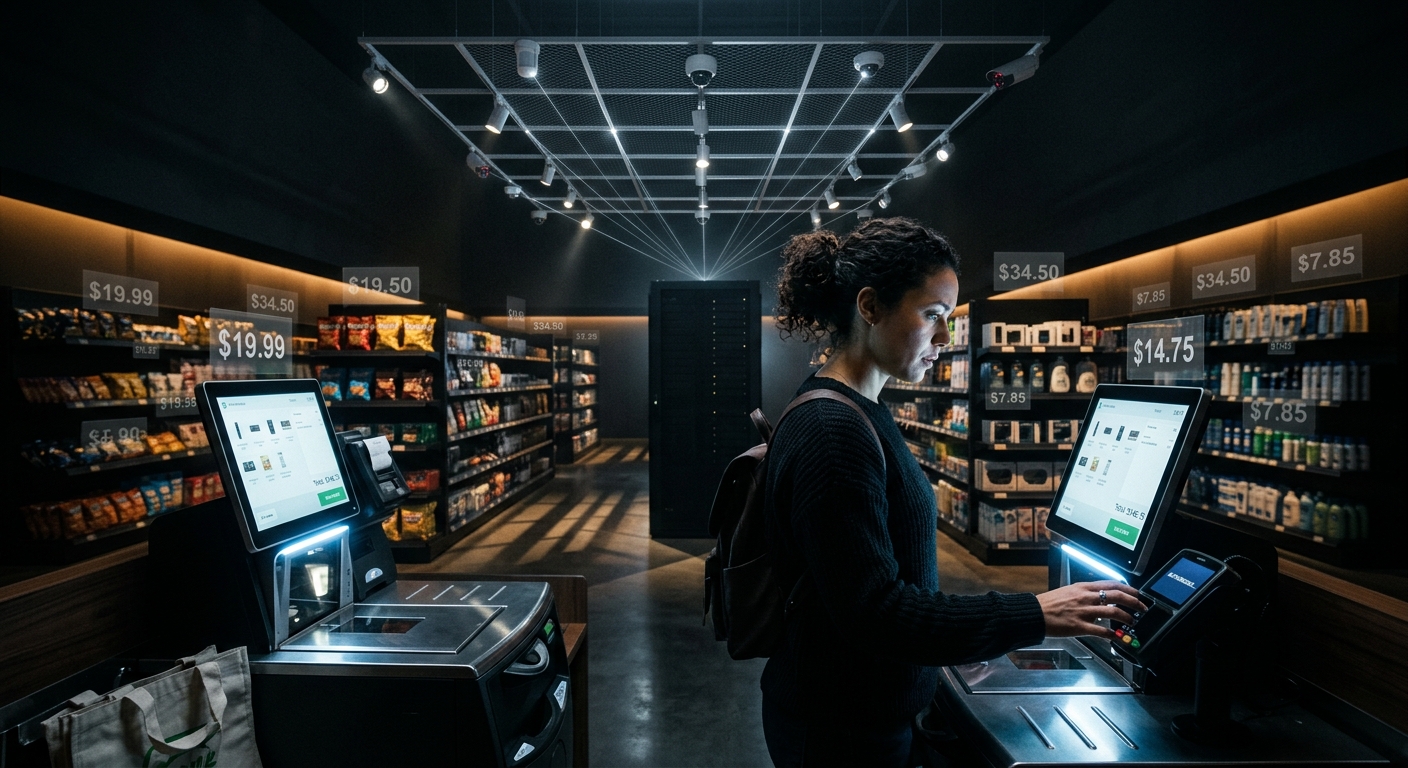
Most of us understand, at least vaguely, that our data is used to sell us things. The newer and more unsettling idea is that our data is used to decide what we pay for them. A class action filed in June 2026 in D.C. Superior Court accuses The Washington Post of exactly this — of building “pricing profiles” from its readers’ behavior and then charging different subscribers different prices for identical access, with its most loyal readers allegedly paying the most. The practice has a name now: surveillance pricing. And the Post case may become its defining example.
How the alleged scheme worked
The complaint’s core allegation is deceptively simple. Starting around December 2024, the suit claims, the Post began monitoring how individuals used its product — which columnists they followed, whether they checked the morning headlines, how closely they tracked election updates — and converted those reading habits into a profile used to set subscription prices. The longer someone remained a loyal subscriber, the more data the paper accumulated about them, and, allegedly, the more it charged them at renewal.
The result, if the allegations hold, is a perverse inversion of how loyalty is supposed to work. In most of the economy, sticking with a company earns you a discount or at least the same deal as a newcomer. Here, the suit argues, devotion was a liability: longtime readers reportedly paid more than new customers for the same content, precisely because the company knew more about how much they valued it. The complaint also alleges the Post could draw on information from other Bezos-owned companies, including Amazon, deepening the profile.
The disclosure that came late
What turns this from a business practice into a legal fight is timing. A law requiring disclosure of algorithm-based pricing took effect in late 2025. According to the suit, the Post did not actually disclose the practice until March 2026, via a renewal email to subscribers — meaning that for over a year, by the complaint’s account, readers were being priced by surveillance they had no idea was happening.
Plaintiffs are seeking punitive damages plus statutory damages of at least $1,500 per person, and their attorneys have suggested the total exposure could run into the “millions, if not billions.” But the dollar figures are almost beside the point. The reason this case matters is what it reveals about a pricing model that is spreading quietly across the digital economy.
Why surveillance pricing is different
Personalized pricing is not new in principle — airlines and hotels have practiced dynamic pricing for decades. What is new is the granularity and the source. Surveillance pricing doesn’t adjust based on supply, demand, or time of booking. It adjusts based on you — on an intimate behavioral profile assembled from your every interaction, designed to estimate the maximum you personally will tolerate paying.
This is the economist’s concept of “perfect price discrimination,” and for most of history it was a theoretical curiosity because no seller could know each buyer well enough to pull it off. Pervasive data collection changed that. When a company can observe how anxiously you refresh election coverage, how attached you are to a particular writer, how embedded the product is in your daily routine, it can model your willingness to pay with uncomfortable precision. The same surveillance that powers targeted advertising now powers targeted pricing — and the reader, generating data simply by reading, becomes the raw material for a price set against their own interests.
The chilling effect on ordinary behavior
There is a subtler harm buried in here, beyond the dollars. Once people understand that how they read affects what they pay, the act of reading itself becomes strategic. Do you avoid clicking the columnist you love because attachment might raise your renewal price? Do you ration your engagement to keep your profile cheap? Surveillance pricing, taken to its conclusion, doesn’t just extract money — it distorts behavior, turning the simple act of being a reader into a negotiation with an invisible algorithm that always has more information than you do.
And critically, the consumer has no realistic way to audit it. You see your price. You do not see what your neighbor pays, or how the number was reached, or which of your habits pushed it up. The information asymmetry is total. That opacity is exactly why disclosure laws — like the one at the center of this suit — exist, and exactly why their enforcement matters.
A test case for the data economy’s next frontier
The Washington Post is a high-profile defendant, but the practice the suit describes is not unique to one newspaper. Surveillance pricing is being explored across subscriptions, retail, and services wherever a company holds rich behavioral data on individual customers. This case will help establish whether the law treats that practice as legitimate personalization or as a deceptive exploitation of surveillance — and whether companies must tell you, plainly, when your own data is being used to set your price.
For readers, the lesson is uncomfortable but clarifying. The data you generate is not just used to predict what you’ll buy. Increasingly, it’s used to decide how much you’ll be charged for it. Loyalty, in the surveillance economy, may be just another data point — and not one that works in your favor.