
A software developer’s satirical protest against the Online Safety Act highlights the growing tension between child protection and mass digital surveillance
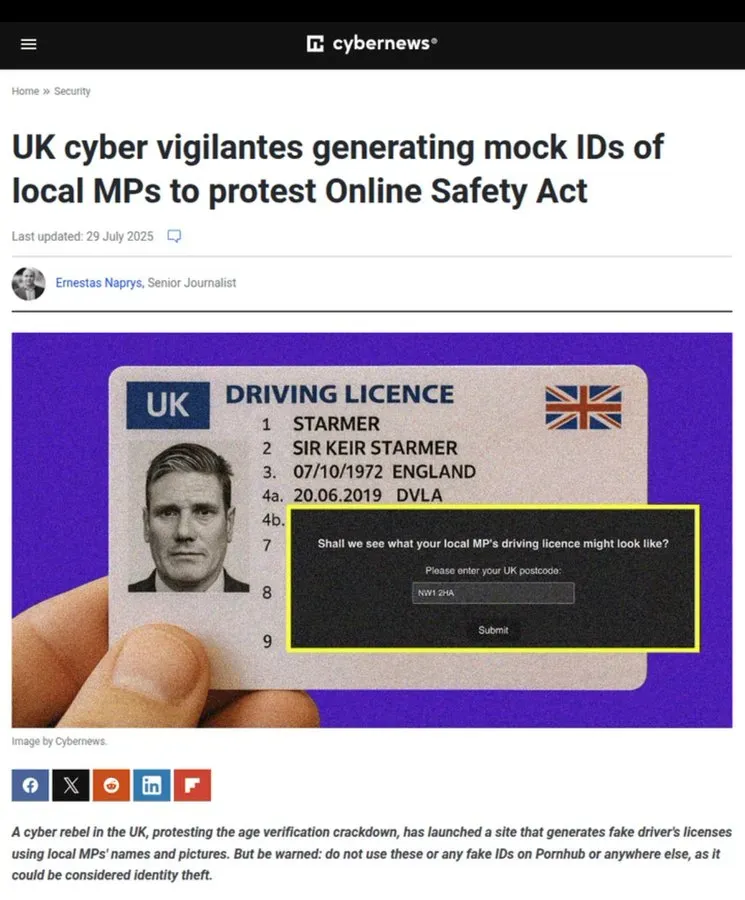
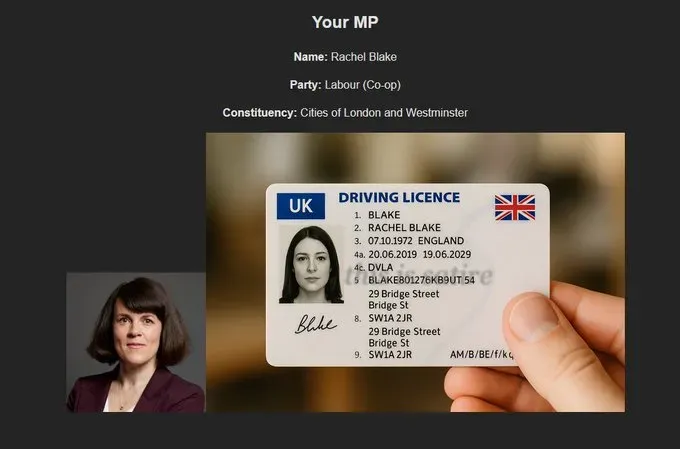
The UK’s Online Safety Act has officially gone into effect, and the backlash is already taking creative forms. A software developer known as “Tim Je” has launched a provocative digital protest at use-their-id.com, creating AI-generated fake driving licenses featuring local Members of Parliament. While clearly satirical—and definitely not intended for actual use—this protest raises serious questions about the privacy implications of the UK’s new age verification requirements.
The Privacy Problem with Age Verification
The Online Safety Act’s age verification mandate represents one of the most significant expansions of digital surveillance in UK history. Starting July 25, 2025, any platform that could potentially host adult content must implement “highly effective” age assurance systems. This isn’t just about adult websites—it affects Reddit, Discord, gaming platforms, and even music streaming services.
What this means for your privacy:
- Mass data collection: Platforms now require government-issued photo ID, biometric data, credit card information, or facial recognition scans- Comprehensive tracking: Third-party verification services create databases linking your identity to every piece of content you access- Data retention concerns: There’s limited clarity on how long these verification companies retain your sensitive information- Cross-platform profiling: The same verification systems used across multiple sites could enable detailed behavioral tracking
The Technical Reality Behind the Protest
Tim Je’s website works by taking a UK postcode, identifying the local MP, and generating a satirical driving license using their official parliamentary photo. The licenses clearly state “this is satire” and include obviously fake details, but they highlight a crucial point: if age verification systems would accept these parody documents, how robust are they really?
The protest reveals several technical concerns:
- Verification effectiveness: Any system that could be fooled by obviously fake IDs raises questions about actual security2. Privacy vs. security trade-off: More invasive verification methods are harder to circumvent but collect more personal data3. Implementation inconsistencies: Different platforms are adopting varying levels of verification, creating an uneven privacy landscape
Freedom of Speech and Censorship: The Growing Battle in the UK
International Context: A Global Privacy Experiment
The UK is serving as a testing ground for age verification technology that other countries are watching closely. France has implemented similar but even more restrictive requirements, while the EU is considering continent-wide age verification mandates. The outcomes in the UK will likely influence global digital privacy standards for years to come.
Current international approaches:
- France: Requires government-issued IDs or credit cards, with anti-sharing measures- Germany: Focuses on parental controls and platform design changes- Australia: Considering age verification but hasn’t implemented comprehensive requirements- United States: Varies by state, with some implementing ID requirements for adult content
The VPN Response: Digital Emigration
The most immediate response to the UK’s age verification requirements has been a massive surge in VPN usage. ProtonVPN reported over 1,400% increase in UK sign-ups following the Act’s implementation. This “digital emigration” highlights a fundamental problem with location-based internet restrictions: they’re easily circumvented by anyone with basic technical knowledge.
Privacy implications of the VPN surge:
- Shifting risk: Users move from regulated UK platforms to potentially less secure international alternatives- Fragmented enforcement: Some users face verification requirements while others don’t- Economic impact: UK platforms may lose users to international competitors with fewer restrictions
What This Means for Digital Rights
The mock ID protest isn’t just about age verification—it’s about the broader principle of digital autonomy. When governments require citizens to surrender biometric data or identity documents to access legal content, it fundamentally alters the relationship between individuals and the state.
Key digital rights concerns:
- Anonymity erosion: Age verification eliminates anonymous internet browsing for affected content- Chilling effects: Knowledge that all access is tracked may change user behavior even for legal content- Disproportionate impact: Verification requirements may particularly affect vulnerable populations who lack official documentation- Slippery slope: Age verification infrastructure could be expanded to other content categories
Russia’s WhatsApp and VPN Restrictions: Separating Fact from Fiction
Looking Forward: Privacy-Preserving Alternatives
While the current UK approach prioritizes verification over privacy, technical solutions exist that could balance child protection with user anonymity:
Privacy-preserving age verification methods:
- Zero-knowledge proofs: Verify age without revealing identity or storing personal data- Device-based verification: Age confirmation stored locally rather than in centralized databases- Parental controls: Technical solutions that give parents control without mass surveillance- Design-based approaches: Platform modifications that reduce appeal to children without requiring verification
The New Dawn of Internet Access in Russia: A Comprehensive Look at the Imminent VPN Ban
The Bottom Line
Tim Je’s protest, while obviously satirical, illuminates serious questions about the future of digital privacy in the UK. The Online Safety Act’s age verification requirements represent a significant shift toward normalized digital surveillance, with implications that extend far beyond protecting children online.
For privacy-conscious users, the key takeaways are:
- Understand the scope: Age verification requirements affect far more platforms than just adult websites2. Consider the data trail: Every verification creates a permanent record linking your identity to your content consumption3. Evaluate alternatives: VPNs provide circumvention but may shift privacy risks rather than eliminate them4. Stay informed: This is likely just the beginning of expanded online identity requirements
The mock MP ID generator may be a humorous protest, but the privacy implications of what it’s protesting are deadly serious. As other countries watch the UK’s digital surveillance experiment, the choices made today will shape the future of internet privacy globally.
Remember: Never use fake identification documents, even satirical ones. This carries serious legal consequences regardless of the underlying political message.
This article is for informational purposes only and does not constitute legal advice. Always consult with privacy professionals and legal experts when navigating digital verification requirements.