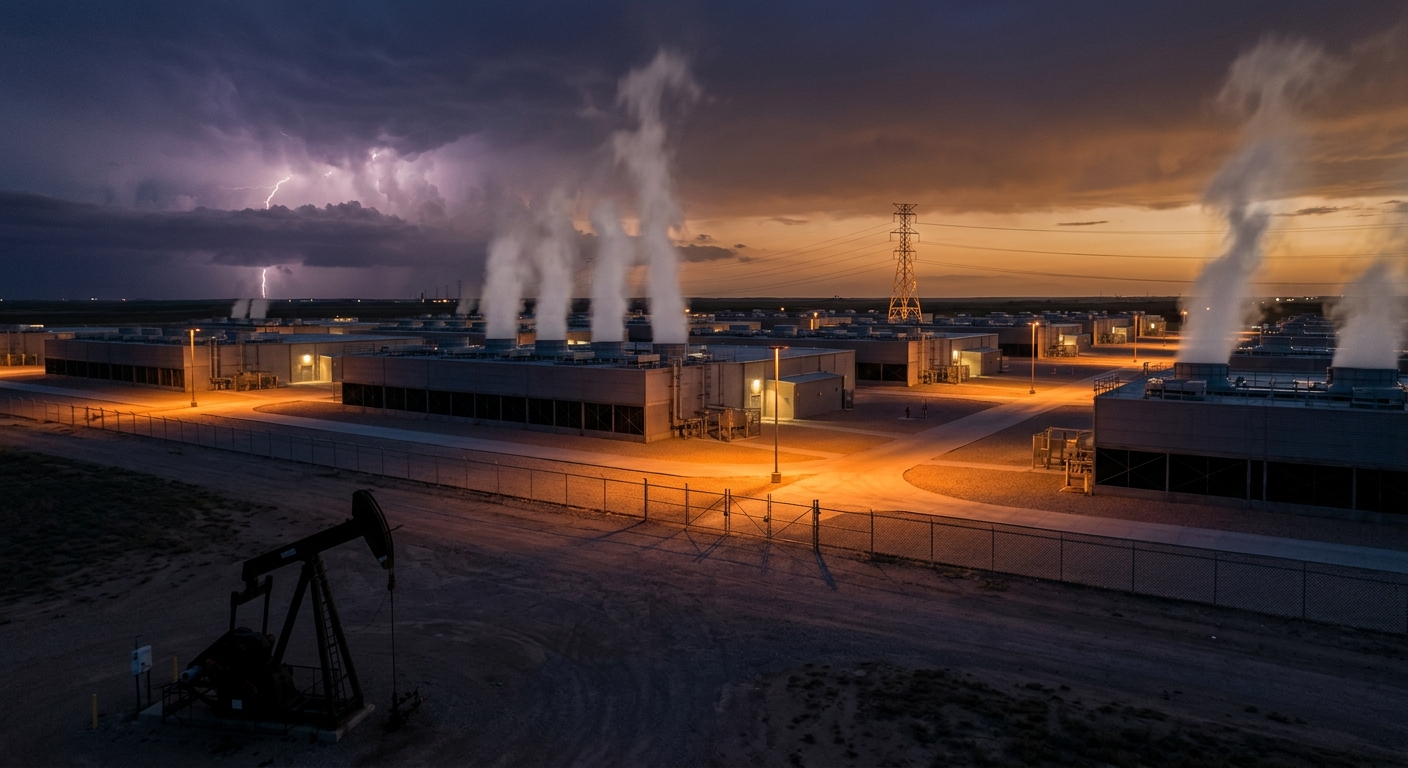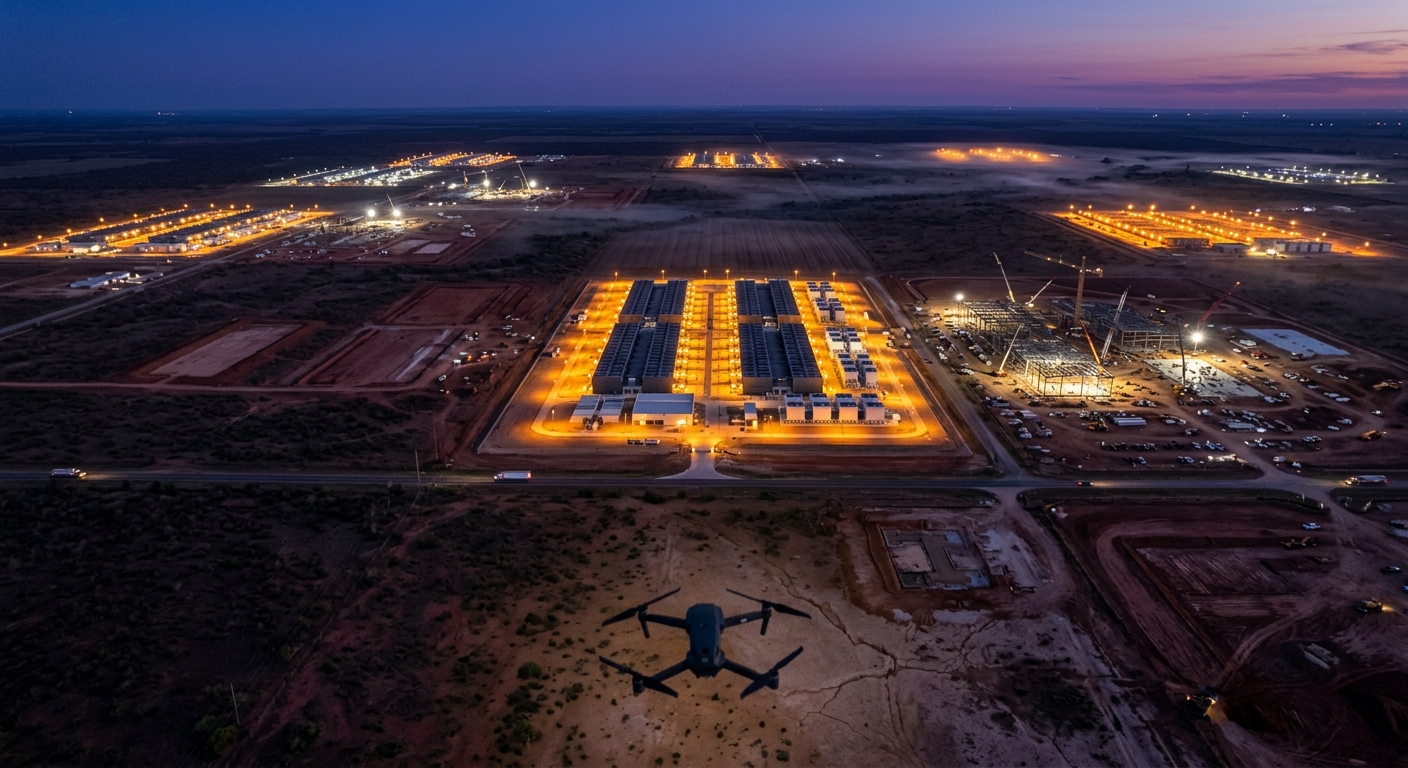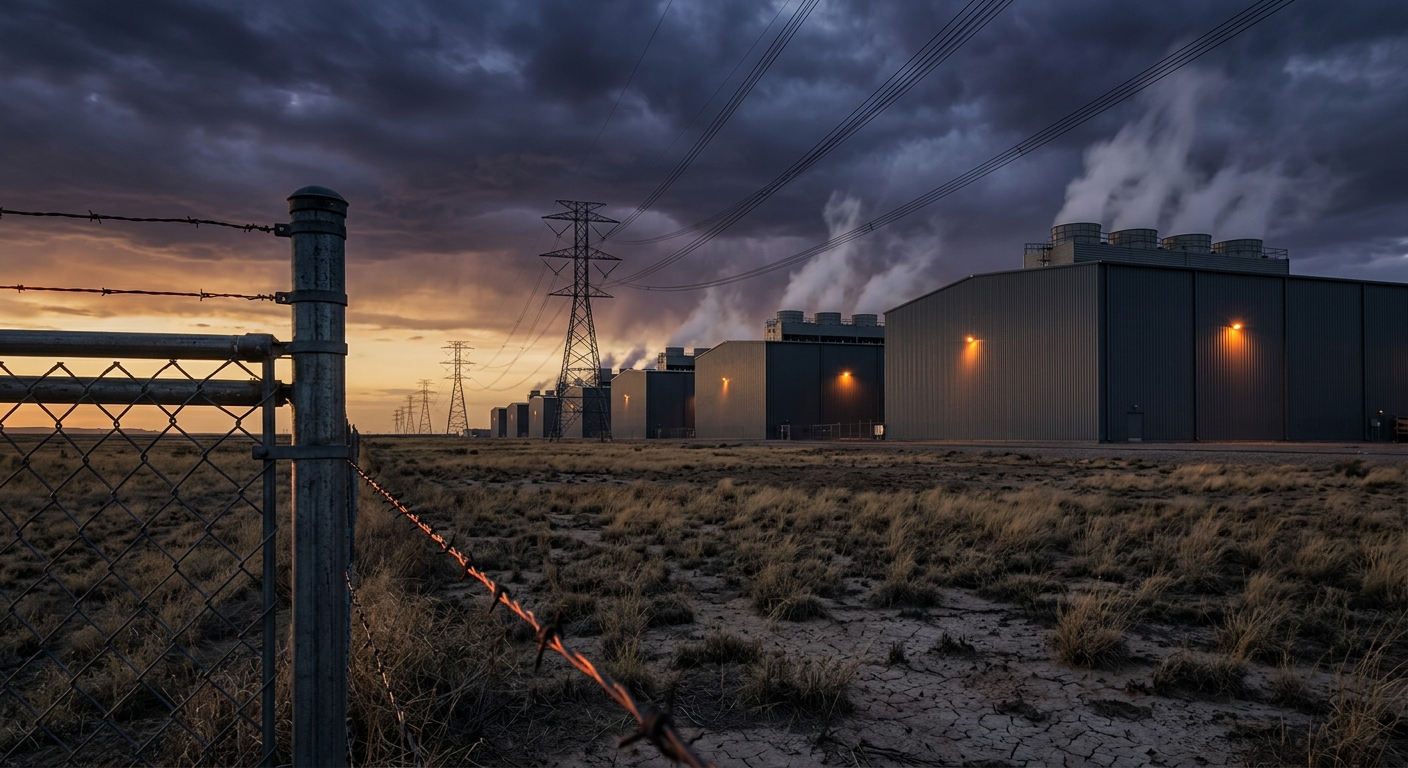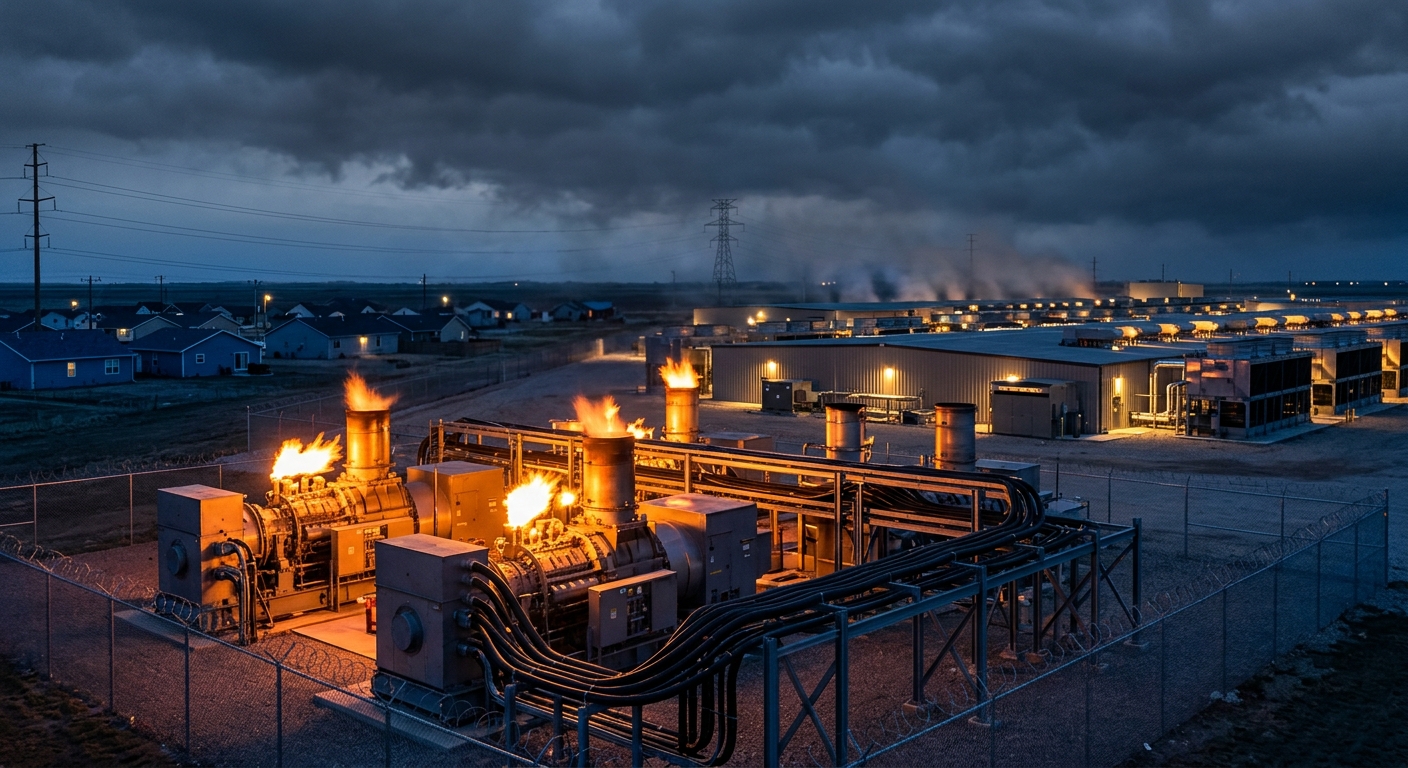
The most under-covered infrastructure story of 2026 is that a significant share of America’s largest new electricity consumers have decided not to be electricity consumers at all.
Data center developers have announced approximately 101 gigawatts of behind-the-meter natural gas generation capacity in the United States. Of that, roughly 57 GW has already publicly disclosed equipment orders — turbines are on order, with lead times measured in years — and around 7 GW is already under construction.
“Behind the meter” means the generation sits on the customer’s side of the utility connection. The facility burns its own gas, makes its own power, and connects to the public grid marginally or not at all. It is a private power plant attached to a private data center, and it exists because the queue to connect to the public grid is now measured in years while the competitive window for AI capacity is measured in months.
Why they are doing it
The honest reason is speed, not ideology.
Texas alone is carrying roughly 474 gigawatts of interconnection requests — multiples of the state’s entire peak demand. Interconnection studies in most regions take three to five years. Transmission upgrades take longer. A developer who has signed a capacity commitment to a hyperscaler cannot wait for a 2031 energization date, and gas turbines with an on-site pipeline tap can be running considerably sooner.
So the sector did what capital does when a public queue becomes a bottleneck: it built a private alternative. Natural gas is the fastest option at scale. Batteries, fuel cells, and on-site solar fill in around the edges, and small modular nuclear appears in nearly every press release and almost no actual 2026 construction schedule.
The other half: what the grid-connected ones cost everyone else
Behind-the-meter build-out did not remove the pressure on the public grid. It ran alongside it, and the public grid numbers are severe.
PJM capacity prices went from $28.92 per megawatt-day in the 2024/25 delivery year to $329.17 per megawatt-day for 2026/27. That is better than a tenfold increase in the price of having generation available when needed, across the largest wholesale electricity market in the country.
IEEFA’s analysis attributed 63% of the increase in the 2025/26 auction to data centers, amounting to roughly $9.3 billion in costs recovered from customers across PJM through higher rates. Starting in June 2026, ratepayers across the region began collectively paying an additional $1.4 billion in capacity market costs, again driven largely by data center demand.
Household-level effects are already visible. Pepco residential customers in Washington, D.C. saw average bill increases of about $21 per month from June 2025. The NRDC has warned that if the full cost of serving announced data center load is socialized across all bills, PJM households could pay something on the order of $70 a month more over time. ICF has projected PJM residential retail rates rising 30% to 60% by 2030, largely from capacity auction dynamics.
Put the two halves together and the shape becomes clear. The facilities that can afford to build their own generation are leaving. The cost of building capacity for the ones that stayed is being spread across every household on the system.
Why this is a transparency problem, not just an energy one
This site covers data centers because of what runs inside them and what can be learned about it. Behind-the-meter generation degrades nearly every remaining mechanism for finding out.
It removes the utility record. When a facility draws from the grid, its consumption exists somewhere in a regulated utility’s books, and utility filings are — imperfectly, with heavy commercial-confidentiality redaction — subject to public utility commission process. A facility that makes its own power has no meter reading in anyone’s system. Its consumption is a private commercial fact.
It removes the interconnection docket. Interconnection queue entries have been the single most productive public source for real capacity figures this year. They are how anyone knows the 474 GW number in Texas at all. A behind-the-meter facility never files one.
It removes the utility commission as a venue. State PUCs are one of the few forums where a citizen or intervenor group can compel a large customer to answer questions on the record. Exit the regulated relationship and the forum disappears with it.
And it weakens air permitting as a proxy. On-site gas generation does require air permits, which is genuinely the last remaining public hook. But permits are often issued per-turbine or per-phase, frequently under the same state agency that is competing to attract the project, and they describe emissions rather than operations.
Combine this with siting on federal land and you get facilities that appear in no county agenda, no state records system, no interconnection queue, and no utility rate case. They generate their own power, sit on their own land, and answer to a federal permitting fast lane.
What the industry gets right
Three points that critics should concede, because they are true.
Behind-the-meter generation can be genuinely better for ratepayers. A facility that builds its own supply is not competing for scarce grid capacity and is not driving the capacity auction prices that everyone else pays. The strongest version of the industry’s argument is that self-supply is the responsible option, and in narrow terms it is right.
Some of these installations are grid-supportive. A number of behind-the-meter projects are designed to export to the grid during peak periods or to provide demand response, which is a net benefit to reliability. Not all self-generation is grid-abandonment.
And the interconnection queue really is broken. Blaming developers for routing around a five-year study process is blaming them for responding rationally to a process failure that regulators have not fixed. Queue reform is the actual fix, and it has been “coming” for most of a decade.
The counterpoint is that all three are arguments about electricity, and none addresses the accountability consequence. A privately powered, privately sited facility with no regulated relationship to anyone is not more transparent for being more efficient.
What the critics get wrong
The 101 GW figure is an announced number, and announced numbers in this sector are systematically inflated. The disciplined way to read it is the tiering: 101 GW announced, 57 GW with disclosed equipment orders, 7 GW under construction. The order book is the credible signal — nobody orders a heavy-duty turbine with a multi-year lead time as a bluff — and it is a bit over half the headline. Cite 57, not 101, if you want to be taken seriously.
It is also wrong to assume behind-the-meter means unmonitored emissions. Air permitting is real, enforceable, and in some states quite demanding. The transparency gap is about consumption and operations, not about smokestacks.
What it means in practice
By mid-2026 the American electricity system is bifurcating. The largest and best-capitalized loads are building private generation and stepping outside the regulated grid entirely — at least 57 GW of it with turbines already ordered. The loads that remain on the public system are driving capacity prices up by an order of magnitude, and the resulting cost is landing on residential bills across PJM right now.
Neither half of that produces a public record of what any individual facility consumes, who owns it, or what runs inside. The energy story and the transparency story are the same story, and they are moving in the same direction.
What you can do
- Read the air permit, because it may be the only public document. For a behind-the-meter project, the state environmental agency’s air permit application is often the sole filing that describes generation capacity, fuel consumption, and runtime assumptions. Comment periods are short and sparsely attended.
- Intervene in your utility’s rate case. Capacity cost allocation — who pays for the generation built to serve large loads — is decided in rate proceedings, and consumer advocates in several states have won large-load rate classes that stop the cost being socialized. This is unglamorous and it works.
- Check whether your state has a large-load tariff. Several states adopted or proposed special rate classes for loads above a threshold, with minimum take obligations and exit fees, so a data center that leaves does not strand costs on households. Ask your commission whether yours has one.
- Look at your own bill’s capacity line. In PJM states the increase is itemizable. Knowing your own number makes the argument concrete at a public meeting in a way that a regional aggregate never will.
- Push for consumption disclosure to attach to the site, not the meter. The cleanest legislative fix is a reporting requirement keyed to facility floor area or IT load rather than to the utility relationship — so self-generating facilities cannot report their way out of existence.