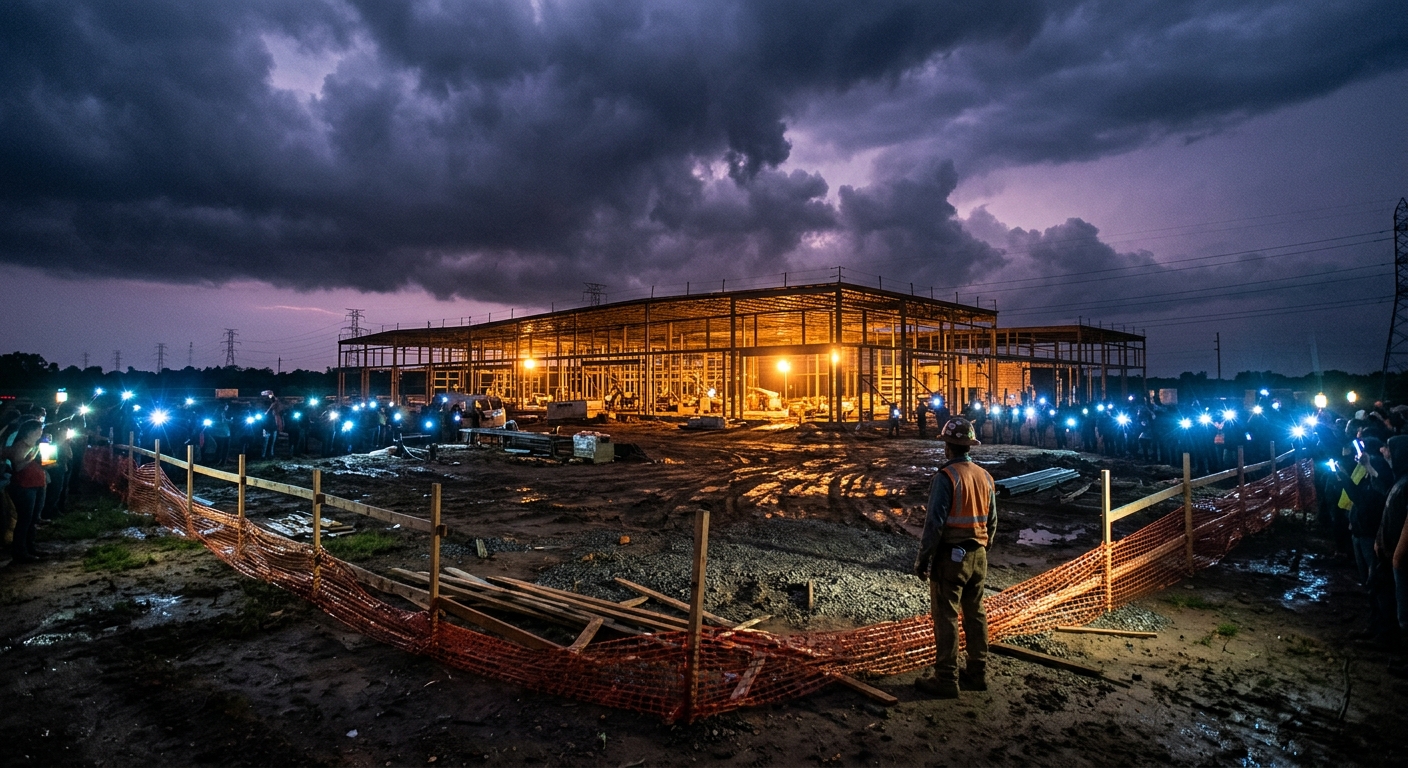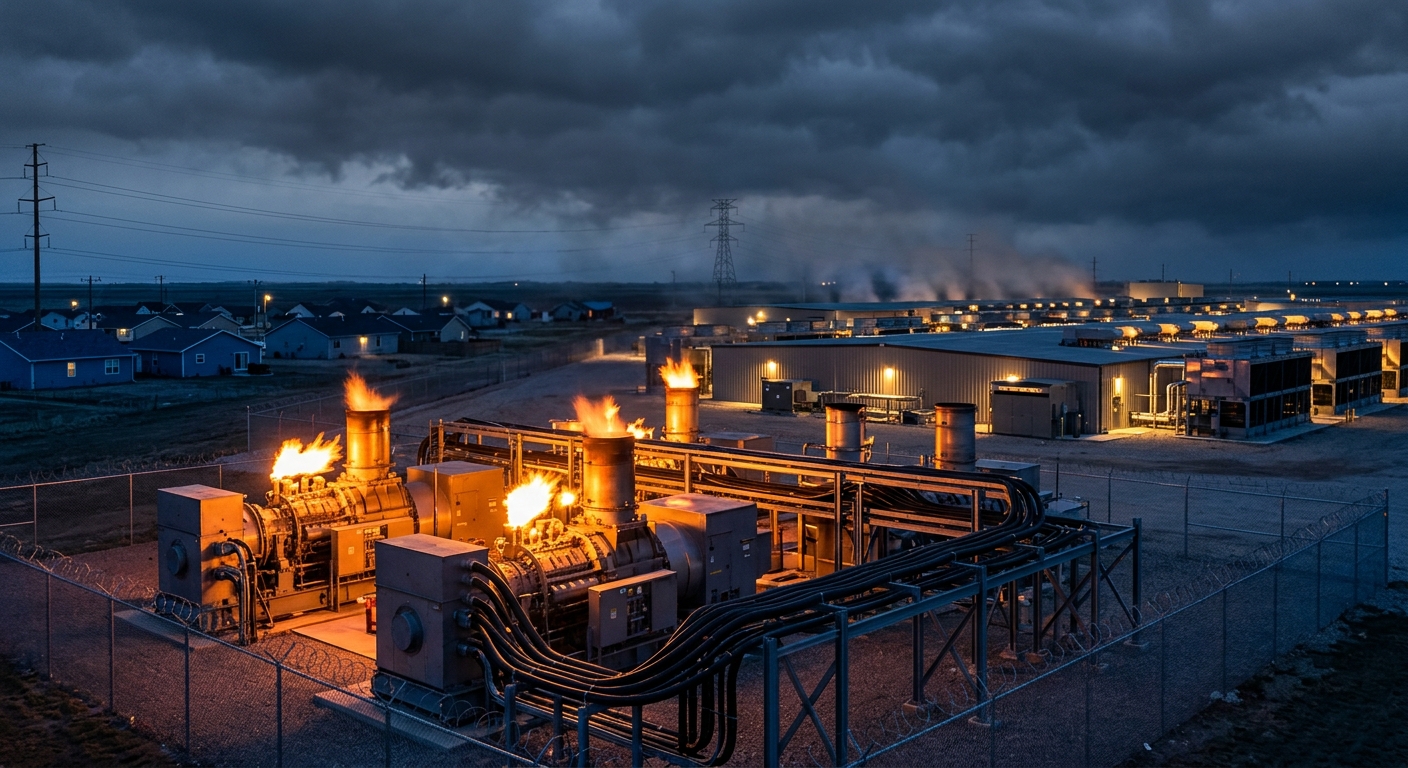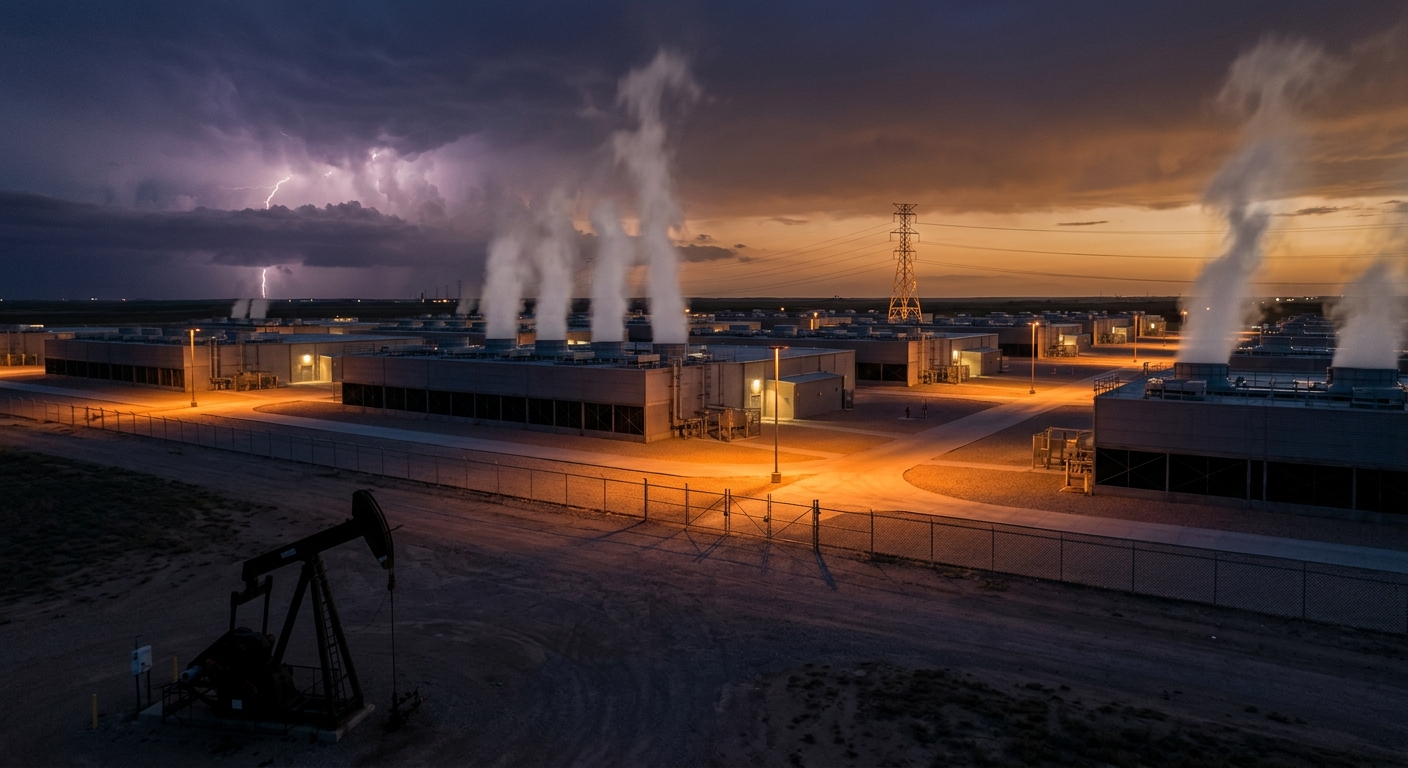
Texas has spent two years marketing itself as the state where you can build a data center fast. On 3 August 2026 it stopped taking new ones.
Governor Greg Abbott ordered a comprehensive audit of data centers seeking to connect to the state’s electricity grid, and directed that approvals be held until that review completes. The Public Utility Commission of Texas and ERCOT were tasked with compelling developers to disclose a specific list of things: tax breaks received, power consumption, on-site generation plans, water use and cooling operations, efforts to mitigate impacts on surrounding communities, and ownership of the facility.
Read that list again. It is, almost item for item, the list of things that nobody currently has to tell you.
The number behind the freeze
The proximate cause is the interconnection queue. Texas is facing roughly 474 gigawatts of interconnection requests from large loads — overwhelmingly data centers.
To calibrate: ERCOT’s all-time peak demand is on the order of 85 to 90 gigawatts. The queue is therefore something like five times the entire peak consumption of the state of Texas, filed by prospective customers who in most cases have paid nothing and committed to nothing.
That figure is not a forecast of what will get built. Interconnection queues are notoriously inflated: developers file at multiple sites to preserve optionality, file speculatively to establish queue position, and file duplicates through different entities. A large majority of that 474 GW will never energize. But that is precisely the problem the audit exists to solve. ERCOT cannot plan generation and transmission for a decade ahead when it cannot distinguish the real requests from the placeholders — and under current rules it has no reliable mechanism to make developers prove they are serious.
A freeze plus an audit is, functionally, Texas demanding that the queue tell the truth.
The year the counties got sued
What makes the state-level move remarkable is how badly local governments fared trying to do the same thing.
Hill County approved what is believed to be Texas’s first county-level data center moratorium — and rescinded it a month later after a developer sued for $100 million in damages. The suit did not need to succeed to work. It succeeded by existing: after Hill County folded, other Texas counties that had been drafting similar measures abandoned them.
Hood County rejected two attempts at a countywide moratorium in February, after State Senator Paul Bettencourt advised the commissioners court that it lacked the legal authority to impose one.
San Marcos became the first Texas city to issue a moratorium, in June — a city, notably, not a county, and therefore operating with home-rule authority that Texas counties largely do not have.
That is the shape of the thing. Texas counties have limited zoning power by design; the state’s development-friendly structure was built deliberately over decades. When a county tried to use what little authority it had, a nine-figure lawsuit arrived and the authority evaporated. The only body with enough standing to demand answers turned out to be the governor’s office — and it took a five-times-peak-demand queue to get there.
Why an ownership question is a privacy question
Of the six disclosure categories in the audit, the one that matters most for readers of this site is the last: ownership of the facility.
Data centers in Texas and elsewhere are routinely held through single-purpose LLCs, often with the operating tenant shielded by non-disclosure agreements negotiated as a condition of siting. A county can approve an abatement worth tens of millions of dollars without being told which company will occupy the building, let alone whose workloads will run inside it.
This is not a hypothetical concern. The same physical capacity that hosts a retailer’s inventory system hosts model training, bulk biometric matching, and the continuous-tracking analytics platforms that federal agencies have been buying all year. From the county’s side of the table, the buildings are indistinguishable and the tenants are anonymous. The state is now, for the first time, asking.
Whether the answers become public records is a separate fight, and one worth watching. Texas’s public information law contains broad exceptions for competitively sensitive commercial information, and every developer in the queue will assert them.
What the freeze’s critics get right
The objections are not frivolous.
A freeze has real costs. Interconnection review in Texas was fast, and that speed was a genuine competitive advantage that brought capital investment and construction employment into counties that needed both. Pausing it transfers projects to Ohio, Georgia, and Wyoming, and some of them will not come back.
The queue number is being used loosely. Officials and journalists alike have cited 474 GW as if it described intended construction. It does not. Anyone reasoning from that number as though half a terawatt of demand is imminent is reasoning badly, and the industry is entirely correct to say so.
Audits can become permanent by inertia. “Until the audit completes” is an open-ended condition. If the review stretches past this year with no published methodology or deadline, a targeted transparency exercise becomes a de facto indefinite moratorium imposed by executive action — which is not obviously better governance than the county moratoria that got struck down.
The defensible position is that the disclosure requirements should outlast the freeze, and the freeze should not outlast the disclosure requirements.
What it means in practice
The most permissive large jurisdiction in America stopped approving the most consequential infrastructure of the decade, because it could no longer tell which of its applicants were real. That is not an environmentalist victory or an industry defeat. It is an admission that the information regime around this build-out has failed at the most basic level — the state that hosts the largest concentration of projects in the country did not know enough about them to plan a grid.
Everything else follows from that. Counties could not get the information, and got sued for asking. The state could not get the information, and had to stop the line to obtain it. The public still cannot get the information, and will now find out whether the answers survive contact with commercial-confidentiality exemptions.
What you can do
- Watch for the PUCT and ERCOT filing schedule. The audit’s data requests, and the responses, will generate a documentary record. Filings at the PUC of Texas are public by default and searchable by docket; that is where the real numbers will surface first.
- File for the response, not the request. If you are in Texas and a facility is proposed near you, the interesting document is the developer’s completed disclosure — power, water, ownership — not the state’s questionnaire. Request it specifically and be ready for a confidentiality assertion.
- If you are outside Texas, use this as the template. Six disclosure categories, demanded as a condition of grid connection rather than as a zoning condition, sidesteps exactly the legal vulnerability that killed the Hill County moratorium. Grid access is leverage that counties do not have and utilities regulators do.
- Do not lead with a moratorium. The record from this year is clear: moratoria invite litigation and often lose, while disclosure conditions attached to something the developer needs tend to survive. Ask for information first.
- Push for ownership disclosure to be non-confidential by statute. Power and water figures are useful. Knowing who is actually behind the LLC — and who the operating tenant is — is what makes the rest of it accountable to anyone.