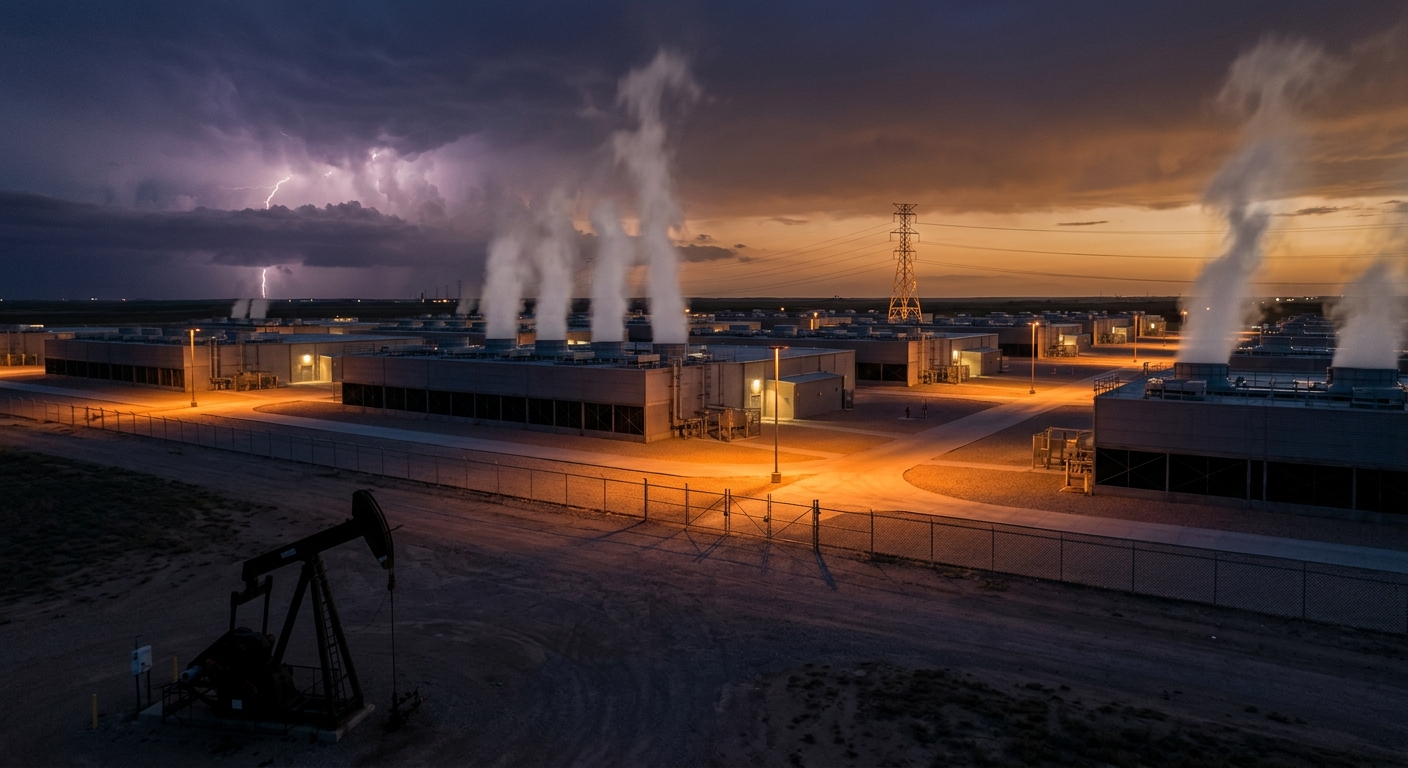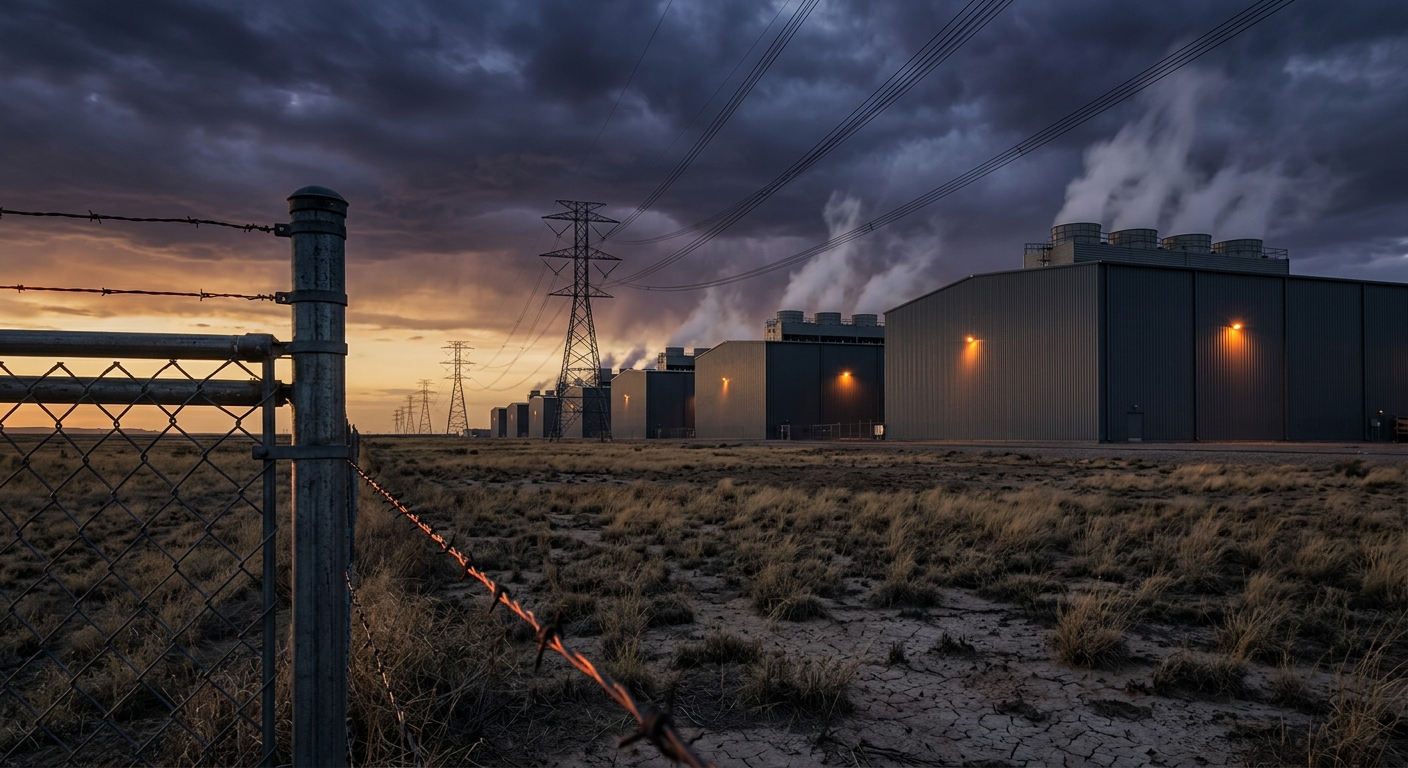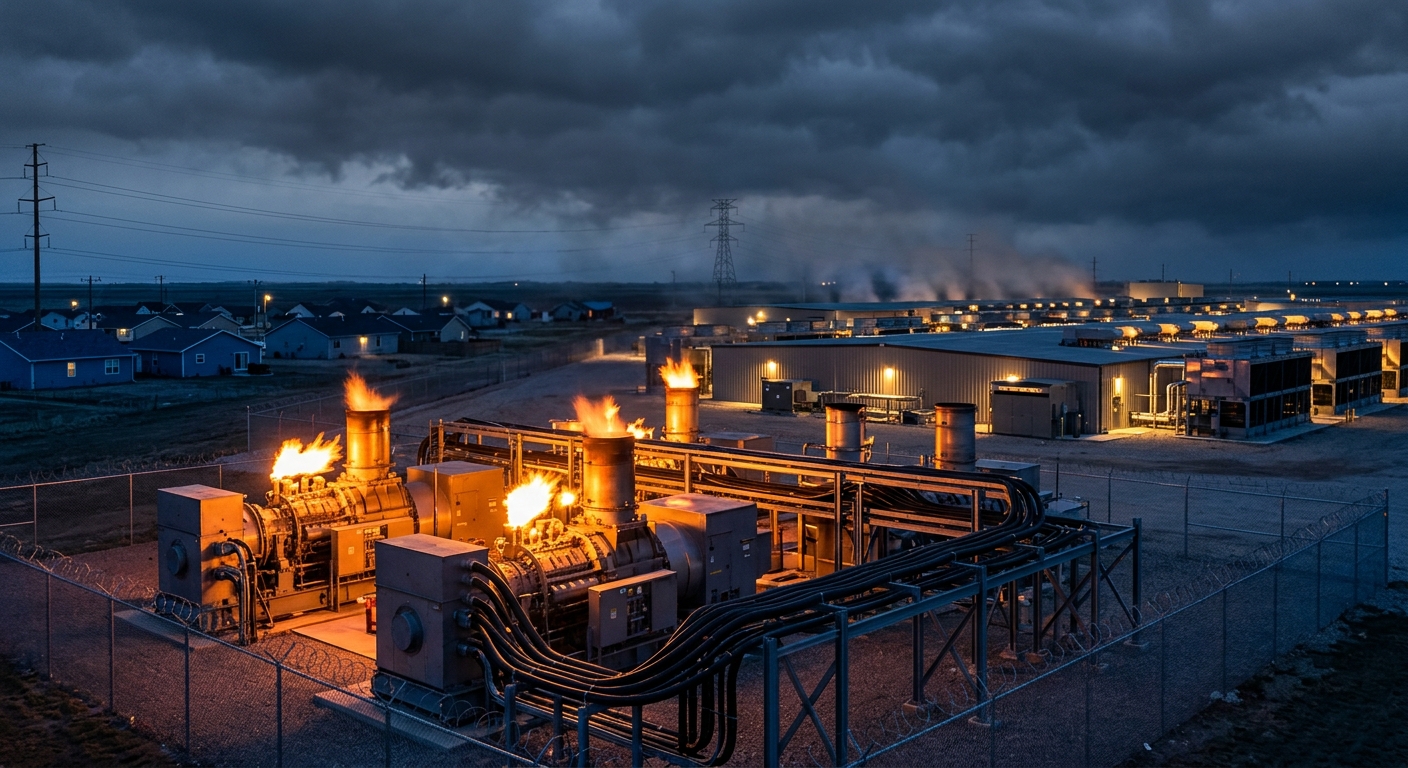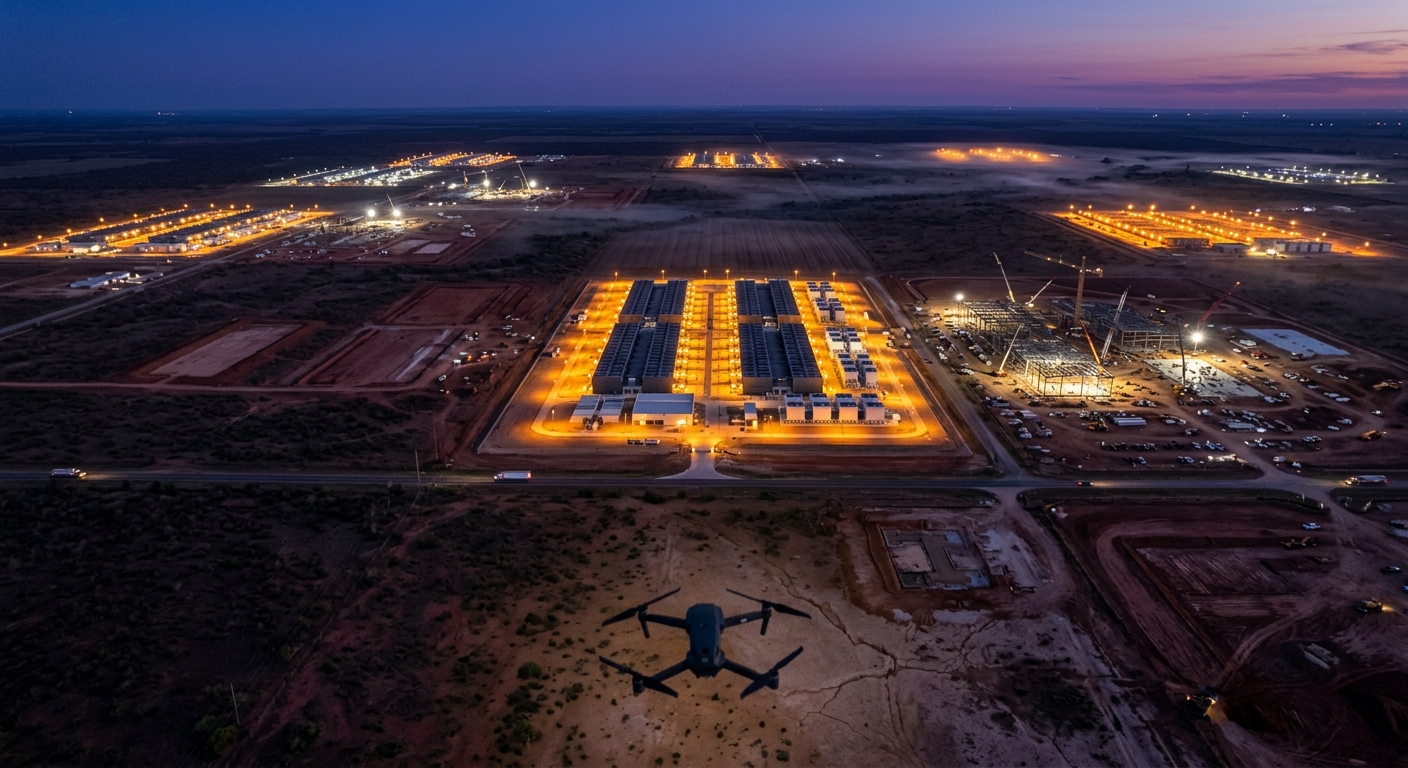
Start with a question that should be trivial: how many data centers are there in the United States?
There is no official answer. There is no federal registry, no permit clearinghouse, no census line item. What exists instead is a handful of commercial trackers — real-estate analytics firms, brokerage research desks, think tanks — each assembling a count from press releases, utility interconnection filings, county zoning agendas, and satellite imagery. They do not agree with each other, and the gaps between them are large enough to change what a reasonable person would conclude about the boom.
Here is the mid-year 2026 picture, with the disagreements left in.
The numbers, and the spread
Operating facilities: roughly 2,000 to 2,100. The commercial trackers converge on about 2,035 active data centers in the US as of mid-2026, with the largest concentrations of power capacity in Virginia, Texas, and California. One tracker, Aterio, put the figure at 2,067 active in a snapshot taken this month.
Under construction: roughly 790 to 830. This is where the spread opens up. The Progressive Policy Institute counted 831 under construction. Aterio’s August snapshot said 814. A third count put it at 787. Those numbers are within about 5% of each other, which sounds tolerable until you remember that each individual facility can represent hundreds of megawatts and a billion dollars.
Announced but not yet started: roughly 3,700 to 4,000. Aterio’s total pipeline came to 6,873 facilities tracked across all stages, of which 3,992 are announced. Another count put announcements at 3,725. The announced tier is the softest number of all — an “announcement” can mean a signed land option, a letter of intent, or a press release about a site the developer has not yet bought.
The honest summary: America is operating around two thousand data centers, actively building around eight hundred more, and has been told about roughly four thousand beyond that, of which an unknown fraction will never be poured.
Where they are going
The geography is extraordinarily concentrated. As of March 2026, Texas led with 140 data centers under construction, narrowly ahead of Virginia with 136. They were the only two states with more than a hundred projects underway. Then the curve falls off a cliff: Georgia at 56, Ohio at 51, and a long tail below that.
At the other end, twelve states had none under construction at all, and eleven more had fewer than five. That is nearly half the country with essentially no exposure to the build-out, and two states absorbing a plurality of it.
The other shift is rural. Pew Research found in April that most new US data centers are being sited in rural areas — a reversal from the earlier generation of facilities that clustered near metropolitan fiber and enterprise customers. Rural siting is a deliberate strategy: cheaper land, weaker zoning regimes, smaller planning departments, faster approvals, and county governments for whom a single facility’s tax abatement negotiation is the largest financial decision they will ever make.
It also means the communities absorbing the largest infrastructure build-out in a generation are, on average, the ones with the least professional capacity to evaluate it.
Why a privacy blog is counting warehouses
Three reasons.
First, because data centers are where the data is. This is nearly tautological and gets skipped anyway. Every argument on this site about brokers, biometric templates, ad-tech bid streams, ALPR plate reads, and model training corpora ultimately resolves to physical racks in specific buildings in specific jurisdictions. Where those buildings sit determines which state’s laws apply to the data at rest, which utility’s records could reveal their operations, and which court has jurisdiction when someone wants a subpoena honored or refused.
Second, because the capacity being built is not neutral. The training and inference capacity going up in 2026 is the same capacity that runs bulk facial recognition matching, continuous-tracking analytics of the kind ICE has been procuring, and the classifier layer behind age-estimation and content-scanning mandates. You cannot separate “AI infrastructure” from “surveillance infrastructure” at the level of the building. It is the same building.
Third, because the opacity is itself the pattern. A country that cannot say how many of these facilities it has also cannot say how much power they draw, how much water they consume, who owns them through which holding structure, or what runs inside. Every one of those unknowns has been a live public controversy in 2026. All of them trace back to the same root cause: no one is required to tell you.
What the boom’s critics get wrong
Two things, and they matter for credibility.
Data centers are not uniquely wasteful compared to what they replace. A great deal of the workload inside them displaced on-premises server rooms that were dramatically less efficient per unit of compute. Hyperscale facilities routinely run power usage effectiveness ratios around 1.1 to 1.2; the enterprise closets they consolidated were often above 2.0. Aggregate consumption is up enormously, but that is a demand story, not an efficiency story, and conflating the two makes the argument easy to dismiss.
“3,992 announced” is not a forecast. Announced projects are the industry’s most inflated number, and treating the pipeline as if it were a construction schedule produces the sort of apocalyptic 2030 projections that later get quietly walked back. Some meaningful share of announcements are speculative land plays, some are duplicate filings for the same site under different entities, and some are negotiating leverage against utilities and counties. Anyone citing the pipeline as a prediction is selling something.
The strongest version of the concern does not need the pipeline number. Eight hundred facilities actually under construction, concentrated into a handful of states, most of them rural, with no mandatory disclosure of power or water draw, is enough.
What is missing from every count
Notice what none of the trackers publish reliably:
- Beneficial ownership. Many facilities are held through single-purpose LLCs, often layered, frequently with the operating tenant undisclosed under NDA. The county approving the abatement may not know who the ultimate customer is.
- Actual power draw. Announced capacity is a nameplate figure. Real consumption is a utility record, and in most states utility records for a single large customer are shielded as competitively sensitive.
- Actual water draw. Reported inconsistently, often only after a public records fight, and frequently not separated from municipal totals.
- Workload. Nothing distinguishes a facility hosting hospital records from one running model training from one running biometric matching for a federal contractor. From the outside, they are identical grey boxes with identical NDAs.
You can drive past one of these buildings and learn nothing about it. That is by design, and it is not a design anyone voted for.
What it means in practice
The United States is halfway through a build-out of roughly eight hundred concurrent industrial facilities, sited disproportionately in rural counties with limited planning capacity, drawing power and water at volumes nobody is obliged to disclose, owned through structures nobody is obliged to reveal, running workloads nobody is obliged to describe. The only reason we have any numbers at all is that private analytics firms sell them, and their counts differ by hundreds of buildings.
For the rest of 2026, the fights described in the articles that follow this one — Texas freezing new approvals, $130 billion of projects blocked by local opposition, the federal reclassification of these sites as national-security infrastructure — are all downstream of the same absence. You cannot govern what you cannot count.
What you can do
- Look up your own county. Search your county commission or planning board agendas for “data center,” “hyperscale,” “Enhanced Use Lease,” and the names of common single-purpose LLC formats. Applications appear on public agendas weeks before votes, and almost nobody reads them.
- Request the interconnection filing, not the press release. Utility interconnection queue entries carry real megawatt figures. In most states they are public records even when the customer name is redacted, and they are far more informative than any developer announcement.
- Ask who the tenant is before the abatement vote, not after. Tax abatement negotiations are the one moment a county has leverage. Disclosure of the operating tenant and of metered power and water draw can be made a condition of the deal — and in a handful of counties this year, it has been.
- Treat announced-pipeline numbers skeptically in both directions. Do not let a developer cite the pipeline as inevitability, and do not cite it yourself as catastrophe. The under-construction figure is the one that will withstand scrutiny.
- Support mandatory reporting, not bans. The most durable wins this year have come from disclosure requirements — metered consumption, ownership, and workload category filed annually — rather than moratoria, which as Hill County, Texas discovered can invite a lawsuit within weeks.