When you signed up for Stripe, PayPal, or Venmo, you agreed to process payments. You didn’t agree to become a node in the world’s largest identity verification network. But that’s exactly what’s happening.
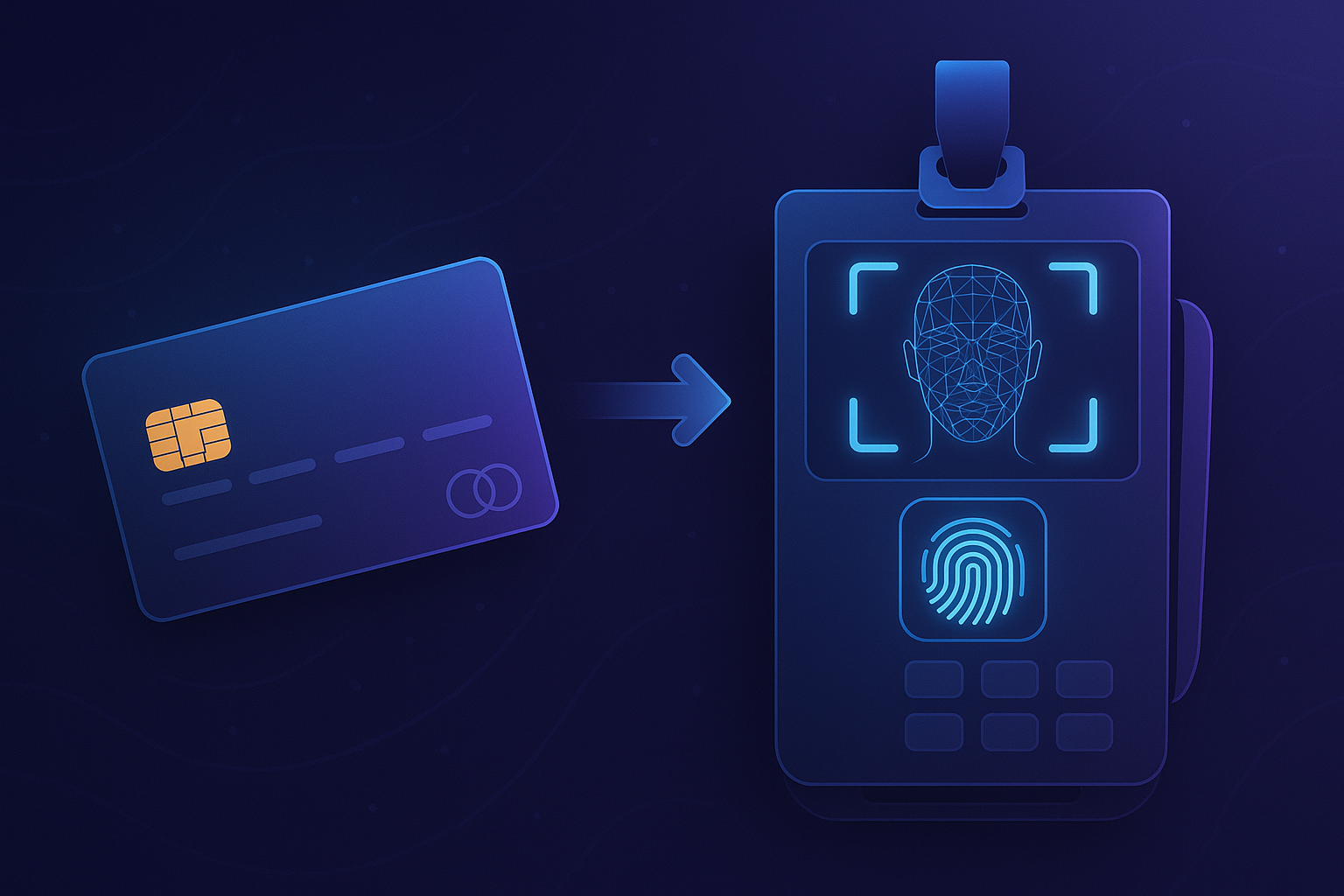
Payment processors are no longer content with simply moving money from point A to point B. They’re repositioning themselves as digital identity providers — companies that verify who you are, not just what you buy. And they’re collecting biometric data, government IDs, behavioral profiles, and financial histories to do it.
This shift has enormous privacy implications that most consumers don’t understand and didn’t consent to. Let’s break down what’s happening, who’s doing it, and what it means for your privacy.
From Payment Processor to Identity Platform
Stripe Identity: Your Face Is Now a Payment Method
In 2021, Stripe quietly launched Stripe Identity, a product that has nothing to do with payments and everything to do with knowing who you are. Stripe Identity lets any business verify a customer’s identity using:
- Government-issued ID scanning (driver’s license, passport)
- Biometric facial recognition (comparing a selfie to your ID photo)
- Document authentication (checking for forged or altered documents)
- SSN and personal data validation
Here’s the privacy problem: Stripe processes payments for millions of businesses — from Amazon to Shopify to DoorDash. When those businesses use Stripe Identity, your biometric data flows through Stripe’s infrastructure. One company now holds both your financial transaction history and your biometric identity data.
Reddit’s r/privacy community erupted when users discovered that Stripe demands biometric data — including selfies and government IDs — just to withdraw their own money. “Not only is this beyond unnecessary,” one user wrote. “Imagine a data breach. That would be absolutely catastrophic.”
That’s not hypothetical anxiety. Stripe collects biometric identifiers from selfies and compares them against government-issued IDs. Under laws like Illinois’ BIPA (Biometric Information Privacy Act), this data carries heightened legal protections precisely because, unlike a password, you can’t change your face after a breach.
PayPal Fastlane: One-Click Identity Across the Internet
PayPal’s evolution is even more aggressive. Through PayPal Fastlane, the company is building a universal checkout identity — a system where your identity follows you across every website that accepts PayPal, whether or not you click the PayPal button.
The pitch to merchants is compelling: “Recognize returning shoppers and let them check out in one click.” The privacy reality is darker: PayPal is building a cross-site identity graph that tracks your presence across the internet’s commerce layer.
And it goes further. In February 2026, reports emerged that Stripe is exploring acquiring PayPal. If this combination happens, a single entity would control:
- Payment processing for a majority of internet commerce
- Biometric identity verification services
- A universal checkout identity system
- Financial transaction histories for hundreds of millions of people
That’s not a payment company. That’s an identity infrastructure monopoly.
Venmo: Your Social Graph Meets Your Financial Graph
Venmo, owned by PayPal, added another dimension by making payments social by default. Your transaction feed — who you paid, when, and the memo field — was public by default for years. Venmo’s privacy policy acknowledges collecting information from “PayPal or another PayPal service,” meaning your Venmo social graph can be combined with your PayPal financial identity.
The IRS has also entered the picture. As of 2025, PayPal, Venmo, and Cash App are required to report transactions over $2,500 to the IRS via 1099-K forms. Your payment app isn’t just your wallet anymore — it’s your tax reporter.
The eIDAS 2.0 Connection: Digital Wallets Go Global
This isn’t just an American phenomenon. The EU’s eIDAS 2.0 regulation is creating a framework for digital identity wallets that will be mandatory across all 27 EU member states. Payment processors like Stripe, Adyen, and Worldpay are positioning themselves as beneficiaries of this framework.
Under eIDAS 2.0, digital ID wallets will be used for:
- Banking and financial services
- Healthcare access
- Age verification
- Government services
- Travel documents
Payment companies are building the infrastructure to serve as the identity layer beneath these wallets. The EU Digital Identity Wallet, scheduled for full rollout by 2026-2027, could make payment processors the gatekeepers of your entire digital existence.
Why This Matters for Your Privacy
1. Identity Data Is Forever Data
When Stripe or PayPal collects your government ID and biometric scan, that data doesn’t expire. Unlike a credit card number that can be reissued after a breach, your face, your fingerprints, and your government ID number are permanent. A breach of biometric identity data is an irrecoverable privacy violation.
2. The Convergence Problem
Historically, your financial data, your identity documents, and your biometric data were held by separate institutions — your bank, your government, and maybe nobody. Payment companies are consolidating all three into a single platform. This creates a single point of catastrophic failure for your privacy.
3. Financial Access Becomes Identity Compliance
When payment processors double as identity providers, they gain the power to condition financial access on identity verification. Can’t verify your identity to Stripe’s satisfaction? You can’t use any of the millions of websites that rely on Stripe for payments. Your ability to participate in commerce becomes dependent on surrendering your biometric data.
4. Scope Creep Is Built In
Stripe Identity launched as a tool for high-risk transactions. Now it’s available for any business. PayPal Fastlane started as a checkout optimization tool. Now it’s a cross-site identity system. The trajectory is clear: every new feature expands the identity footprint while the original consent — “I want to buy something” — remains unchanged.
What You Can Do
Minimize Your Identity Footprint
- Use virtual cards (Privacy.com, Apple Pay, prepaid cards) to reduce the identity data attached to your transactions
- Avoid payment platforms that require biometric verification when alternatives exist
- Don’t store government IDs in payment apps unless legally required
- Opt out of PayPal Fastlane and similar cross-site identity features in your account settings
Understand What You’re Consenting To
- Read the privacy policy when a payment app asks for your ID — understand whether they’re collecting biometric data
- Check state laws — Illinois (BIPA), Texas (CUBI), and Washington have specific biometric privacy protections
- Exercise your rights under CCPA, GDPR, or state privacy laws to request deletion of biometric data
Support Decentralized Alternatives
- Cash remains the most private payment method — use it when possible
- Cryptocurrency (with proper operational security) can provide payment functionality without identity verification
- Open-source identity solutions and self-sovereign identity projects offer alternatives to corporate identity platforms
The Bottom Line
Payment companies followed the same playbook as social media companies: offer a useful service, accumulate data, then pivot to monetizing identity. The difference is that payment companies sit at an even more fundamental layer of daily life. You can delete your Facebook account. You can’t easily opt out of the payment system.
When a company that processes your financial transactions also scans your face, validates your government ID, and tracks your checkout behavior across the internet, it’s no longer a payment processor. It’s an identity authority — one you never elected, can’t vote out, and can barely opt out of.
The payment giant that wants to be your digital ID already is. The only question is whether we’ll build guardrails before the consolidation is complete.
For more on digital identity and privacy, see our guide to Digital IDs and Personal Privacy.