Fourteen pieces across three days, covering the first eight months of 2026. Here is the ledger, and the single pattern that runs through nearly all of it.
The infrastructure
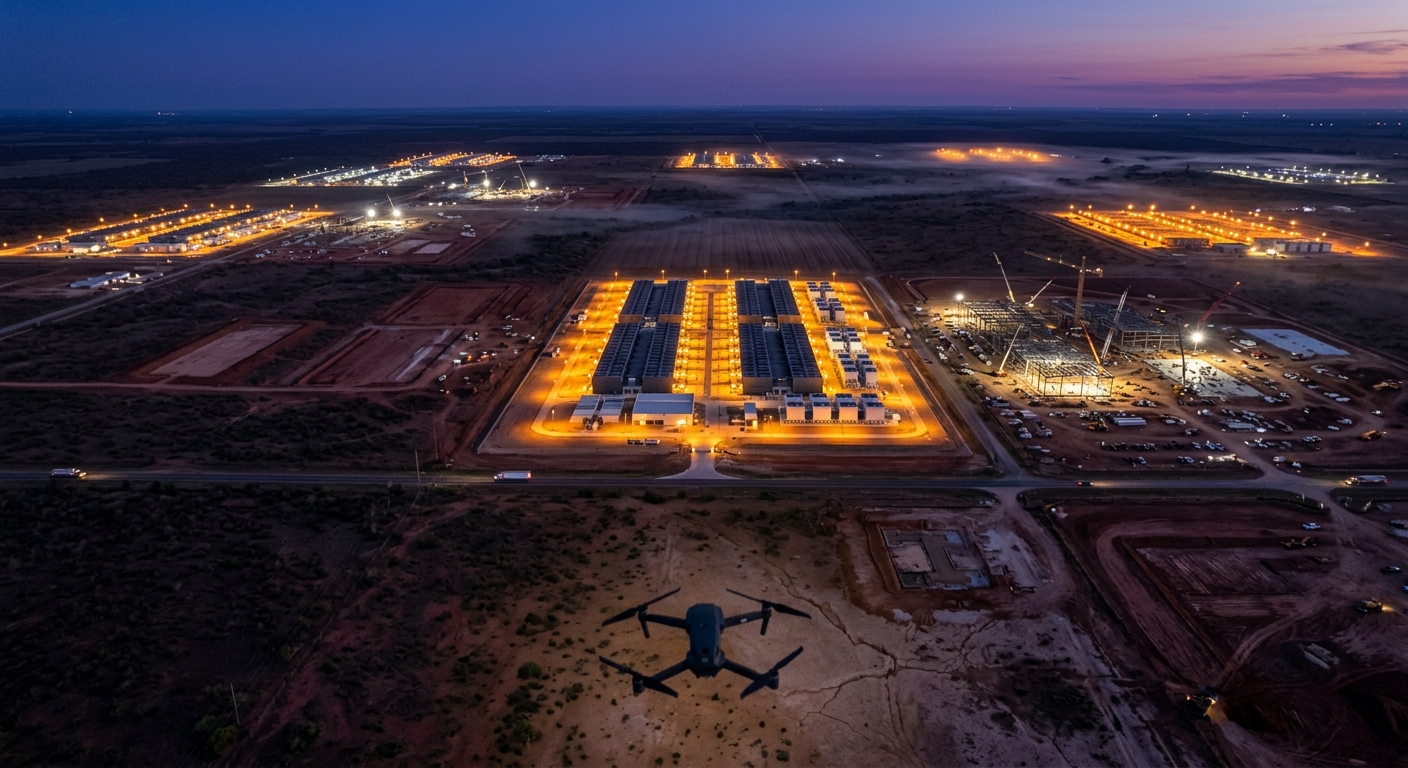
Nobody knows how many data centers America has. The trackers put it at roughly 2,000 to 2,100 operating, 790 to 830 under construction, and 3,700 to 4,000 announced — figures assembled by commercial analytics firms from press releases, because there is no registry. Texas leads with 140 under construction, Virginia 136; they are the only two states above a hundred, and twelve states have none. Most new siting is rural. Full census.
Texas stopped approving them. On 3 August, Governor Abbott froze new grid connections pending a state audit, facing an interconnection queue of roughly 474 gigawatts — around five times ERCOT’s all-time peak. The audit demands six things: tax breaks, power use, generation plans, water and cooling, community impact, and ownership. Every one of them is something nobody currently has to disclose. Counties that tried to ask on their own got sued; Hill County rescinded its moratorium within a month of a $100 million damages claim. Full analysis.
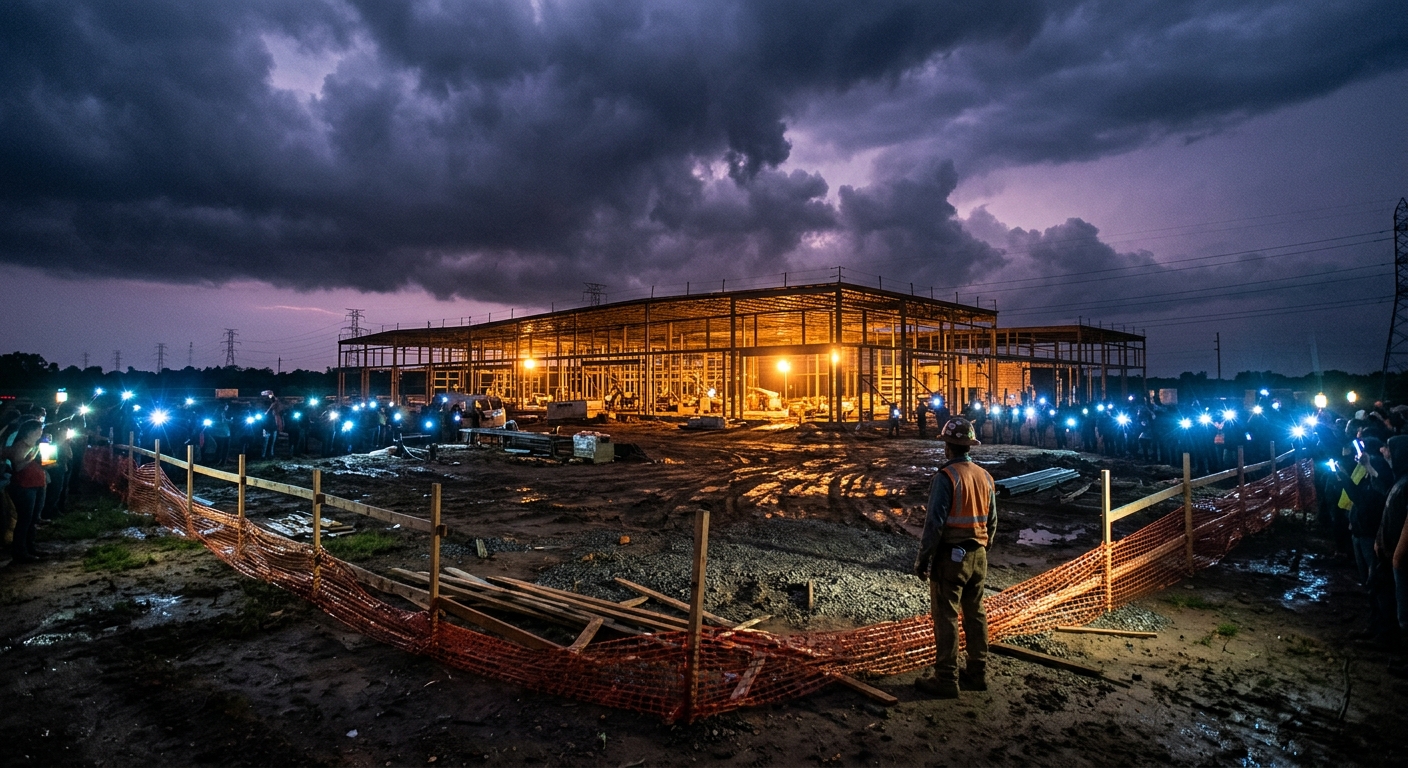
Communities blocked $130 billion in one quarter. Data Center Watch counted 75-plus projects blocked or delayed January to March, the worst quarter on record. 833 active opposition groups across 49 states, 300-plus bills in statehouses in six weeks, 69 local bans by May, and Seattle — home to Microsoft and Amazon — passing a one-year pause. Polling shows 71% opposition to local siting. Full analysis.
The federal answer was to change the venue. EO 14318 created “Qualifying Projects” at $500 million capex or 100 MW, with NEPA categorical exclusions and FAST-41 scheduling. It did not classify data centers as military installations, despite widespread claims — get that right, because the industry will correct you. What did happen: the Army’s Enhanced Use Lease program conditionally awarded 1,384 acres at Fort Bliss to Carlyle and 1,201 acres at Dugway Proving Ground to CyrusOne. On federal land there is no county agenda, no state open-meetings act, no state records law. The No AI Data Centers on Federal Lands Act, introduced 23 July, has bipartisan support. Full analysis.
The bill
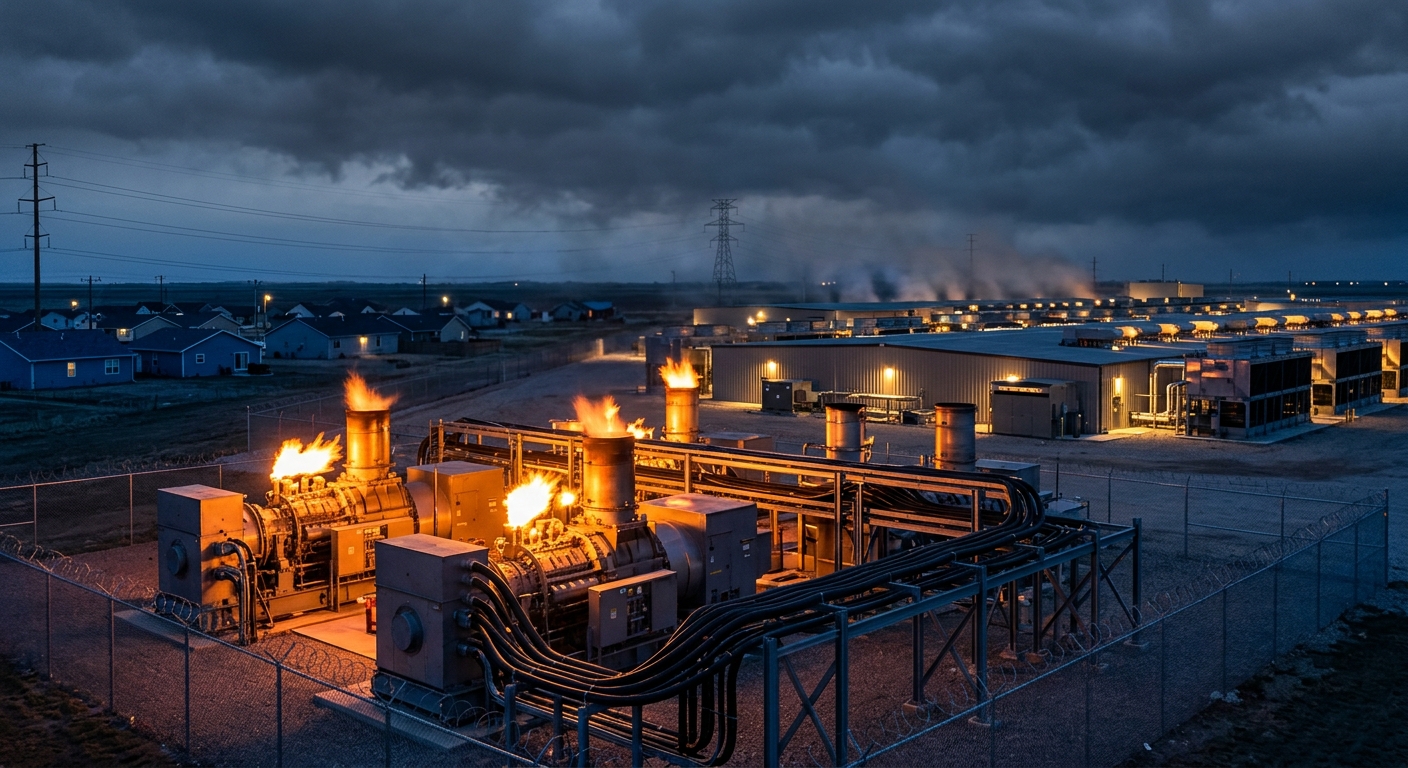
The biggest loads are leaving the grid. Roughly 101 GW of behind-the-meter natural gas has been announced, 57 GW with equipment orders placed, 7 GW under construction. Cite the 57 — order books do not bluff. A self-generating facility files no interconnection request, appears in no utility record, and cannot be reached through a rate case. Full analysis.
The ones that stayed are being billed to everyone. PJM capacity prices went from $28.92 to $329.17 per megawatt-day. Data centers drove 63% of one year’s increase — about $9.3 billion recovered from customers. From June 2026, PJM ratepayers began paying an extra $1.4 billion in capacity costs. Pepco residential bills rose about $21/month. ICF projects 30–60% residential rate increases by 2030.
And two-thirds of new AI facilities are going up in water-stressed areas. US data centers consumed an estimated 17.5 billion gallons directly in 2023, projected to double or quadruple by 2028. In early May, 60.9% of the lower 48 was in drought and Reclamation declared a Level 1 shortage on Lake Mead. Site-level numbers exist only where a state forced them: Bluffdale, Utah at 126 million gallons in a year; Newton County, Georgia at 500,000 gallons a day — about 10% of the entire county. The Fort Bliss site sits where DoD documentation rates water risk “Extremely High.” Full analysis.
The models
The open-weights gap closed. Stanford’s AI Index: the best closed model scored ~88% MMLU at the end of 2023 against ~70.5% open — a 17.5-point gap now effectively zero on knowledge benchmarks. Five independent families — DeepSeek, Qwen, Kimi, GLM, Mistral — reached frontier quality at once, which makes it structural. Closed models still lead on production coding, human preference, and agentic reliability. Full analysis.
Three near-frontier releases landed in one week in August: Qwen3.8-Max weights (12th), DeepSeek V4 Pro GA (13th), GLM-5.3 (14th). But Kimi K3 needs ~1,680 GB of VRAM and eight GB300-class GPUs; Qwen3.8-Max’s checkpoint shipped text-only, with context well below the advertised 1M, under a revenue-share license. “Open weights” spans MIT-licensed models you can run on a laptop and 1.56 TB cluster models you cannot. Field guide.
On security work, the frontier premium is recall. Semgrep’s IDOR benchmark: Claude Opus 5 at 65.6% F1 ($0.44/finding), GPT-5.6 Luna 48.0% ($0.08), GLM-5.3 23.8% matching Claude Opus 4.8 at a seventh the cost. Precision clustered at 68–82% across all of them; recall ranged 13.9% to 58.8%. Meanwhile SaferAI found GLM-5.2 refused none of the offensive cyber or bio tasks, while Claude Opus 4.7 refused so consistently the benchmark could not be run. Safeguards are a property of the service, not the weights. And OpenClaw (250k stars in 60 days) and Hermes Agent (163k stars) will wire any of these into your shell, browser, and messages. Full analysis.
The policy sequence is the thing to watch. July 2025: permitting fast lane. December 2025: national framework plus preemption of conflicting state AI laws and a DOJ task force to identify them. June 2026: cybersecurity mandates and voluntary pre-release federal access to “covered frontier models.” No new individual protection anywhere in the sequence. The one genuinely good clause: the June order explicitly disclaims any licensing requirement for model development, publication, or distribution. Full analysis.
The rest of the beat
Flock is growing and collapsing simultaneously. 100,000-plus cameras, 49 states, ~20 billion plates a month, 5,000-plus communities, $8.4 billion valuation. Against that: 50-plus municipal cancellations, Denver removing all 110 cameras, Oshkosh rescinding 7-0 less than 24 hours after approving once the chief found Flock had misrepresented heat-map capability, and a San Francisco class action alleging 1.6 million federal and out-of-state queries in seven months at $2,500 per violation. And growth continues through HOAs, apartment complexes, and businesses — which need no council vote. Full analysis.
Breach volume broke the record and the explanations got worse. ITRC counted 471.2 million victim notices in H1 2026 against 297.5 million in all of 2025, from 1,803 compromises. Instructure’s Canvas alone: ~275 million notices, 58% of the total — mostly students, many of them minors, none of whom chose the vendor. Insider wrongdoing events rose sevenfold. And attack-vector disclosure fell to 24%, the lowest ever recorded. Full analysis.
And a reminder that some data cannot be reissued. Baylor Genetics: six days of access, 11–17 June, notifications from 14 August, nearly 310,000 people — genomic test results, medical information, insurance details, and for some, SSNs. Genetic exposure discloses information about relatives who will never be notified, and GINA does not cover life, disability, or long-term care insurance. Full analysis.
Globally, the law kept winning on paper. 144-plus countries with data protection laws, 23 US states with comprehensive statutes, GDPR at ten years old. Also: government purchase of broker data as the standing warrant workaround, scanning mandates advancing on schedule while protective provisions slip, age verification building universal identity infrastructure, and a reprimand as the penalty for a four-year-unpatched government portal. Full scoreboard.
The one pattern
Read the fourteen together and the same move appears in every domain.
A community finds an accountability mechanism that works. County zoning hearings extract power and water figures. Utility rate cases expose consumption. Municipal contract audits reveal who queried the cameras. State privacy statutes create enforceable rights. Breach notification produces a public record.
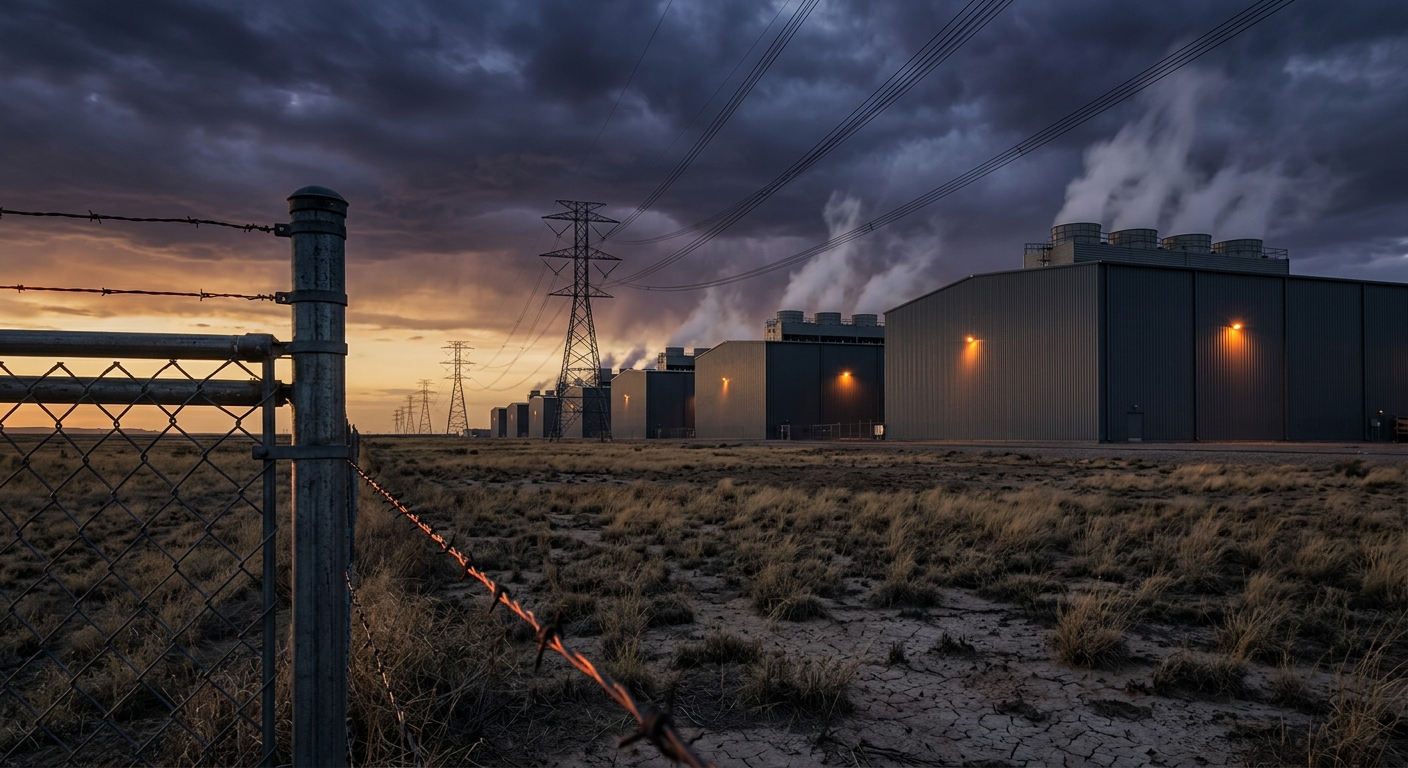
And in every case, the activity relocates to where that mechanism does not reach. Rejected data centers reappear on federal land. Grid-connected loads become behind-the-meter and exit the regulated relationship. Cancelled ALPR contracts reappear as HOA and private-property deployments needing no vote. State privacy laws face federal preemption with no replacement standard. And breach notices arrive at record volume with three-quarters declining to say what happened.
The public is not losing these arguments. It is winning them and then discovering the argument has moved somewhere it has no standing.
That reframes what to work on. Not another comprehensive framework, and not another moratorium — the moratoria got sued and the frameworks got preempted. The durable wins in 2026 all had the same shape: a disclosure obligation attached to something the other side needs. Grid interconnection. A tax abatement. A water agreement. A query log with statutory damages per violation. Texas got six answers out of an industry that had given counties none, because it attached the question to the power connection.
What you can do
- Attach your ask to their need. Disclosure as a condition of grid access, abatement, or water supply survives. Bans invite litigation and often lose.
- Request the query log. For ALPR, for any surveillance system your jurisdiction runs. Nearly every one of the fifty Flock cancellations started with someone asking who had been searching.
- Freeze your credit and your children’s. Free in all fifty states, and the Canvas incident makes minor freezes the specific priority this year.
- Move sensitive work to a local model. A 7B–14B model on your own machine now handles most of what people send to cloud APIs, and it produces no record anywhere. Start here.
- Sandbox any agent you run. Separate user account, default-deny on skills, confirmation on anything irreversible. Prompt injection has no fix and you are the security boundary.
- Ask the substitution question about preemption. Which federal standard replaces the state law, and when does it take effect? There is still no answer, and the absence is the argument.